TechFreedom Urges Congress to Scrap Universal Service Surcharge

The extra fee appears on consumers’ phone bills to finance rural broadband, low-income, school and library connections.

TechFreedom Urges Congress to Scrap Universal Service Surcharge
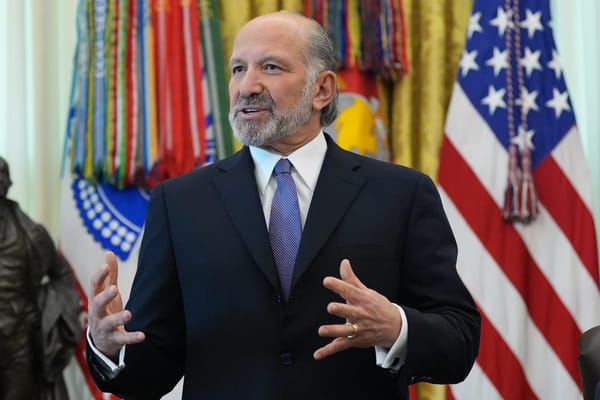
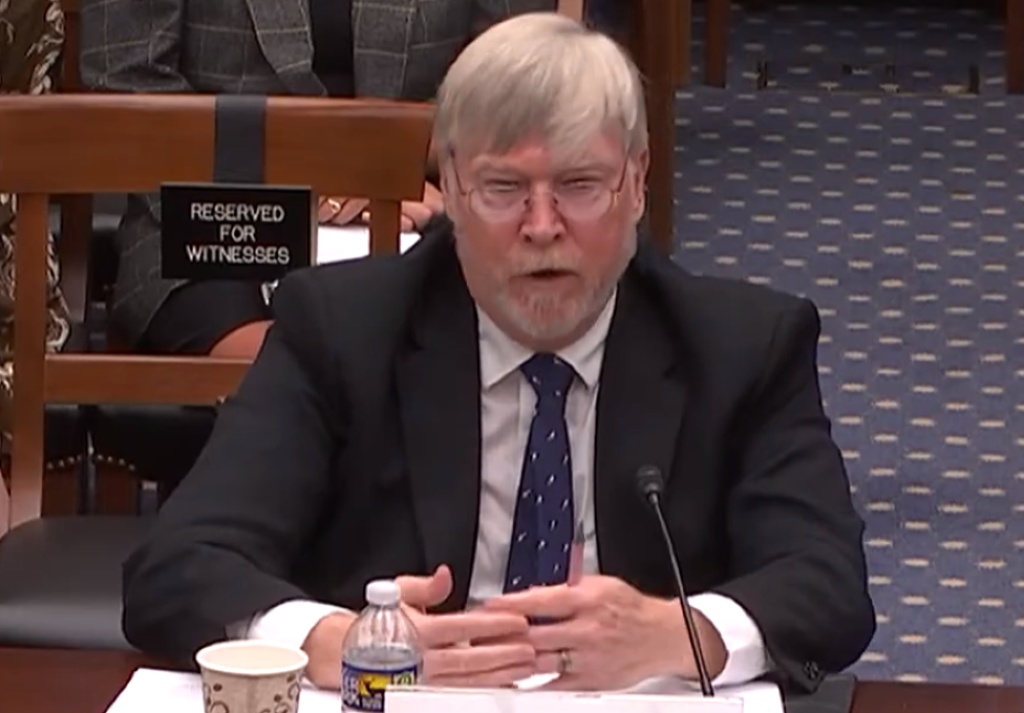
Photo of James Dunstan, Founder of Mobius Legal Group and Senior Counsel for TechFreedom, testifying at a House Science, Space, and Technology hearing on July 13, 2025.

WASHINGTON, Sept. 23, 2025 – Free-market think tank TechFreedom urged Congress last week to scrap the Universal Service Fund’s line-item surcharge and rein in its private administrator.

In comments filed to the Senate USF Working Group, TechFreedom Senior Counsel James Dunstan said the Federal Communications Commission had “abdicated its statutory responsibility” by subdelegating control of the nearly $9 billion-a-year fund to the Universal Service Administrative Company, a private entity.

“The FCC has abdicated its statutory responsibility through private delegation to a company with direct ties to the telecommunications industry,” Dunstan wrote. “[USAC] sets its own budget, pays itself handsomely, and creates a funding process so complicated that all but the most sophisticated recipients must pay consultants to help them through the process.”

Because USAC was not subject to the Freedom of Information Act, “evaluating the effectiveness of each USF program is nearly impossible,” he added.

The group cited explosive growth in the USF’s contribution factor, funded since the 1990s by fees on interstate voice revenue, which was set to rise from 5.7 percent in 2000 to more than 38 percent in the fourth quarter of 2025. 

“What started as a 5.7 percent tax on end-user interstate telecommunications revenue, netting around $1.1 billion in quarterly contributions in 2000, ballooned to a 33.4 percent tax rate and around $2.5 billion in quarterly contributions by mid-2021,” the filing read.

TechFreedom called the levy “the most regressive tax in the United States,” noting that families just above the federal poverty line pay the same monthly surcharge as billionaires. 

The group urged Congress to eliminate the contribution system entirely and instead fund universal service through general appropriations.

That recommendation clashes with calls from major industry trade groups last week, when broadband carriers urged lawmakers not to fund USF through congressional appropriations, warning that the annual budget cycle would inject too much uncertainty into long-term buildouts.

Two other free market groups submitted comments

Two other free market tanks, the Free State Foundation and the Information Technology & Innovation Foundation, also submitted comments to the working group arguing for general appropriations.

Free State said lawmakers could make multiyear appropriations to avoid volatility and allow providers to make long-term plans without fearing sudden changes in support.

Beyond calling for general appropriations, TechFreedom recommended that Congress impose a five-year statute of limitations on audits and clawbacks, require program-level cost-benefit analyses to track spending at the census-block level, and consolidate federal broadband subsidies to avoid duplicative builds.

The Senate working group, co-led by Sens. Ben Ray Luján, D-N.M., and Deb Fischer, R-Neb., has solicited feedback on long-term reforms to the program. Comments were due last Monday, Sept. 15, at midnight.

Member discussion

Popular Tags