250 Years of American Independence & 150 Years of American Telecommunications
Videos from the event will be available will be available soon for Breakfast Club Members!
Sign In to the Club!The Program Took Place on Oct. 1, 2026
Videos from the event will be available will be available soon for Breakfast Club Members!
Want to watch the event videos? Join the Breakfast Club to watch
- Noon–12:05 p.m. | Welcome: Drew Clark, CEO, Broadband Breakfast
- 12:05–12:20 p.m. | Keynote: Sen. Deb Fischer
- 12:20–12:35 p.m. | 1876–1926: The Telephone and the Telegraph: Claude Fischer
- 12:35–12:50 p.m. | 1927–1976: Broadcasting, Cable and the Creation of the Media: Thomas Hazlett
- 12:50–1:35 p.m. | Innovation: Shane Greenstein, Chris Lewis, and Matt DelNero.
- 1:35–1:50 p.m. | 1977–2026: Computing and the Internet: Christopher Yoo
- 1:50–2:35 p.m. | Competition: Milton Mueller, Gigi Sohn, Jonathan Nuechterlein, and Eli Noam
Keynote Remarks: Senator Deb Fischer
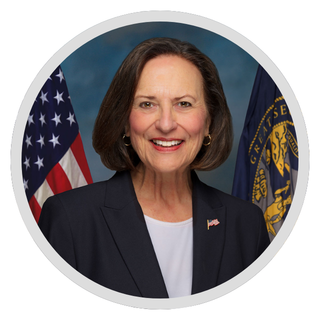
A lifelong Nebraskan, Deb Fischer is the senior senator from Nebraska. Senator Fischer was first elected to the U.S. Senate in November 2012, becoming the first Nebraska woman elected to a full term and the first Nebraska state senator elected directly after service in the state legislature. She was reelected for a second term in 2018, and in November 2024, Nebraskans voted to send her back to the Senate for a third term. During the 119th Congress, she serves as deputy whip under Senate Majority Whip John Barrasso (R-Wyo.), working to present the concerns of Nebraskans directly to Republican Senate leadership. She also serves on six important Senate committees: Armed Services, Appropriations, Commerce, Agriculture, Rules, and Ethics.
Senator Fischer believes the first duty of Congress is to defend the nation. As a senior member of the Senate Armed Services Committee, she is committed to defending against growing threats to our homeland and our allies. She serves as Chair of the Subcommittee on Strategic Forces, which focuses on America’s nuclear triad and associated delivery systems, the emergence of space as a warfighting domain, and defending the nation against increasingly sophisticated missile threats. The subcommittee directly oversees two unified combatant commands: U.S. Strategic Command, headquartered at Offutt Air Force Base in Nebraska, and U.S. Space Command.
Historical Recap: 1876-1926: The Telephone and the Telegraph

Claude Fischer is Distinguished Professor of the Graduate School in Sociology at the University of California, Berkeley. His research examines American social history, technology and the ways urban and rural life shape personal relationships. He is the author of America Calling: A Social History of the Telephone to 1940, which won the Dexter Prize from the Society for the History of Technology. His other books include Made in America: A Social History of American Culture and Character and Still Connected: Family and Friends in America Since 1970, examining changes in American culture and social ties.
Historical Recap: 1927–1976: Broadcasting, Cable and the Creation of the Media

Thomas W. Hazlett is the H.H. Macaulay Endowed Professor of Economics at Clemson University and a former chief economist of the Federal Communications Commission. His research examines telecommunications markets, spectrum policy and the regulation of wireless technology. He also directs Clemson’s Information Economy Project. Hazlett is the author of The Political Spectrum: The Tumultuous Liberation of Wireless Technology, from Herbert Hoover to the Smartphone. He has provided expert testimony before congressional committees, courts and regulatory agencies, bringing his research on communications markets into public policy debates.
Historical Recap: 1977–2026: Computing and the Internet

Christopher S. Yoo is the Imasogie Professor in Law and Technology at the University of Pennsylvania and founding director of its Center for Technology, Innovation and Competition. His research spans telecommunications regulation, network neutrality and the economics of internet networks. He also co-directs Penn’s Center on Media, Technology and Democracy. Yoo is the author of The Dynamic Internet: How Technology, Users, and Businesses Are Transforming the Network. His research projects include empirical studies of innovative approaches to expanding internet access and examinations of how legal rules can improve interoperability among technologies.
Panel 1: Innovation
This panel examines how past regulatory bargains shaped the technologies that followed, and weighs how to protect the permissionless innovation that built the modern internet while managing the risks each new tool introduces. It asks what 150 years of precedent suggests about governing what comes next.
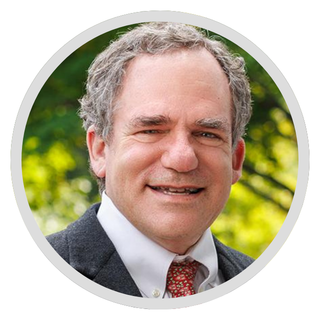
Shane Greenstein is the Martin Marshall Professor of Business Administration at Harvard Business School, where he co-chairs the HBS Digital Initiative and teaches in the Technology, Operations and Management unit. A leading economist of the information technology industry, he has spent decades studying how innovation, competition, and market structure shaped the rise of digital markets. He is the author of How the Internet Became Commercial, an economic history of the internet's transition from a government research network to a private industry. He co-directs the program on the economics of digitization at the National Bureau of Economic Research and writes the long-running technology blog Digitopoly.
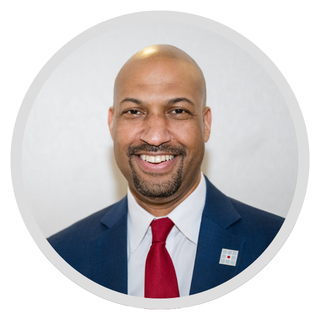
Chris Lewis is President and CEO of Public Knowledge, a Washington, D.C.-based public interest organization focused on technology and communications policy. He joined Public Knowledge in 2012 and became president and CEO in 2019, leading advocacy on broadband access, competition, an open internet, consumer protection, and emerging technologies. Previously, Lewis worked in the Federal Communications Commission’s Office of Legislative Affairs and on the staff of Senator Edward M. Kennedy. He also served as North Carolina field director for Barack Obama’s 2008 presidential campaign and two terms on the Alexandria City Public School Board. A Harvard University graduate, Lewis also serves on the board of the Institute for Local Self-Reliance.

Matt DelNero is a partner at Covington & Burling in Washington, D.C., and co-chair of the firm’s Technology & Communications Regulation Practice Group. He advises telecommunications, technology and media companies on broadband funding, spectrum policy, privacy and regulatory approvals for transactions. Previously, DelNero served as chief of the Federal Communications Commission’s Wireline Competition Bureau, overseeing more than 170 attorneys, economists and other professionals. His work included broadband competition, internet service provider privacy rules and major telecommunications transactions, as well as oversight of the Universal Service Fund and efforts to expand broadband access. He joined the FCC as deputy bureau chief in 2014, became chief in 2015 and returned to Covington in 2017.

Breakfast Media LLC CEO Drew Clark (moderator) has led the Broadband Breakfast community since 2008. An early proponent of better broadband, better lives, he initially founded the Broadband Census crowdsourcing tool to collect and verify broadband data left unpublished by the Federal Communications Commission. As CEO and Publisher, Clark presides over the leading media community advocating for higher-capacity internet everywhere through topical, timely and intelligent coverage. Clark also served as head of the Partnership for a Connected Illinois, a state broadband initiative.
Panel 2: Competition
This panel brings that history to bear on today's fights over broadband deployment, spectrum access, and the vast infrastructure now being built to power artificial intelligence. It asks whether the current buildout is opening the market to new entrants or consolidating it in fewer hands, and what a century and a half of competition policy suggests about the answer.

Milton Mueller is an internationally prominent scholar specializing in the political economy of information and communication. The author of seven books and scores of journal articles, his work informs not only public policy but also science and technology studies, law, economics, communications, and international studies. His books Networks and States: The global politics of Internet governance (MIT Press, 2010) and Ruling the Root: Internet Governance and the Taming of Cyberspace (MIT Press, 2002) are acclaimed scholarly accounts of the global governance regime emerging around the Internet. Mueller’s research employs the theoretical tools of institutional economics, STS and political economy, as well as historical, qualitative and quantitative methods. Mueller’s prominence in scholarship is matched by his prominence in policy practice. He is the co-founder and co-director of the Internet Governance Project (IGP), a policy analysis center for global Internet governance. Since its founding in 2004, IGP has played a prominent role in shaping global Internet policies and institutions such as ICANN and the Internet Governance Forum.
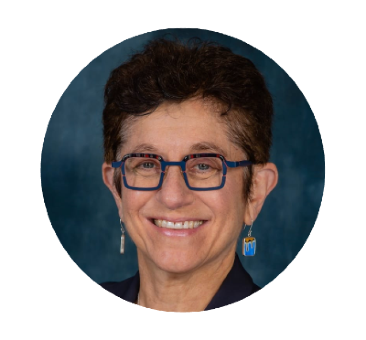
Gigi Sohn is the first executive director of the American Association for Public Broadband, the membership organization for municipally owned and publicly operated networks, which she joined in 2023. She spent 2013 to 2016 as counselor to FCC Chairman Tom Wheeler, where she worked on the commission's 2015 net neutrality rules, and before that co-founded and ran Public Knowledge, the consumer and intellectual property advocacy group, from 2001 to 2013. Earlier she directed the Media Access Project, the first public interest communications law firm. President Biden nominated her to the FCC in October 2021. She is a senior fellow and public advocate at the Benton Institute for Broadband & Society and a distinguished fellow at the Georgetown Law Institute for Technology Law & Policy.
.
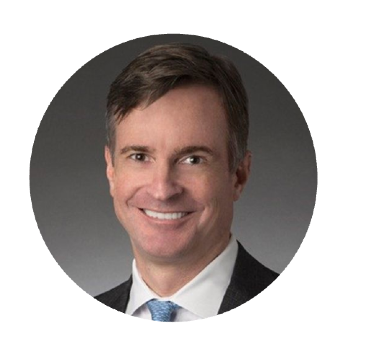
Jonathan Nuechterlein is a distinguished scholar at George Washington University’s Competition Law Center and teaches antitrust and telecommunications law at Georgetown and the University of Virginia. He retired from Sidley Austin in 2024 after nearly nine years leading its Telecom and Internet Competition practice. Previously, he served as general counsel of the Federal Trade Commission, deputy general counsel of the Federal Communications Commission and assistant to the U.S. solicitor general. He is also co-author of Digital Crossroads: Telecommunications Law and Policy in the Internet Age (3rd Edition).

Eli Noam is Professor of Economics and Garrett Professor of Public Policy and Business Responsibility, emeritus, at Columbia University, and director of the Columbia Institute for Tele-Information, a research center on management and policy issues in telecommunications, internet, and electronic mass media. He served as a Public Service Commissioner of New York State and was appointed by the White House to the President's Information Technology Advisory Committee. He has also taught at Columbia Law School, Princeton University's Economics Department and Woodrow Wilson School, and the Swiss universities of St. Gallen and Fribourg.
ALSO: Introducing the Online Course, "150 Years of American Telecommunications"
Partner with us
Sponsorship opportunities are available for organizations that want to be part of that story and reach Broadband Breakfast's audience of broadband professionals, policymakers, and industry leaders.
Want to learn more about partnering with Broadband Breakfast on "250 Years of American Independence & 150 Years of American Telecommunications?" Email Sales & Marketing Director Quinn Nghiem at quinn@breakfast.media or Development Associate Akul Saxena at akul@breakfast.media