
U.S. Should Plan Early for WRC, Witnesses Say
The international spectrum management conference will focus on satellite issues.

WASHINGTON, March 17, 2026 – Preparing early for the World Radiocommunication Conference next year will be important for the U.S. delegation’s effort to secure favorable global policies, witnesses told lawmakers Tuesday.
The conference, where regulators and companies meet every four years to set global goals for spectrum allocation, is being hosted in Shanghai, China from Oct. 18 to Nov. 12, 2027. That will present an additional layer of security concerns, witnesses said.
Lawmakers at the Senate Telecom and Media Subcommittee hearing were largely on the same page in seeing the conference as a venue for ensuring global rules allow expanded market access for U.S. companies, and for attempting to curtail China’s efforts to do the same. The House Communications and Technology Subcommittee is holding a hearing on the same issue Wednesday.
Preparing early will mean locking in U.S. positions on agenda items and amassing support for those positions among allied countries, plus selecting a delegation head and staffing up their team to allow more preparation time.
“I understand the administration has been working to identify the head of delegation for WRC-27, and I hope we’ll see an announcement soon,” said Stephen Lang, a retired ambassador who led the U.S. delegation to WRC-23 in Dubai. “The sooner that happens, the better.”
Lang was a late addition to the WRC-23 delegation, taking over for Anna Gomez after she was tapped in 2023 to serve as a commissioner at the Federal Communications Commission.
He wasn’t able to attend regional spectrum planning meetings and “unfortunately hadn’t fully developed all the relationships that I would have liked to have had leading into the conference,” he said. “I had a shorter runway and needed to do a lot of that on the ground.”
Grace Koh, another former ambassador who led the United States’s WRC-19 delegation, agreed. She said providing enough staff for the delegation to handle multiple WRC meetings at the same time and selecting a leader would be important.
“There’s something about having that leader that actually forces the delegation to start paying attention, and start realizing that things are nearing the end and they need to actually compromise,” she said.
Spectrum disputes
WRC-27 agenda item 1.7 involves considering the 4.4 GigaHertz (GHz), 7/8 GHz, and 15 GHz band for potential sharing or licensed mobile use.
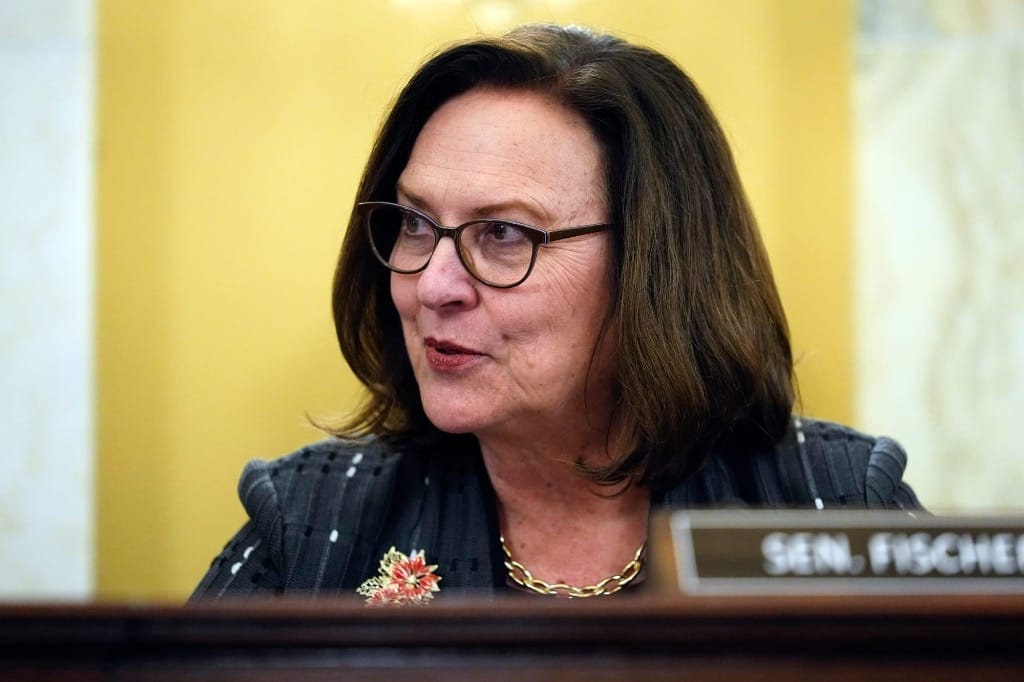
Sen. Deb Fischer, R-Neb., was not happy about the prospect of 7/8 GHz being under consideration. Fischer secured provisions that prevent the FCC from auctioning any 7.4-8.4 GHz spectrum, which is used by the military, as part of the budget bill passed in July.
The wireless carriers want the U.S. to advocate at WRC for licensed, mobile use in 7.125-7.4 GHz, while the cable industry wants the delegation not to take a position. The Commerce Department is currently studying the band for potential repurposing, and the White House has said it wants the spectrum for mobile use.
Despite the domestic disagreement on mobile spectrum, other witnesses said WRC-27 would largely be focused on satellite issues.
“China and other nations suffer from Starlink envy, fearing that U.S. commercial dominance will crowd them out of low-Earth orbit,” said James Lewis, a fellow at the Center for European Policy Analysis.
Michael Calabrese, director of the wireless future program at New America, said in his written testimony that agenda item 1.4 would be important as it proposes opening more spectrum for direct-to-cell satellite service. SpaceX is looking to launch up to 15,000 new satellites to support its direct-to-cell Starlink Mobile service.
The item “opens the door to additional, and potentially globally-harmonized, [mobile-satellite service] spectrum that can be used by satellite providers on a significantly less constrained basis to innovate and provide more commercially available direct-to-device mobile connectivity to consumers,” he wrote.
There are also issues that aren’t formal agenda items but should be a focus of the U.S. delegation, like international satellite spectrum sharing rules that SpaceX says hamper its broadband service. The FCC is considering changing the rule for U.S. operators unilaterally, something New America supports.
“It remains possible to modernize satellite spectrum sharing rules at WRC-27, but this will require a focused U.S. effort,” he said.




Member discussion