Virginia Democrat Urges Spanberger to Resolve Pole Disputes
The governor can use existing rules to make BEAD funding accessible, the Democrat says.

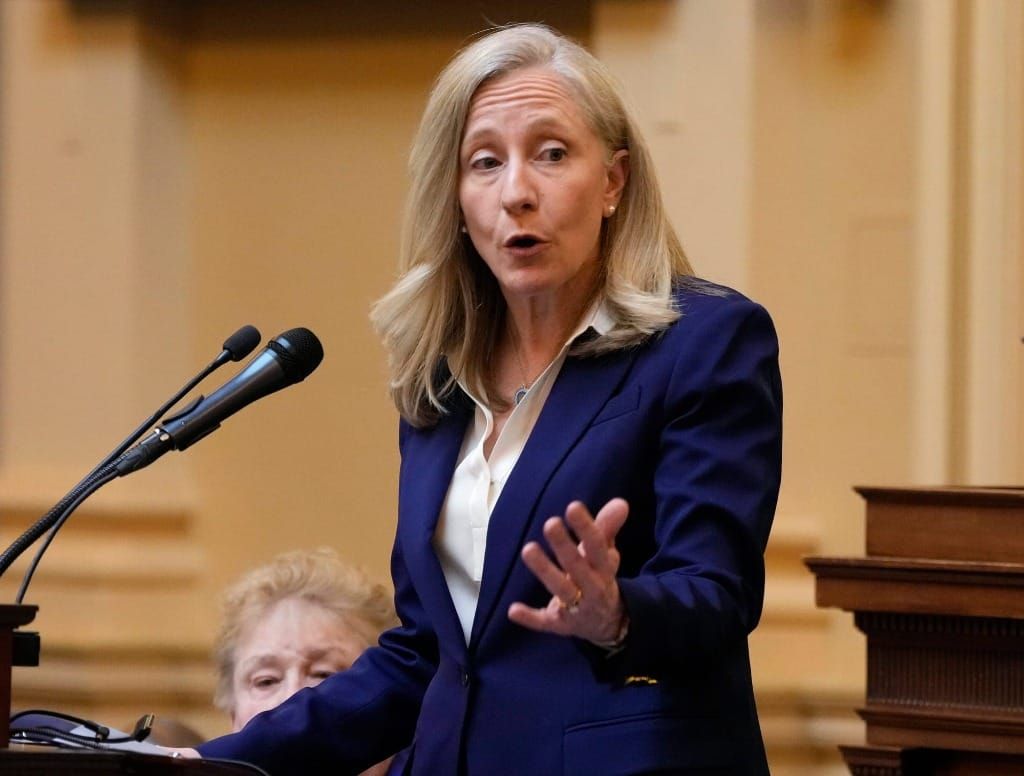
WASHINGTON, May 28, 2026 – Virginia Democrat Lynlee Thorne, a resident of rural Virginia and political director of Democratic PAC Rural GroundGame, is urging Governor Abigail Spanberger (D) to enforce rules on utility poles in an effort to make federal funding for broadband deployment payoff sooner rather than later.
The state has received more than $545 million in funding and is investing another $750 million in connectivity. However, the Virginia government has yet to deliver connections to some rural communities because of disputes over utility poles. In Virginia, Comcast was given $126 million in Broadband Equity, Access, and Deployment Program (BEAD) money to help connect 13,000 locations.
When Comcast tried to attach fiber to Appalachian Power poles, a subsidiary of the Ohio-based American Electric Power Company, AEP demanded that Comcast pay to replace poles that had preexisting safety conditions.
Massive delays have occurred, with Comcast complaining to the Federal Communications Commission that Appalachian Power demanded broadband providers pay 20%-100% of pole repair costs. Meanwhile, broadband construction to 13,000 unserved and underserved locations in Virginia is jeopardized.
Thorne is urging Spanberger to enforce existing rules. This includes clarifying that utility partners should follow the FCC’s cost-causation standards. Thorne said in an Op-Ed in the Richmond Times Dispatch, “No passing your (AEC’s) deferred maintenance costs onto broadband builders and eventually onto consumers.”
Thorne is also encouraging the State Corporation Commission to treat the unresolved pole dispute as an infrastructure emergency. In addition, she is urging the governor to work with federal partners for flexibility in BEAD funds to address pole-related costs and clarify repair responsibilities.
“None of this requires new technology or a new law. It requires accountability. It requires making sure the rules that exist actually get enforced,” Thorne said.
The BEAD Program is a $42.5 billion federal grant program that is designed to bring high-speed internet to every American. The funding is distributed through the National Telecommunications and Information Administration by funding partners that help build infrastructure.
Lawmakers and experts question whether the federal government's cyber defense agency can recover from losing roughly one-third of its workforce.
The 'first-in-the-nation law' is aimed at enhancing transparency, and signed by Gov. Kathy Hochul in December, it took effect Tuesday.
Fable 5 and Mythos 5 offline as company complied with a directive from the Trump administration to prevent tool's use by foreign nationals.
Also, pro-CBRS groups released a report highlighting deployments in the band.