
Wireless, Aviation Industries Still Disagree on Some Proposed Upper C-band Rules
The mobile carriers said proposed FAA rules were too restrictive.

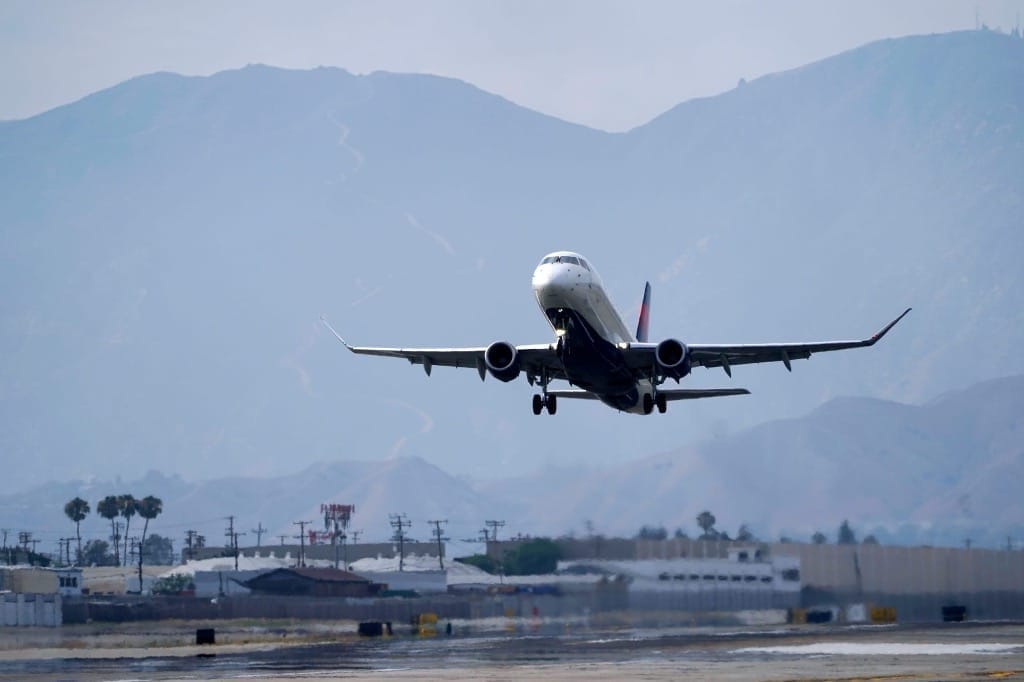
WASHINGTON, March 19, 2026 – The wireless and aviation industries are still at odds on some parts of the government’s plan to open the upper C-band up to mobile carriers.
CTIA, the major wireless industry group, told the Federal Aviation Administration last week that its proposed operating standards were too conservative in estimating next-generation airplane gear’s tolerance to 5G use in adjacent spectrum, an issue it’s raised before. Existing altimeters, critical instruments that measure a plan’s altitude, will have to be replaced for upper C-band spectrum to be used, and CTIA wanted priority aircraft finished by 2029.
The aviation industry, for its part, sided with the FAA on its safety analysis.

“The assumptions underlying this analysis must be consistently applied and mutually recognized by both the FAA and the FCC when finalizing their respective rules,” several aviation industry groups, associations, and companies said in a joint filing.
The FAA received last week comments on its proposed requirements for the next generation of altimeters, which will be able to handle mobile operations in adjacent spectrum in a way current gear can’t.
The groups also proposed an initial deadline for altimeter replacements in mid-2032. They said the process might not be fully complete until 2034, but that companies were working to develop a faster timeline “assuming financial incentives are available.”
CTIA said there was much agreement between the mobile and aviation industries on coexistence, but the sides disagreed on multiple assumptions the FAA used in its safety analysis. CTIA thought they went beyond a worst-case scenario and were essentially adding technical restrictions without a corresponding safety benefit, and airlines and others saw the parameters as necessary to ensure aircraft were completely safe. CTIA urged the agency to loosen some parameters.
“These adjustments would avoid a poor technical and policy outcome that risks overburdening the Upper C-band licensees and manufacturers with unnecessarily restrictive technical requirements,” the group wrote.
Under the July budget law, the Federal Communications Commission has to auction at least 100 megahertz in the upper C-band by July 2027. The agency is considering selling off as much as 180 megahertz, but the main incumbent satellite company has said the agency should stop at 160 megahertz.
The band, at 3.98-4.2 GigaHertz (GHz), is adjacent to spectrum used by altimeters. The current equipment won’t work properly with any 5G use in the upper C-band, which is why they’ll need to be replaced with next-generation gear that can accommodate more interference.
The aviation industry groups said those replacement costs could total anywhere from $4.5 billion to $7 billion, and more than 58,000 units would ultimately need to be replaced.
Groups representing airlines and others also asked the FAA to extend commitments wireless carriers made to ensure airports were not affected by lower C-band interference until the initial compliance deadline for altimeter upgrades. If not extended, the protections would expire in January 2028.
“Without an extension of the temporary mitigation measures, the 5G networks in the Lower C-Band will create safety risks and jeopardize continued air service at 188 airports,” the American Association of Airport Executives wrote. “Extension of these measures is vital to permanently addressing the risks posed by advanced wireless signals in the Upper C-Band and Lower C-Band to radio altimeters and aviation safety.”





Member discussion