
Wisconsin Town Votes to Restrict Tax Incentives for OpenAI Data Center
The referendum reflects growing local backlash to large-scale AI infrastructure projects.

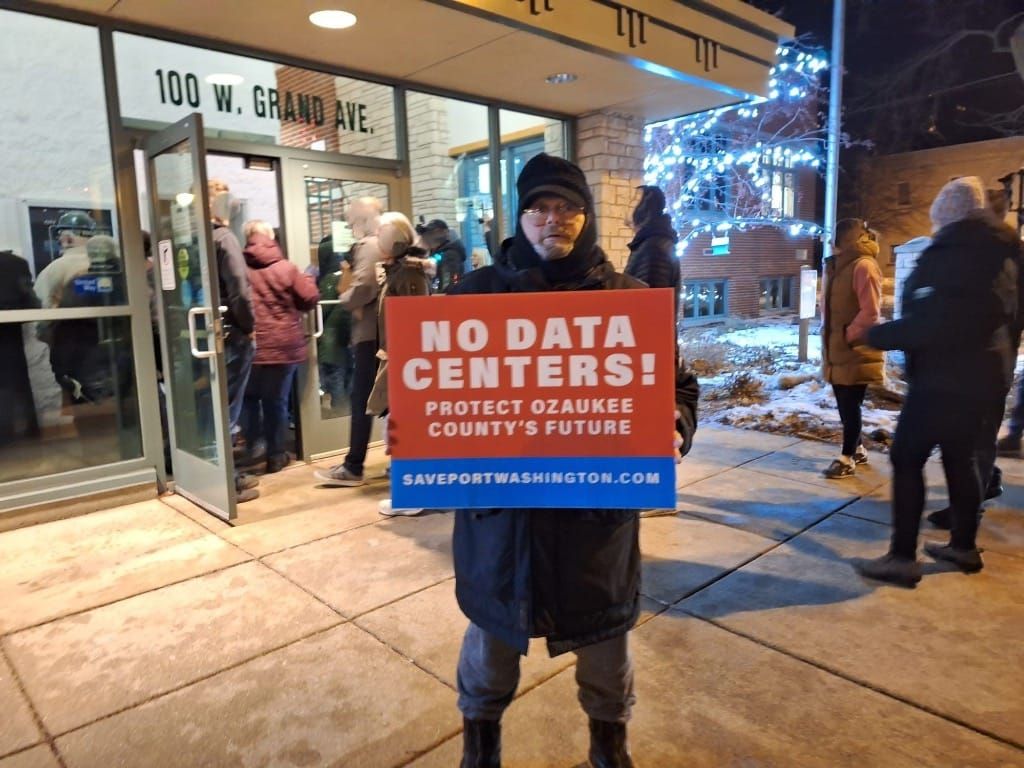
April 8, 2026 – Residents of Port Washington, Wisconsin, voted to limit local officials’ ability to grant tax incentives for large development projects, triggered by a proposed $15 billion data center backed by OpenAI and Oracle.
The referendum, which passed Tuesday, requires city leaders to obtain voter approval for future projects worth more than $10 million before offering tax incentives to developers.
The measure was driven by plans to build a 1.3-gigawatt artificial intelligence data center campus tied to the Stargate project, a $500 billion initiative led by OpenAI, SoftBank, and other key technical partners to build massive AI data center infrastructure in the U.S., backed by President Donald Trump.

The referendum passed Tuesday with 2,710 votes of approval compared to 1,371 in opposition. More than 50 percent of the 8,257 registered Port Washington voters voted in the election.
Supporters of the referendum said the measure ensures transparency and community input.
“Tonight, democracy worked the way it’s supposed to,” said Christine Le Jeune of Great Lakes Neighbors United, a local advocacy group. She noted that more than 1,000 residents signed the petition to place the measure on the ballot.
Carri Prom, a Port Washington resident, said the vote does not signal opposition to development broadly. “We are for development that the community understands, supports, and has chosen together,” she said.
Oracle said project would contribute $175 million towards infrastructure upgrades
Developers and project backers have emphasized the economic benefits of the proposed campus. Oracle has said the project would contribute $175 million toward local infrastructure upgrades, including water and wastewater systems, and generate more than 4,000 construction jobs and 1,000 permanent positions.
But opponents have raised concerns about noise, water usage, energy demand and potential increases in utility costs.
While the referendum passed Tuesday won’t necessarily derail the Stargate data center, it will allow residents to potentially obstruct future projects by requiring city leaders to obtain voter approval before awarding developers tax incentives.
The Port Washington vote reflects a broader national tension as communities grapple with the rapid expansion of data centers needed to support artificial intelligence and cloud computing.
In Indianapolis, opposition to data center projects has escalated, with a local official’s home targeted in a shooting incident this week, accompanied by a note reading “NO DATA CENTERS.”
At the same time, some policymakers are framing data center development as a strategic imperative. Nebraska Gov. Jim Pillen, R, described large-scale computing facilities as essential to economic and national security interests.
“The facilities of the future, let’s call them ‘AI factories,’ are critical not just for our information economy, but for our national security,” Pillen said. “We simply can’t lose them to our foreign adversaries.”
As demand for digital infrastructure grows, local resistance could shape how, and where, future projects move forward.







Member discussion