
WISPA Urges NTIA to Stop States’ Unfair BEAD Requirements
Trade association accuses some states of 'unreasonable and unnecessary obstacles'

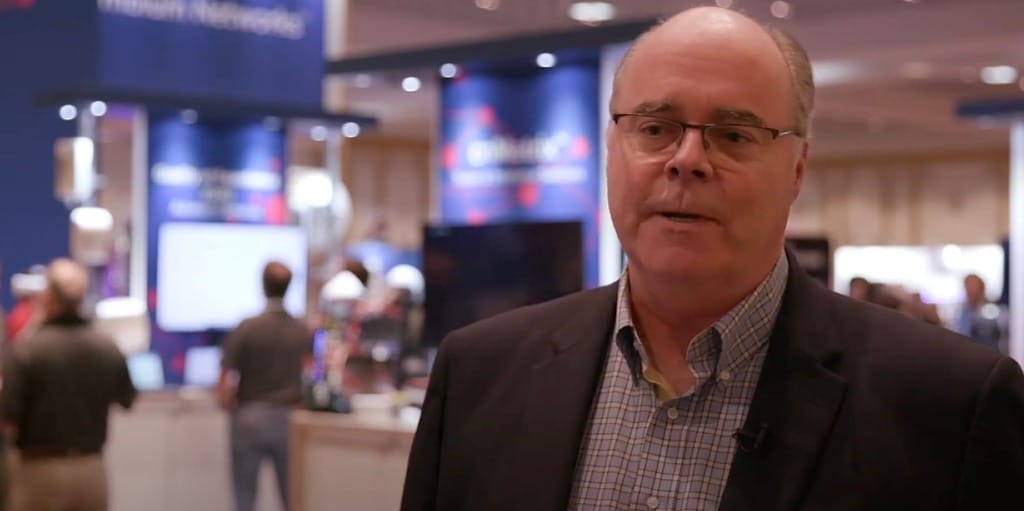
WASHINGTON, June 23, 2025 – WISPA President and CEO David M. Zumwalt on Friday urged the National Telecommunications and Information Administration to prohibit states from imposing unreasonable requirements on unlicensed fixed wireless providers during the rollout of the Broadband Equity, Access, and Deployment Program.
In a letter addressed to Adam Cassady, principal deputy assistant secretary and deputy administrator at the NTIA, WISPA accused three state broadband offices of “creating unreasonable and unnecessary obstacles” that make it challenging for unlicensed fixed wireless operators to meet the seven-day deadline for submitting technical evidence required by NTIA’s new June 6 BEAD guidelines.
WISPA, a trade association representing small wireless ISPs, condemned the Idaho Office of Broadband for its excessive requirements placed on unlicensed fixed wireless.

FROM SPEEDING BEAD SUMMIT
Panel 1: How Are States Thinking About Reasonable Costs Now?
Panel 2: Finding the State Versus Federal Balance in BEAD
Panel 3: Reacting to the New BEAD NOFO Guidance
Panel 4: Building, Maintaining and Adopting Digital Workforce Skills
In particular, WISPA cited a draft notice from the Idaho Office of Broadband that would “require ULFWs to conduct extensive performance (speed and latency) testing ‘for each location selected by ADECA.’” WISPA criticized the notice for its vagueness, stating it fails to define the acronym, “ADECA,” puts no limit on the number of locations that must be tested, and does not provide a timeline for when the locations must be disclosed. WISPA suggested that “ADECA” might refer to the Alabama Department of Economic and Community Affairs – an agency irrelevant to the Idaho broadband office.
Turning its focus to New Mexico, WISPA pointed out burdensome mandates imposed by the state broadband office. One mandate forces providers to manually record Broadband Serviceable Location data into an Excel workbook. According to WISPA, this process is "repetitive" and “not scalable for small ULFWs within the required time frame.”
To address these difficulties, WISPA advised the NTIA to permit ULFW providers to submit “existing BDC shape files along with sector coverage overlays and technical attestations, summarize propagation reports and equipment specifications that demonstrate compliance with BEAD technical criteria, without requiring manual BSL-level tabulation; and include as acceptable formats JSON, GIS shape files, or CSV outputs from vendor tools or CRM systems.”
WISPA also expressed skepticism of the Ohio broadband office, accusing it of wrongfully disqualifying valid provider coverage data to favor new fiber deployments – in a potential attempt to attract private equity investments.
“The evidentiary process that these states, and likely others, have implemented extend far beyond what NTIA contemplated in Appendix A of the Policy Notice,” WISPA stated. “[They] appear to be designed to ensure that ULFWs are unable to disqualify locations receiving 100/20 Mbps service. We urge your office to direct Eligible Entities to make appropriate changes, and to carefully examine and take action on notices from other Eligible Entities that appear biased against ULFW deployments.”
The letter concluded by seeking clarification from NTIA regarding the new BEAD requirements:
- Will locations depicted as “served” by satellite on the Fabric be available for BEAD funding?
- What is the “most recent version of the Fabric?”
- How does NTIA define “support 5G?”
With states having more control under the new BEAD guidelines, WISPA emphasized the need for clear guidance and instructions from NTIA.






Member discussion