
With Anti-DEI Commitments in Hand, FCC Approves AT&T-UScellular Spectrum Sale
AT&T bought 3.45 GHz and 700 MHz licenses for about $1 billion.

Jake Neenan
WASHINGTON, Dec. 3, 2025 – The Federal Communications Commission approved Wednesday AT&T’s $1 billion purchase of spectrum from UScellular.
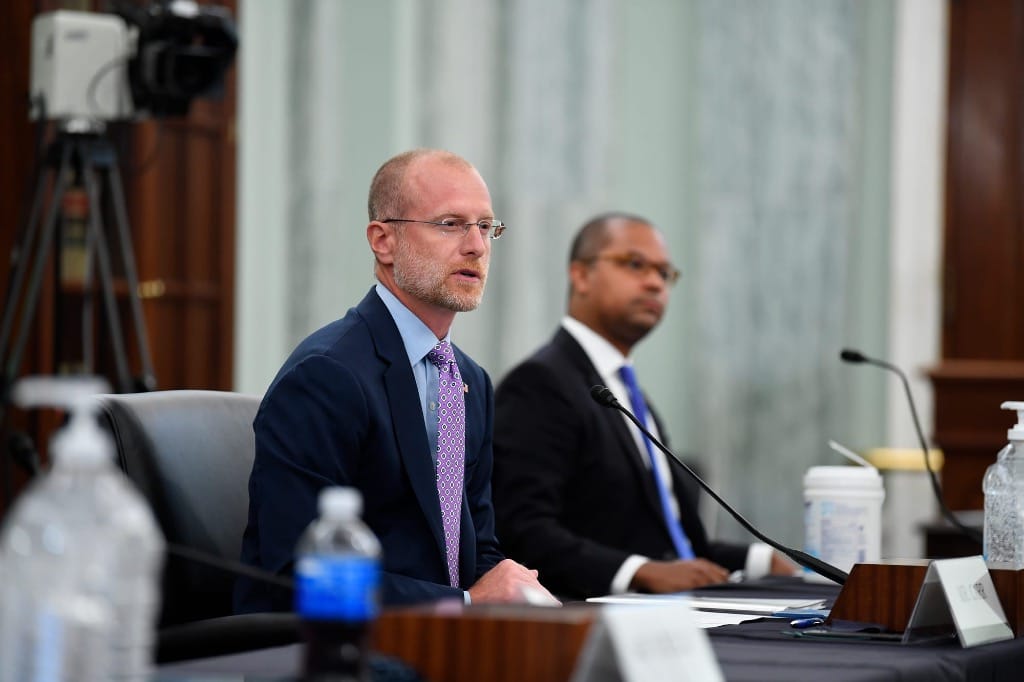
The approval came two days after AT&T sent the agency a letter committing to ending various diversity initiatives, something FCC Chairman Brendan Carr has made clear is a requisite for getting transactions cleared. Carr posted the letter on X Tuesday.
“We accept AT&T’s commitments as firm and definite, and expect that these changes will prevent DEI discrimination in the post-transaction company, as consistent with the law and the public interest,” the FCC wrote in its order blessing AT&T’s spectrum purchase.
AT&T is buying up to 40 megahertz of spectrum in the 3.45 GigaHertz (GHz) and up to 24 megahertz in the 700 MHz band, in all covering about 12 percent of the population, from UScellular.
UScellular is now Array Digital Infrastructure, after selling its mobile operations and a chunk of spectrum to T-Mobile. As part of the transition, Array is also selling spectrum to Verizon in a deal that has yet to be approved.
Consumer advocates and rural carriers had opposed the deal, calling it anticompetitive, and asked the FCC only to approve it with strings attached. They had also asked the FCC to consolidate its review of Array’s spectrum sales to the three major carriers, characterizing the deals as dominant companies carving up a competitor and further edging out smaller companies.
The agency said that it had already evaluated impacts of UScellular’s market exit when it approved the T-Mobile deal this summer. It also disagreed that the AT&T sale would result in an anticompetitive aggregation of spectrum.
“What matters is whether consumers benefit from greater availability, better quality, and more innovative services as a result of the Commission’s decisions,” the agency wrote in its Wednesday order. “Based on the record, we disagree with Petitioners that this spectrum assignment will harm consumers or competition.”
The agency continued:
“Given the current levels of spectrum attributed to rival service providers and the fact that additional spectrum will be auctioned off in the near future, we find it unlikely that the acquisition of spectrum by AT&T in this transaction would allow it to foreclose entry, raise rivals’ costs, or otherwise harm the public interest in the local markets at issue.”
“Finally, broader concerns about spectrum aggregation limits and concentration among entities are more appropriately addressed in a rulemaking proceeding and not an individual transaction.”
AT&T and Array had argued the deal would increase competition by making AT&T’s mobile and fixed wireless services better, something the agency said it agreed with.
“We recognize the potential of this additional bandwidth to provide additional 5G network capacity, and we substantially credit Applicants’ claimed benefits that the transaction would result in faster 5G speeds for customers and improved and expanded products and services in the markets subject to the transaction,”
The FCC granted AT&T a waiver exempting it from the agency’s spectrum aggregation cap in the 3.45 GHz band, intended to promote competition. The cap was set to expire in 2026, and the agency said there wasn’t much point in making AT&T wait another month.
The agency had been asked by two attorneys currently suing Array for fraud to put its review of the deal on hold. The attorneys, Mark O’Connor and Sara Leibman, a former FCC lawyer, said Array doesn’t meet the character qualifications necessary to hold and sell licenses.
The two made similar claims around the T-Mobile deal. The FCC said Wednesday that as O’Connor and Leibman made identical arguments, it would side against them in the AT&T deal as well.
In court, Leibman and O’Connor are arguing that two smaller companies that received bidding discounts in FCC spectrum auctions were essentially puppets of Array, allowing the company to buy spectrum at a lower price than it could have by bidding itself. Some of that spectrum is now being sold to AT&T, worth about $232 million of the total in Array’s estimation.
Multiple cases are working their way through the courts. Array told the Supreme Court last week not to grant the attorneys’ request to review a D.C. Circuit case siding with the company.
AT&T is also looking to buy $23 billion in spectrum from EchoStar, and Lumen’s consumer fiber business. The other major carriers, T-Mobile and Verizon, have sent their own letters to the FCC disavowing DEI in exchange for other merger approvals.
Democratic FCC Commissioner Anna Gomez, who has been critical of the policy, posted Tuesday that “Companies should remember that abandoning fairness and inclusion for short-term gain will be a stain to their reputation long into the future.”


Member discussion