
Advocates Push to Rebuild a Permanent Federal Broadband Subsidy
Calls mount for a modernized Universal Service Fund to address broadband affordability

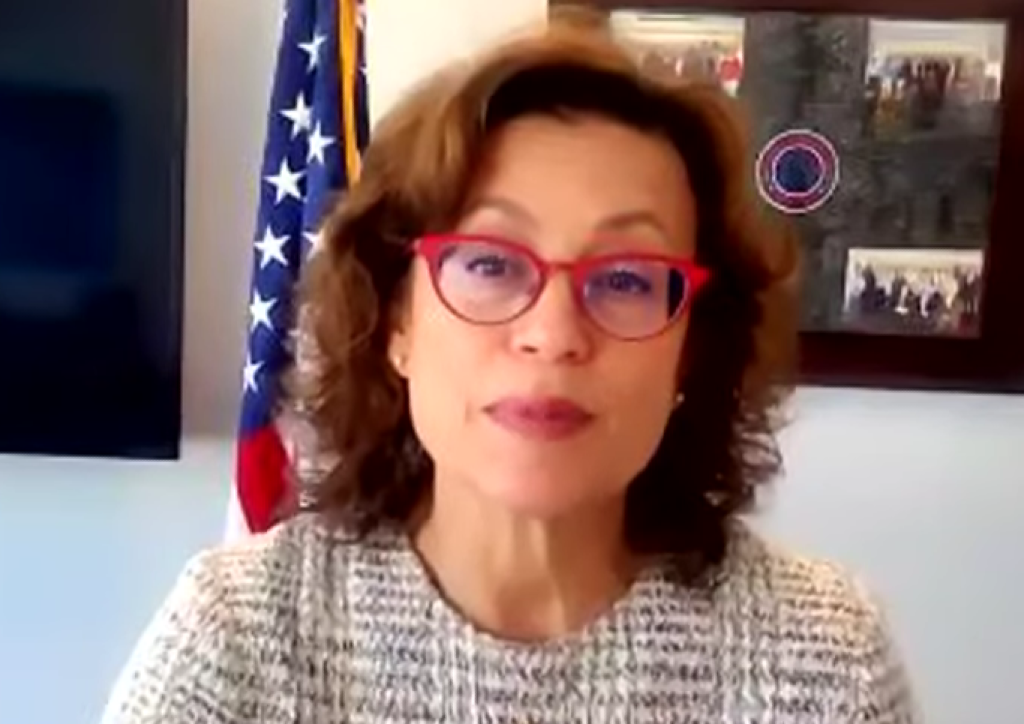
WASHINGTON, Oct. 9, 2025 – FCC Commissioner Anna Gomez called on Congress to ensure affordability remains central to reform of the Universal Service Fund.
“Only Congress has the authority to change the Universal Service Fund in a durable, forward-looking way that can withstand legal challenges,” Gomez said. She spoke at an event Thursday hosted by Public Knowledge centered on advancing strategies for affordable broadband adoption.
“No matter what the solution is, I feel strongly that affordability should remain a central pillar, and any new funding mechanism should not adversely impact consumers,” the FCC commissioner said.
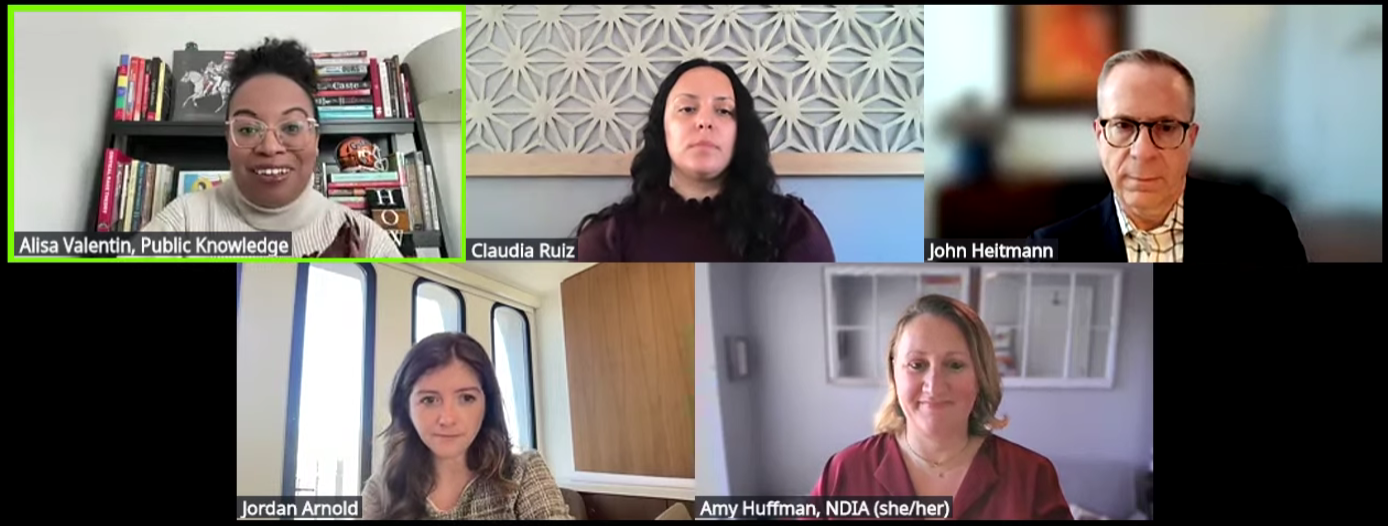
Representing the National Lifeline Association, John Heitmann, a partner at Nelson Mullins, urged Congress to overhaul the FCC’s decades-old Lifeline program into a modern affordability mechanism capable of replacing the expired Affordable Connectivity Program.
“Today, the ACP is gone and it's not coming back,” Heitmann said. “So we have Lifeline, I think it is our best chance of an affordability program … to address the digital divide.”
The $9 billion Universal Service Fund supports several long-running programs that expand access to communications services for low-income households, schools, libraries, and rural health facilities. Lifeline, one of those programs, provides a $9.25 monthly discount on phone or internet service for qualifying low-income consumers.
Heitmann argued the current $9.25 subsidy was outdated.
“When you have $9.25 to work with, that doesn’t give you a lot. You can’t go out and buy things for $9.25 today. You could in 2012, you certainly can’t today,” Heitmann said.
He said the $30 Affordable Connectivity Program subsidy “was enough to do something remarkable. It got fixed and wireless providers competing for the business of this consumer. That doesn't happen without government support.”
The National Digital Inclusion Alliance called for a permanent broadband subsidy in recent comments to the Senate USF Working Group, said Amy Huffman, the group’s policy director. Lawmakers are in the midst of efforts to modernize the fund.
“If we are really going to get at universal service, that includes making sure low-income households can get and stay online,” Huffman said.
“USF funds should be used to cover a reformed Lifeline program,” said PK’s broadband policy director Alisa Valentin. “That's something that Public Knowledge also agrees with.”
Jordan Arnold, research associate for the Benton Institute, who recently published a report on state affordability strategies, said several states have created their own universal service funds or expanded existing programs to complement the federal Lifeline benefit.
Oregon, for instance, recently passed legislation to raise its state Lifeline subsidy, she said, offering up to $15 per month in addition to the federal $9.25 discount. The new law added a one-time device benefit.
“We see a number of states have created their own state lifeline program that supplements the federal Lifeline program,” she said. “In a case like Oregon, you see the state trying to work towards something that maybe more closely resembles the ACP.”
States are “doing what they can,” Arnold said. But, “we still need a federal subsidy program like ACP to make sure that people who can't afford to pay anything can get an internet connection.”


Member discussion