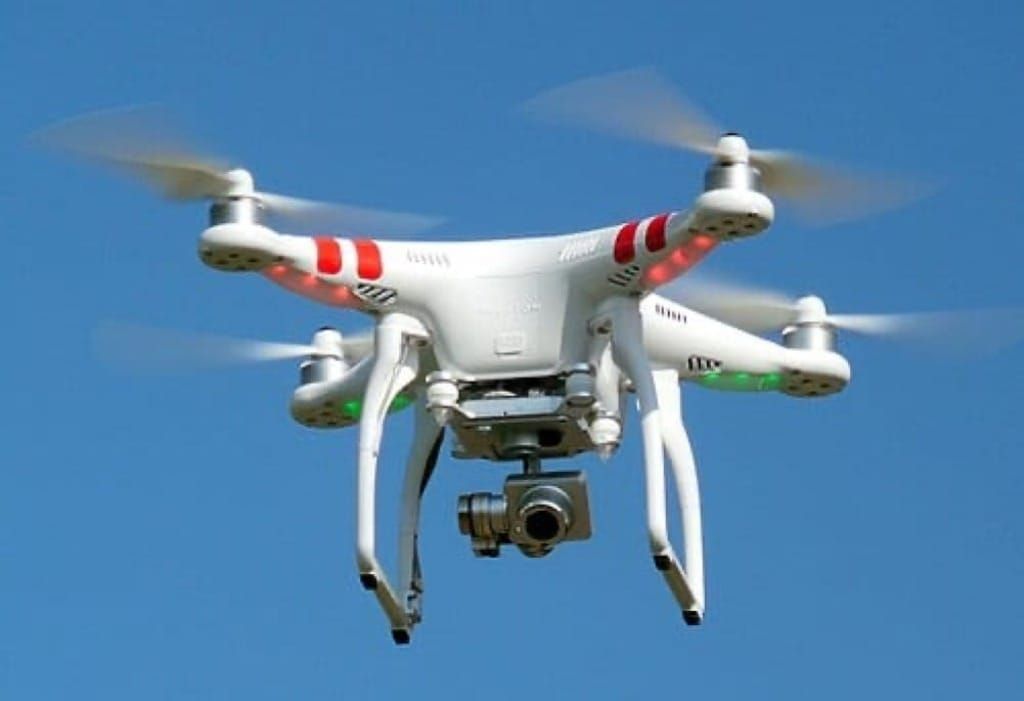
AI-Powered Drones to Reshape Economy and National Security
U.S. leadership will depend on spectrum access and domestic drone systems, FCC says.

Georgina Mackie
WASHINGTON, May 8, 2026 – Artificial intelligence-powered drones are becoming a critical layer of the U.S. digital economy, a federal regulator said Thursday.
Speaking at the AI+ Expo in Washington, Federal Communications Commission commissioner Olivia Trusty said American leadership will depend on spectrum access, secure communications networks and domestic drone production.
“Drones, when powered by AI, are becoming a new and intelligent layer of our digital economy,” Trusty said in remarks.
Drones combined with AI are already reshaping sectors including emergency response, agriculture, logistics and national security.
AI-enabled drones can help first responders assess disaster damage in real time, inspect infrastructure more efficiently and deliver medical supplies to hard-to-reach areas.
She also emphasized the growing military importance of autonomous aerial systems, saying drones are “maximizing our lethality and reshaping the strategic landscape across warfighting domains.”
Trusty argued that U.S. leadership in drones and AI will require accelerating commercial deployment, reducing reliance on foreign supply chains and expanding testing environments.
Her remarks come as the FCC faces growing debate over its ban of foreign made drones and drone components.
Public commenters have urged the agency to reconsider restrictions on Chinese drone manufacturer DJI, arguing the limits could harm public safety operations and small businesses that rely on the technology.
At the FCC, Trusty said the agency is focused on policies supporting domestic drone deployment, communications security and spectrum availability.
The FCC has increasingly framed drone policy around national security and supply-chain resilience. FCC Chairman Brendan Carr has identified securing a domestic drone supply chain as a key agency priority as policymakers push to reduce reliance on foreign-made systems.
Trusty also said reliable spectrum access will be essential.
“Without reliable access to spectrum, drones cannot communicate effectively, operate beyond visual line of sight, or scale from isolated use cases to widespread deployment,” Trusty said.