Anchor Institution Say Mission Endures as Policy Climate Shifts
Coalition leaders outline long-term strategy for the future of digital equity and inclusion.

Akul Saxena
ARLINGTON, Va., Nov. 1, 2025 — The Schools, Health & Libraries Broadband (SHLB) Coalition closed its annual AnchorNets conference here on Friday with a call for stronger mentorship and partnerships to advance digital equity even amid federal funding uncertainty.
Joseph “Joey” Wender, SHLB’s executive director, said the coalition had begun drafting a new three-to-five-year strategic plan focused on expanding its impact. “Momentum was on our side,” he said, citing the Supreme Court in Federal Communications Commission v. Consumers’ Research, in which SHLB participates, and new partnerships.
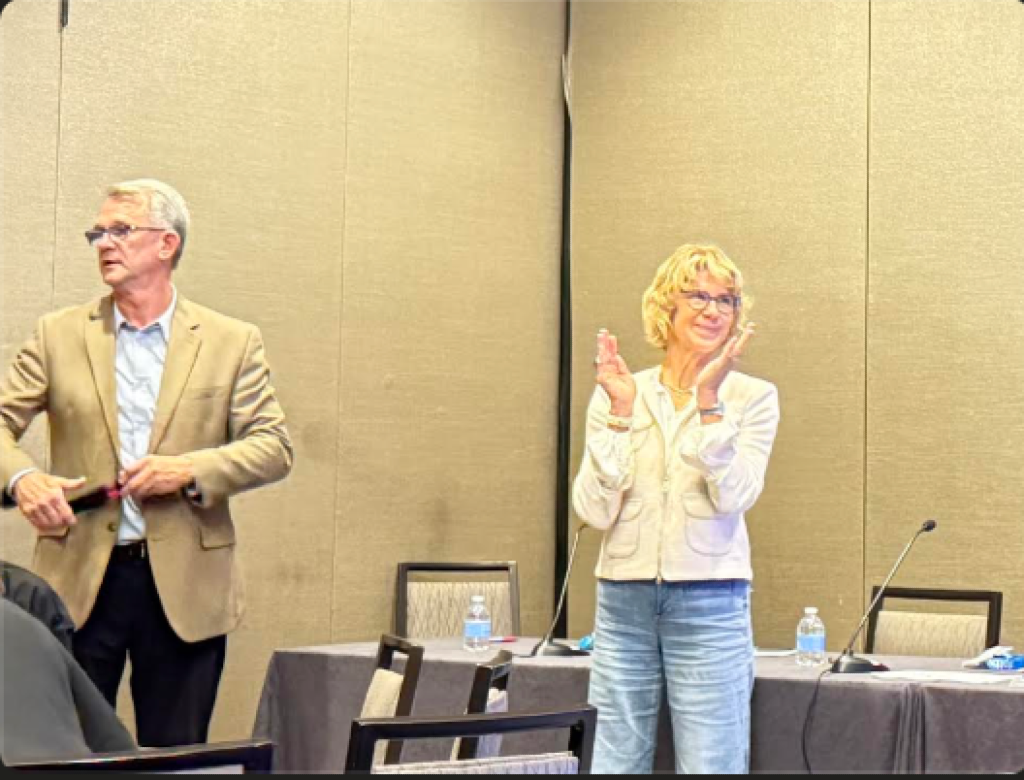
Cindy Aden, program chair at the University of Washington Information School, led the planning workshop and urged attendees to identify new audiences and measurable outcomes to guide SHLB’s next phase of advocacy.
SHLB is uniquely positioned to connect broadband policy to real-world access gaps, she said. “How could we talk about AI in education if students still didn’t have the connectivity they need to learn?”
Panelists said SHLB’s next chapter should emphasize outreach to smaller, rural, and under-resourced institutions.
One participant from West Texas described towns of just 700 to 11,000 residents where limited broadband access left students unfamiliar with modern workplace technology and disconnected from industry standards. Aden and others said those realities, where geography dictated opportunity, had to be reflected in federal and state broadband policy, not treated as anecdotal gaps.
From expansion to preservation
Kristen Corra, policy counsel at SHLB, said the coalition’s policy environment had shifted since the Biden administration, moving from expansion to preservation. “A few years ago, we were modernizing: adding hotspots, Wi-Fi on buses, and pushing future-focused rules,” she said. “Now we’re fighting to sustain what was built.”
Still, she said SHLB’s advocacy remained strong, pointing to durable partnerships with state broadband offices, anchor institutions, and education groups that “keep the mission alive, even as the funding climate changes.”
Philip Neufeld, executive officer for strategic research at the Fresno Unified School District, said practical resources, such as shared templates, case studies, and baseline connectivity standards would help small districts advocate more effectively at local school boards.
The West Texas participant added that “when you have clear benchmarks, you gain confidence in front of the school board, and confidence drives investment.”
Wender closed the session by urging members to continue sharing data and stories that link connectivity and measurable outcomes. This coalition’s strength, he said, is in the voices it brings together.
Member discussion