8 Years After Its Founding at Mobile World Congress, Can Open RAN Scale?
Although it didn’t originate that way, O-RAN has become seen as an ‘anti-Huawei’ alliance. It stands to gain as U.S. and Europe are mandating removal of Chinese telecom equipment


Drew Clark, Akul Saxena
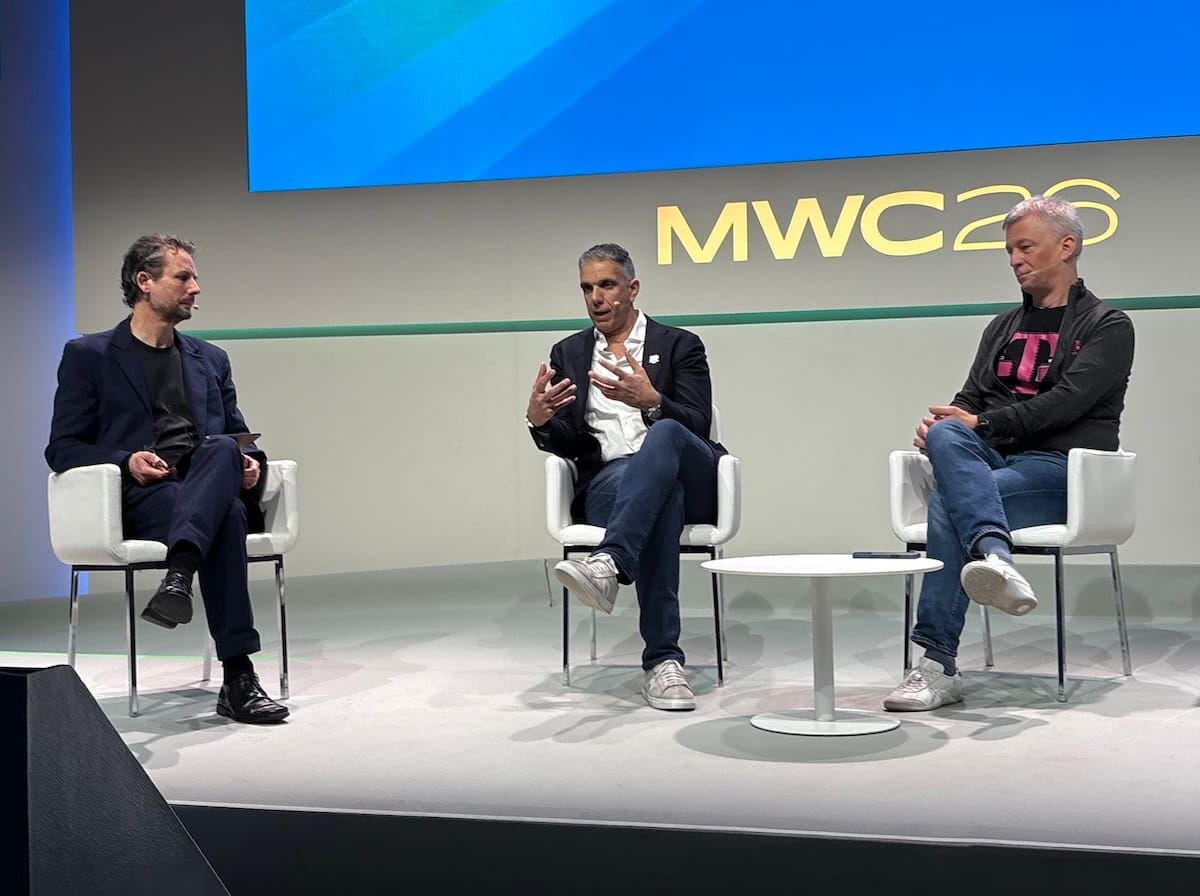
BARCELONA, March 10, 2026 — For decades, mobile operators had little choice in how they built their networks. A handful of equipment vendors controlled the entire stack – radios, software, and the interfaces between them – leaving carriers dependent on whichever supplier they had chosen and unable to mix components from competitors.
That changed in February 2018, when five of the world's largest mobile operators founded the O-RAN Alliance at the Mobile World Congress (MWC) that year. The founding members – U.S.-based AT&T, China Mobile, Deutsche Telekom, Japan-based NTT DOCOMO, and France-based Orange – advocated for open, interoperable mobile networks, in which hardware and software from different vendors can be mixed and matched instead of purchased as a single proprietary system. The approach, they argued, would drive down costs, accelerate innovation, and reduce dependence on any single supplier.
Eight years in
Eight years later, advocates of the movement said on March 3, at the 2026 O-RAN Alliance Summit, that one of its most ambitious bets has paid off. Rakuten Mobile, the Japanese carrier that built the world's largest fully open, cloud-native mobile network from scratch, reported its first annual profit last year. The network now serves 10.2 million subscribers across 350,000 cells built on disaggregated, multi-vendor infrastructure.
The network now serves 10.2 million subscribers across 350,000 cells built on disaggregated, multi-vendor infrastructure. The O-RAN Alliance, the standards body that coordinates the global push toward open mobile networks, marked eight years since its founding at this same conference.
The question facing the movement has shifted, panelists said. It is no longer whether open, disaggregated networks can work. It is whether they can scale, stay open under geopolitical pressure, and deliver returns before the industry moves on to 6G.
The alliance has now published 147 technical specifications and counts more than 1,600 active contributors. Deployment is accelerating across major markets. AT&T, the Dallas-based telecommunications carrier, is moving from planning into full Open RAN deployment across the United States, said Rob Soni, the company's vice president of RAN technology, speaking at MWC.
Deutsche Telekom is on track to deploy 3,000 Open RAN sites in Germany alone by next year.
Thomas Lips, chair of the alliance's governing board and senior vice president of RAN disaggregation and enablement at Deutsche Telekom, said a component-based request for proposals covering all of the company's European markets is now underway. The alliance published its first 6G work items in February, Lips said, and early 6G deployments could arrive as soon as 2028.
Does O-RAN benefit from a push against Chinese-made telecom equipment?
When asked whether government-mandated removal of Chinese equipment from telecom networks helps or hinders the Open RAN mission, the panel divided. The United States had pursued such removals through “rip-and-replace” funding, federal financing that reimburses carriers for removing equipment from vendors deemed national security risks, primarily Huawei and ZTE. European cybersecurity authorities have moved toward similar requirements in recent months.
Sudhakar Pandey, head of radio access networks at Rakuten Mobile, said more governments should back Open RAN deployment directly. Consistent public investment, he said, is what new infrastructure technologies require to reach scale.
Soni said AT&T would not take a position on whether geopolitical fragmentation helps or hurts open networks, but said a diversified, open supply chain is itself the answer to vendor dependency.
Ari Kynäslahti, senior vice president and mobile networks chief technology officer at Nokia, the Finnish telecommunications equipment manufacturer, pointed to ongoing work in 3GPP, the international technical standards body that governs 4G, 5G, and their successors, as evidence that the global engineering community remains unified despite political tensions.
"If I look at the actual work happening right now in 3GPP, everybody has their hands dirty working on the next generation of standards together," Kynäslahti said. "I don't see bifurcation there."
Sadayuki Abeta, chief Open RAN strategist at NTT DOCOMO, the Japanese mobile operator and one of the alliance's five founding members, said technical specifications remain consistent globally. Vendors are carrying the same solutions across European, American, and Asian markets regardless of which governments are restricting which equipment, he said.
Henrik Jansson, vice president and head of North America business development at Samsung Networks, the network infrastructure division of the South Korean electronics company, said fragmentation hurts the industry broadly. Open interfaces, he said, reduce the kind of single-vendor dependence that makes supply chain fragmentation dangerous in the first place.
"Fragmentation doesn't help," Jansson said.
Beyond the geopolitical debate, the technical frontier of Open RAN has shifted. The front haul interface – the connection between radio units and baseband processing equipment – is largely a solved engineering problem.
The new frontier: Interoperable telecom software
The new focus, driven by the maturation of front haul integration and the rising complexity of AI-driven network management, is the Service Management and Orchestration layer, known as the SMO. The software platform coordinates network functions, manages automation, and hosts third-party applications that can optimize everything from energy consumption to antenna positioning.
Ericsson and Nokia announced an agreement this week to open their respective SMO platforms to each other's third-party optimization applications. The combined ecosystem now reaches roughly 90 vendors, said Gabriel Foglander, head of strategic RAN leadership at Ericsson.
Deutsche Telekom and Vodafone, the London-based telecommunications operator, have taken different approaches to the SMO. Deutsche Telekom is building its own in-house platform, giving it direct control over how artificial intelligence applications are integrated and how network capacity is allocated to specific customers or use cases in real time. Vodafone selected its SMO vendor through a competitive procurement process, prioritizing scale and industrialization over customization.
The race to 6G
Kanika Atri, senior director of telecoms at Nvidia, the California-based semiconductor and AI company, said the industry is moving from basic network automation toward genuine autonomy - systems that self-configure, self-optimize, and self-heal with minimal human intervention.
Nvidia announced this week the open-source release of the first large telco model, an artificial intelligence system trained on telecommunications network data. The model was made available through the GSMA Telco AI Initiative, the mobile industry association's artificial intelligence program.
Yigal Elbaz, senior vice president and network chief technology officer at AT&T and a founding board member of the O-RAN Alliance, said the pace of technological change now demands that the alliance move faster than standards bodies traditionally have.
"There's a new foundational model drawn on us every three to four weeks," Elbaz said. "We cannot allow ourselves to spend weeks, months, and years agreeing on a specification.”
Lips said the work ahead is less about proving that Open RAN functions and more about closing remaining specification gaps. That includes advancing massive MIMO, the antenna technology that concentrates radio signals toward individual users, versus broadcasting broadly. The architecture being built for 5G, he said, must serve as the foundation for 6G from the first day of standardization.
"6G is coming," Lips said. "And it's faster coming than most of us would admit."