
Arielle Roth Says NTIA Won’t Allow State Rules to Undermine BEAD Success
NTIA Administrator Arielle Roth was also questioned on screen time use in schools.

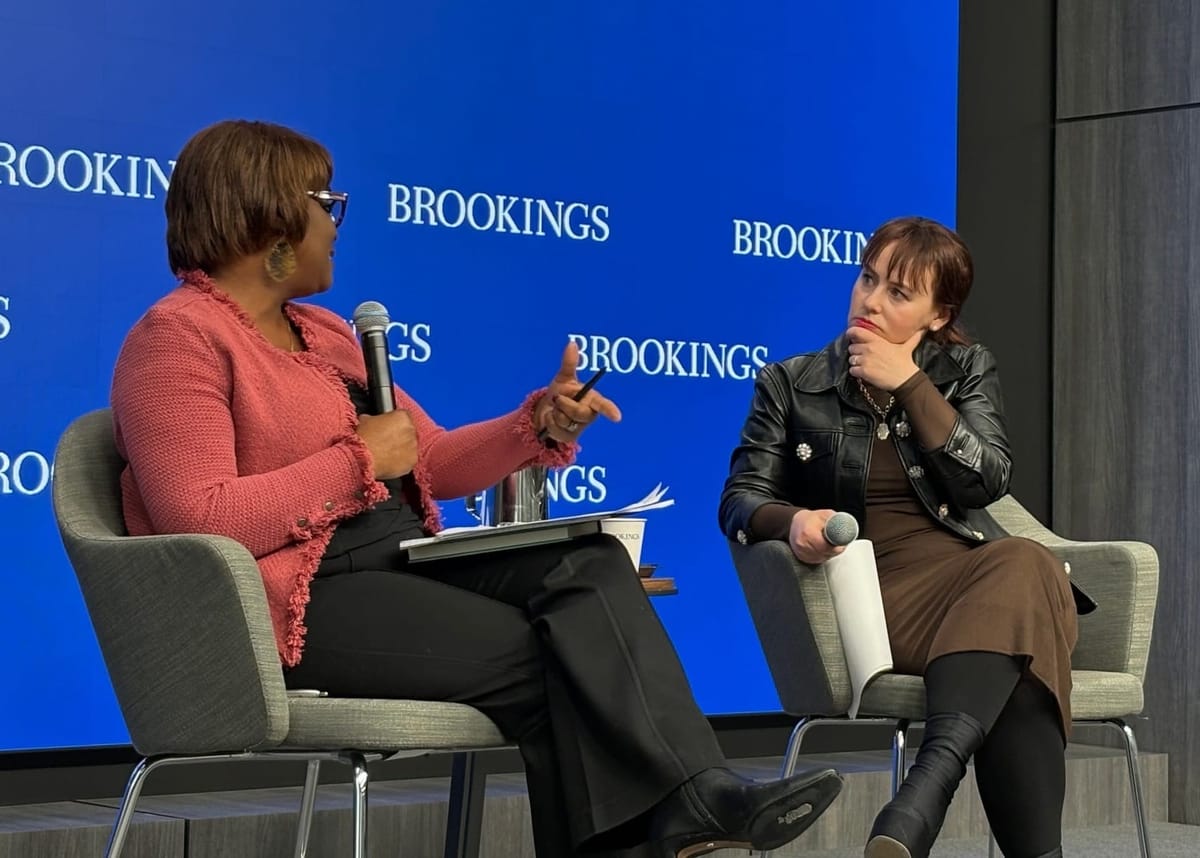
WASHINGTON, Feb. 13, 2026 – The National Telecommunications and Information Administration has been “very clear” with states that they cannot impose untested regulations on providers because it could “undermine the success” of broadband projects, said agency Administrator Arielle Roth.
Following Roth’s Monday announcement at the State of the Net Conference that six additional states and territories gained BEAD approval, on Thursday she emphasized the need to ensure program success, something that she said hasn’t been consistent in the past.
She stressed the need for a “hospitable permitting environment” that will allow projects to be delivered efficiently without being slowed down.

“The previous administration was really focused on one technology, universally and maximizing only that technology, whereas our focus has been on universal broadband access, getting every single last American connected,” Roth said. “And that’s what we’re on track to do.”
NTIA’s number one priority has been ensuring universal broadband access and closing the digital divide, Roth said at the Brookings Institution in her conversation with the think tank’s Nicol Turner Lee.
Concerns about excessive screen time
She also said another priority of hers has been the concern surrounding “excessive screen time” use among children.
Roth said connectivity and technology have become the norms in the development of education. She said she had grown skeptical of Ed Tech, and whether it was serving children’s best interests.
In her role at NTIA, Roth is continuing to navigate what she sees as a complex topic to ensure technology use in education is thoughtful and intentional, instead of automatic.
Real-world scenarios
Turner Lee posed a real-world scenario, wondering if there might be an exception to technology use in schools. In Turner Lee’s visit to Maricopa County, Arizona, she asked a teacher why all the elementary school students were allowed to have or carry their cell phones in school, a sight that initially shocked her.
Turner Lee said the teacher told here that the children had parents that could be deported, making it important to have a phone at all times.
With this, Turner Lee asked Roth if there might be exceptions to what could be seen as excessive screen time use.
Roth said these were interesting questions that are important to consider, especially when it comes to the effects on “disadvantaged low-income children.” She said it’s important to keep in mind that children grow up with different backgrounds, making it an issue that is “certainly front of mind for us.”
“These are really hard questions,” she added. “And I think it’s really important that we grapple with them rather than resorting to simplistic assumptions that more is always better.”








Member discussion