
Array Says Whistleblowers Shouldn’t Be Able to Sue Under False Claims Act
Three Supreme Court justices have said there are 'substantial questions' on the issue.

Jake Neenan
WASHINGTON, Jan. 23, 2026 – Federal judges should find that whistleblowers can’t sue for fraud under the False Claims Act, Array Digital Infrastructure argued Thursday.
An AT&T subsidiary has made a similar argument, and three conservative Supreme Court justices have signalled they’re open to it.
Array, which went by UScellular until it sold its wireless operations to T-Mobile, told a U.S. District Court for the District of Columbia judge that she should dismiss a fraud suit against the company partly because the whistleblowers bringing the suit shouldn’t be able to sue in the first place.
The company said the False Claims Act, which mandates higher damages for fraudulently seeking government cash, violated the U.S. Constitution by allowing private parties to sue under the law and effectively act as “officers of the United States.”
Those have to be officially appointed, usually by the president or head of an agency.
“Here, Relators were not appointed through any of these modes. Accordingly, they cannot validly exercise the law enforcement power of the United States,” the company wrote. “The proper remedy, therefore, is to dismiss this case.”
Years-long legal battle
Array has been in a years-long legal battle with two attorneys, Mark O’Connor and Sara Leibman, a former FCC lawyer, who allege the company used subsidiaries to improperly obtain small business credits and buy spectrum for less money than it could have by bidding directly. The company denies this, and the Federal Communications Commission hasn’t been dissuaded by the issue from approving Array’s billion-dollar spectrum and wireless business sales.
“The Department of Justice and the FCC have repeatedly investigated these claims, over the course of many years, and each time have declined to take any action against Defendants,” the company argued Thursday. “It could not be clearer that the FCC – the supposed victim of the scheme – is done with these claims.”
Leibman and O’Connor had a second, similar FCA case against Array that ended when the Supreme Court recently refused to review a decision dismissing it. The D.C. District Court case was revived in October by the same D.C. Circuit panel that dismissed the other suit.
An AT&T subsidiary has also argued the False Claims Act provisions allowing whistleblowers to sue are unconstitutional. The carrier’s Wisconsin unit is being sued under the law by a telecom auditor who alleged
Like Array did Thursday, the company said in an unsuccessful motion to dismiss in July that those parts of the FCA violated the Constitution.
“Relators like Heath qualify as ‘Officers of the United States’ because they exercise significant authority in bringing civil suits on behalf of the United States and occupy continuing positions established by law,” the company wrote. “And because relators are not appointed consistent with the requirements of the Appointments Clause, their exercise of authority in bringing FCA suits is unconstitutional.”
The district judge overseeing that case was not convinced, saying it was “at minimum persuasive if not dispositive that these provisions are consistent with the original understanding of Article II” of the Constitution.
Set for trial
The case is set to go to trial in May.
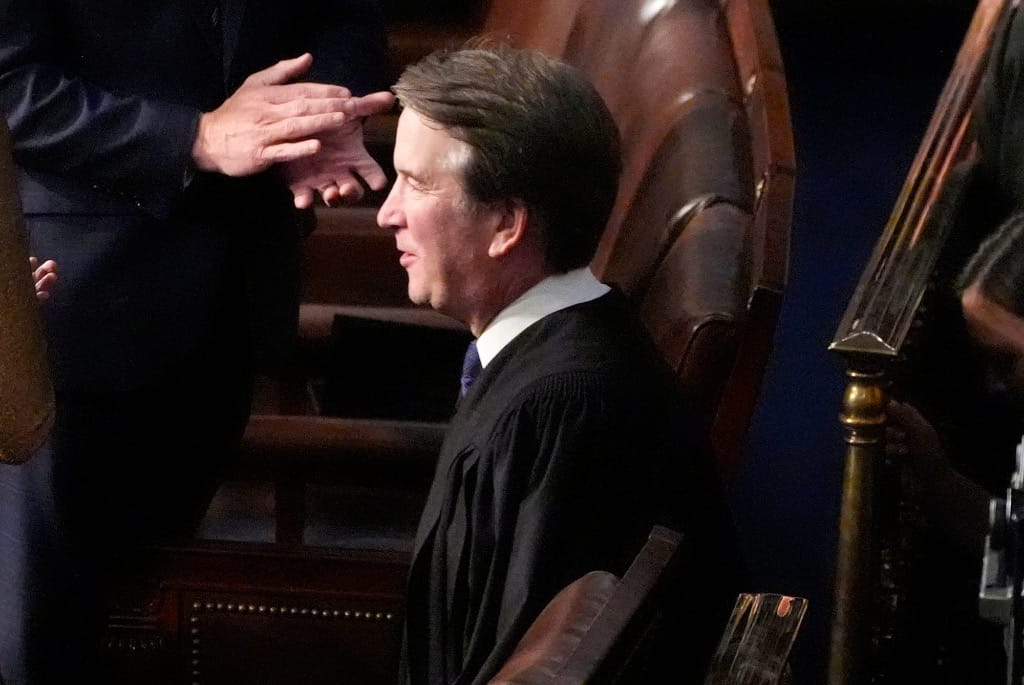
The Supreme Court weighed in on the case earlier last year and found that the funding program at issue was covered by the FCA. The decision was unanimous, but in a concurring opinion, Justices Brett Kavanaugh and Clarence Thomas, both conservatives, said from their perspective the provisions at issue “raise substantial constitutional questions under Article II.”
“Those constitutional questions are not before the Court in this case,” Kavanaugh wrote. “But in an appropriate case, the Court should consider the competing arguments on the Article II issue.”
In a separate FCA case, Justice Amy Coney Barrett, also conservative, joined Kavanaugh in a concurrence that made a similar point.
Several circuit courts have already upheld the FCA provisions at issue, but the Eleventh Circuit, which has not, heard oral arguments on the issue in December. Morgan Lewis attorneys said in a blog post that it was difficult to predict the outcome, but if judges there found the provisions unconstitutional it would “wreak havoc” on “the vast majority” of the FCA docket.


Member discussion