
As BEAD Deadline Arrives, at Least 34 States Have Posted Bidding Results
At least six states have confirmed they received an extension from NTIA.

WASHINGTON, Sept. 4, 2025 – As the deadline approaches for states to submit final broadband spending plans to the Commerce Department, at least 34 have publicly posted their results.
At least another six have specified they received an extension: California (Oct. 2), Texas (Oct. 27), Idaho (Sept. 25), Oregon (Sept. 18), Illinois (Sept. 30), and Michigan (Sept. 11).
States are supposed to submit plans for spending their slices of the $42.45 billion Broadband Equity, Access, and Deployment program by the end of Thursday. In order to meet the requirement that they accept public comment for at least one week, states were supposed to begin soliciting that input on or before Aug. 28.

At least two states have submitted: West Virginia and Louisiana.
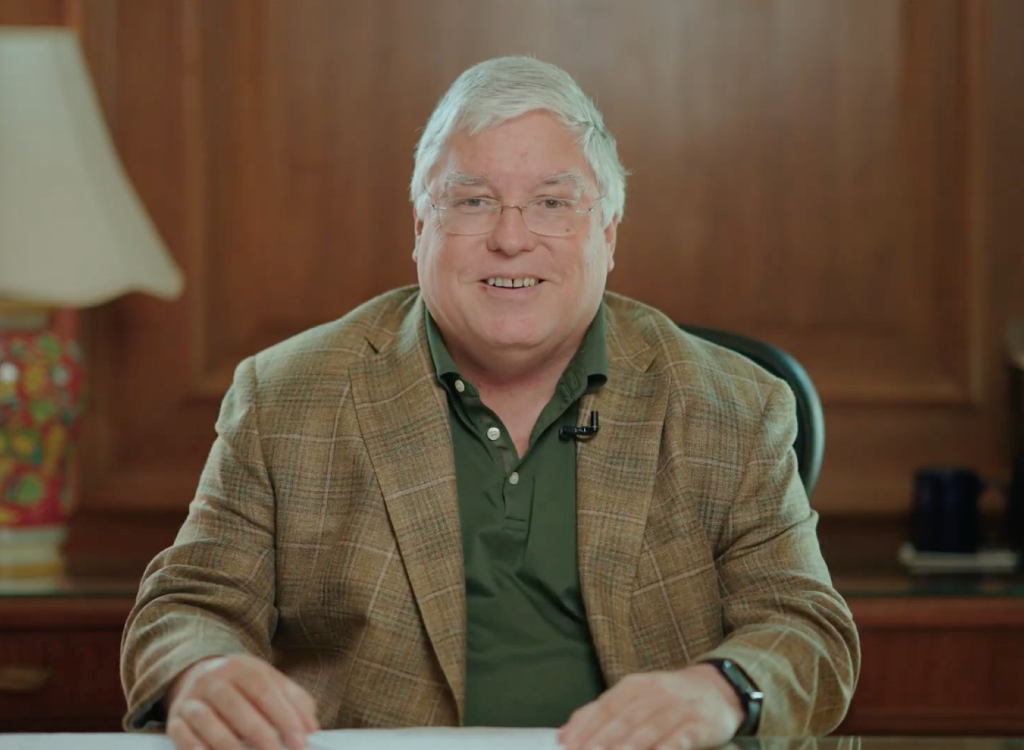
“This is really exciting and arguably the biggest economic development initiative we've seen in West Virginia's history,” West Virginia Gov. Patrick Morrisey (R) said in a video announcing the submission. “It has the potential to transform the Mountain State – a major investment in digital infrastructure.”
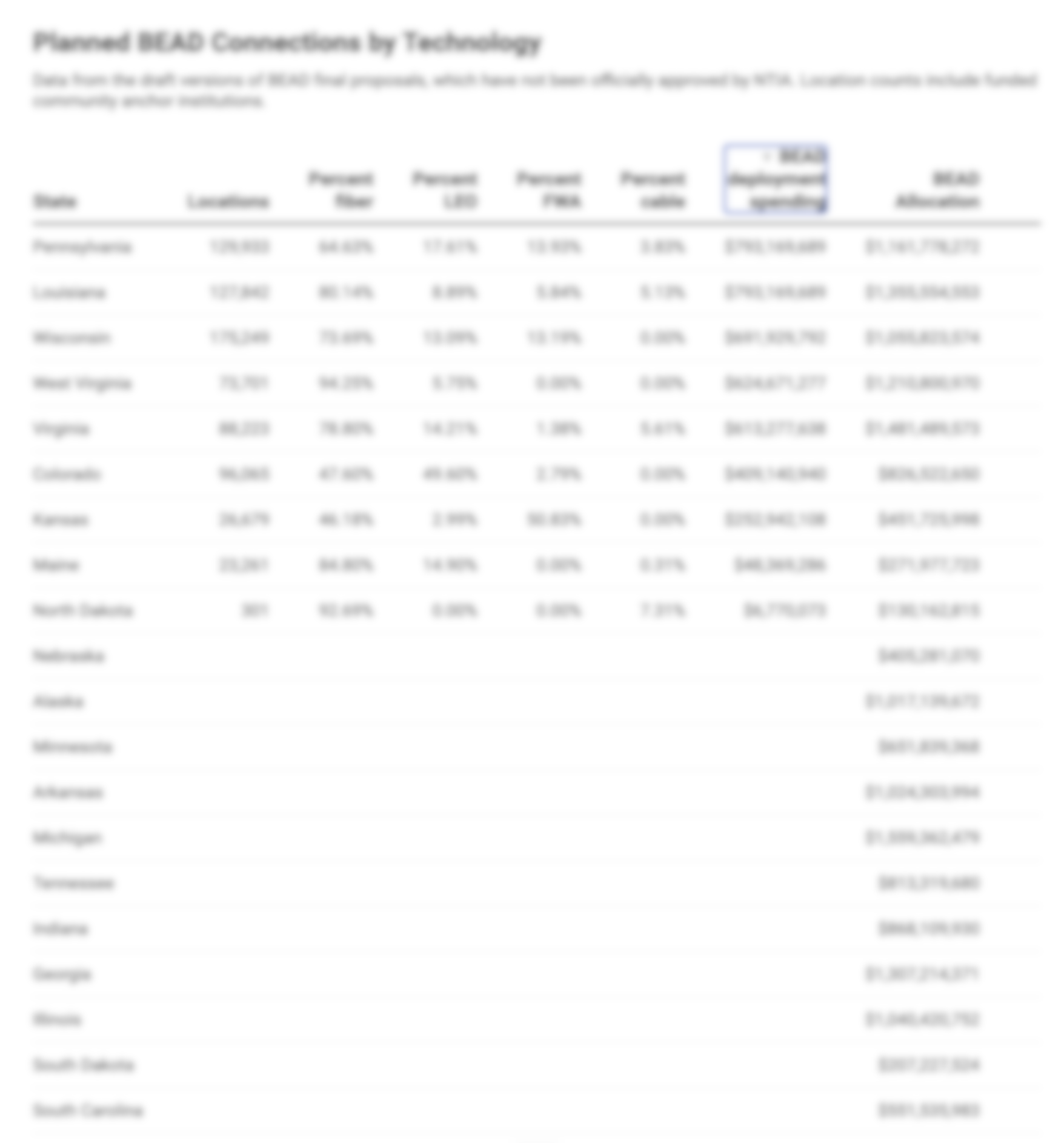
The state has emphasized it worked closely with the Trump administration to finalize its spending plan, which would get fiber to more than 94 percent of the state’s 73,701 eligible locations – the highest fiber proportion of any state to report results so far.
Commerce’s National Telecommunications and Information Administration has said it plans to process and approve states’ plans – the final step before state broadband offices can sign contracts and fund projects – within 90 days of submission.
Of the 34 states that posted their grant winners, New Street Research analyzed 32 in an investor report published Thursday. Fiber was still on track to serve the majority of BEAD-eligible locations, at 65 percent. Satellite’s share was 20 percent, with fixed wireless slated for 13 percent and cable for 2 percent.
“Both SpaceX and Amazon Kuiper have won more locations than any wired operator at 213k and 202k,” New Street analyst Vikash Harlalka wrote. “Amazon Kuiper’s share of funding remains low (1%), while SpaceX has 4% of the total funding, higher than any other wired operator except for Comcast and AT&T.”
The Trump administration handed down new rules for the BEAD program in June, rescinding approval from the three Biden-era plans that had received it and requiring an additional round of bidding under the new framework. The rules eliminated a categorical preference for fiber, which has higher capacity but costs more to deploy, and made it easier for satellite and wireless providers to compete on the basis of cost.
Compared to plans compiled under the Biden administration, states are funding more satellite and fixed wireless and are saving cash, both chief goals of the Trump administration’s rule change.
But they’re also still getting fiber to most of their locations on the national level. And despite NTIA’s focus on cutting costs, some western states have posted plans with relatively expensive fiber projects.
States have to review their bidding results with NTIA before posting their draft plans for public comment, giving a chance for the agency to push back on plans it doesn’t approve of, but experts have cautioned nothing has been officially approved yet.
Among major national ISPs, Comcast is far in the lead with $766 million in total tentative grants, with AT&T in second at $523 million. AT&T and Verizon have participated strictly for fiber funding, with all fixed wireless winnings going to small, local providers.





Member discussion