
As More States Post Draft BEAD Plans, Fiber Still at Two-Thirds of Locations
Two more states posted plans for public comment Thursday afternoon – Tennessee and North Carolina – bringing the total to at least 30.

WASHINGTON, August 29, 2025 – As more states release drafts of their final spending plans under the Broadband Equity, Access, and Deployment program, fiber still appears slated to serve about two thirds of the funded locations.
Two more states posted plans for public comment Thursday afternoon – Tennessee and North Carolina – bringing the total to at least 30.
“Fiber remained the preferred technology” in the deployment of BEAD funds, New Street Research analyst Vikash Harlalka wrote. “That said, given the significant satellite allocations in larger states such as Minnesota and Ohio, Fiber’s share [remains at] to 66%, while Satellite [is at] 18%.”
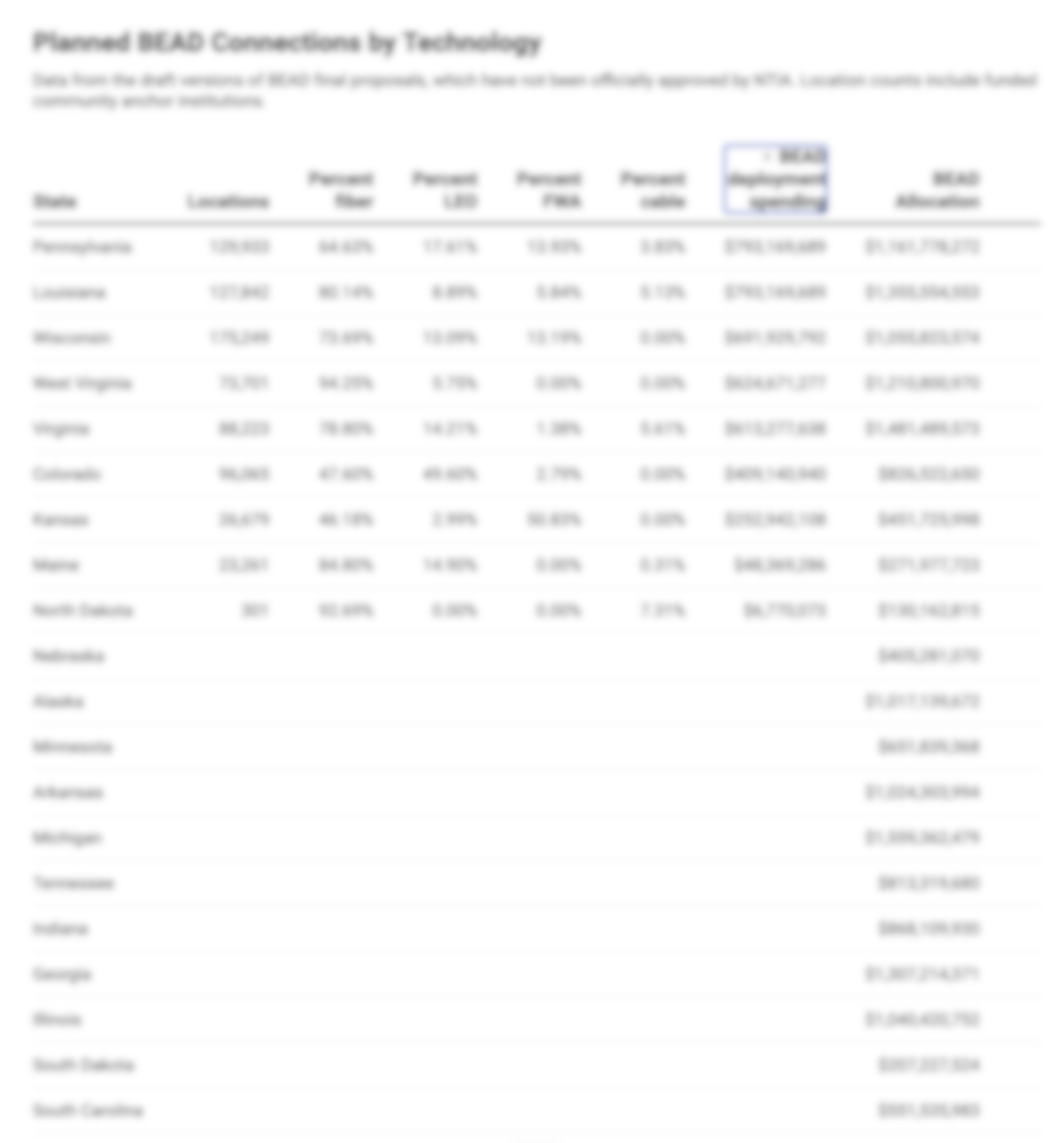
Of the states that had reported, the group included 19 in its analysis: Arkansas, Arizona, Colorado, Delaware, Georgia, Kansas, Louisiana, Maine, Minnesota, Nevada, New Hampshire, New Mexico, North Dakota, Ohio, Pennsylvania, Virginia, Washington, West Virginia, and Wisconsin.
The Trump administration issued new rules for the program in June, axing an explicit preference for fiber, emphasizing cost savings, and mandating an additional round of bidding under the new framework. States generally have until Sept. 4 to submit their final spending plans, but NTIA guidance said states had to post drafts of their plans for public comment “no later than August 28th,” suggesting the 20 that had not posted plans on Friday morning were given more time.
At least five states have specified their new deadlines: California (Oct. 2), Texas (Oct. 27), Idaho (Sept. 25), Oregon (Sept. 18), and Illinois (Sept. 30). Meanwhile, Indiana’s broadband office told stakeholders Thursday it was “still diligently working on Benefit of the Bargain (BOB) applications and will be announcing preliminary awards in the near future.”
47% of funds to be spent on deployment
Of all the money allocated under the program to the 19 states New Street analyzed, they’re proposing to spend 47 percent of it on deployment, according to New Street. States have seen their eligible location counts decrease as broadband mapping improves and current buildouts continue, and NTIA and Commerce Secretary Howard Lutnick have been focused on lowering those deployment costs.
The satellite awards have been accomplishing that goal. Among the states New Street analyzed, SpaceX’s awards work out to an average $1,376 per location and grants won by Amazon’s nascent Kuiper service work out to just $614 per location, both lower than many wireline awards.
Despite a desire to lower those power-location costs, NTIA has apparently been flexible in some cases. A 98-location project in Arizona would run more than $67,000 per location, and New Street noted others in western states above $20,000.
While it doesn’t constitute formal approval and NTIA could still change states’ plan, states have to review the results of their bidding with the agency before posting their drafts for public comment. Still, SpaceX has asked the agency to reject proposals from at least two states – Louisiana and Virginia – where it says it should hae won more locations under the less explicitly fiber-friendly rules.
It’s not clear what will happen to the other 53 percent of the states’ BEAD allocations. The Trump NTIA appears reluctant to allow non-deployment spending, rescinding approval for any such efforts, even some already underway, in June. The agency has said more guidance is forthcoming.
The law standing up BEAD specifies that at least “broadband adoption programs and affordable device distribution” were acceptable uses of BEAD funds remaining after securing connectivity for each eligible location. States are still not all optimistic about being able to use the funding.
Among national ISPs, Comcast winning the most
Among the major national ISPs, Comcast has been winning the most heavily, taking home more than $600 million to serve about 5,600 locations.
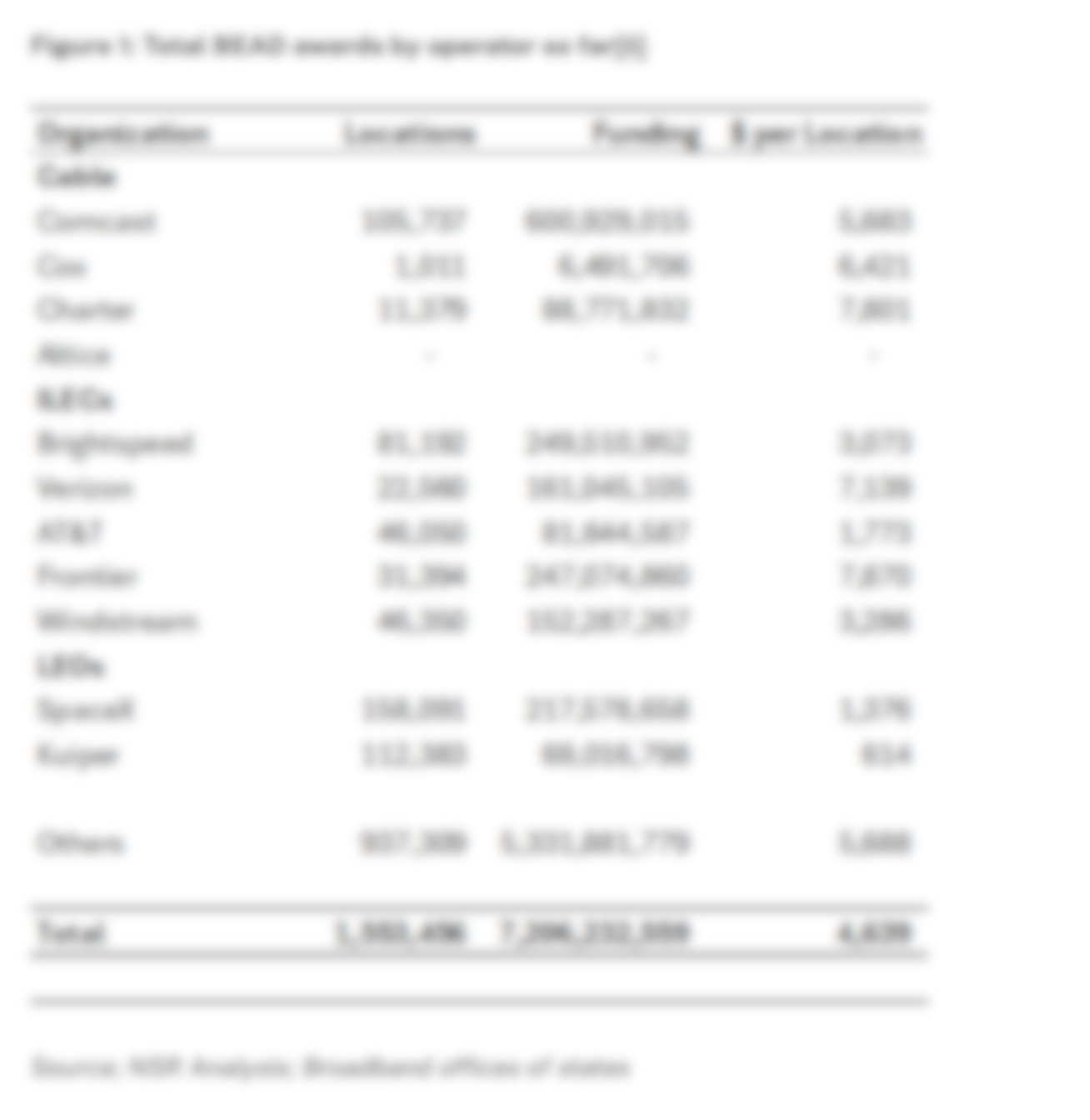
NSR Analysis; Broadband offices of states
“No other operator has been awarded even half the total funds as Comcast,” Harlalka wrote. “AT&T, Brightspeed, Verizon and Frontier won less than we expected. Perhaps they lost out to satellite operators in some of the locations. With Cable operators deploying HFC in some locations, we might see them take some share away from the ILECs.”





Member discussion