
AT&T CFO: EchoStar Spectrum a Boon to Fixed Wireless
Analysts estimated the extra airwaves could support an additional 900,000 fixed wireless subscribers.

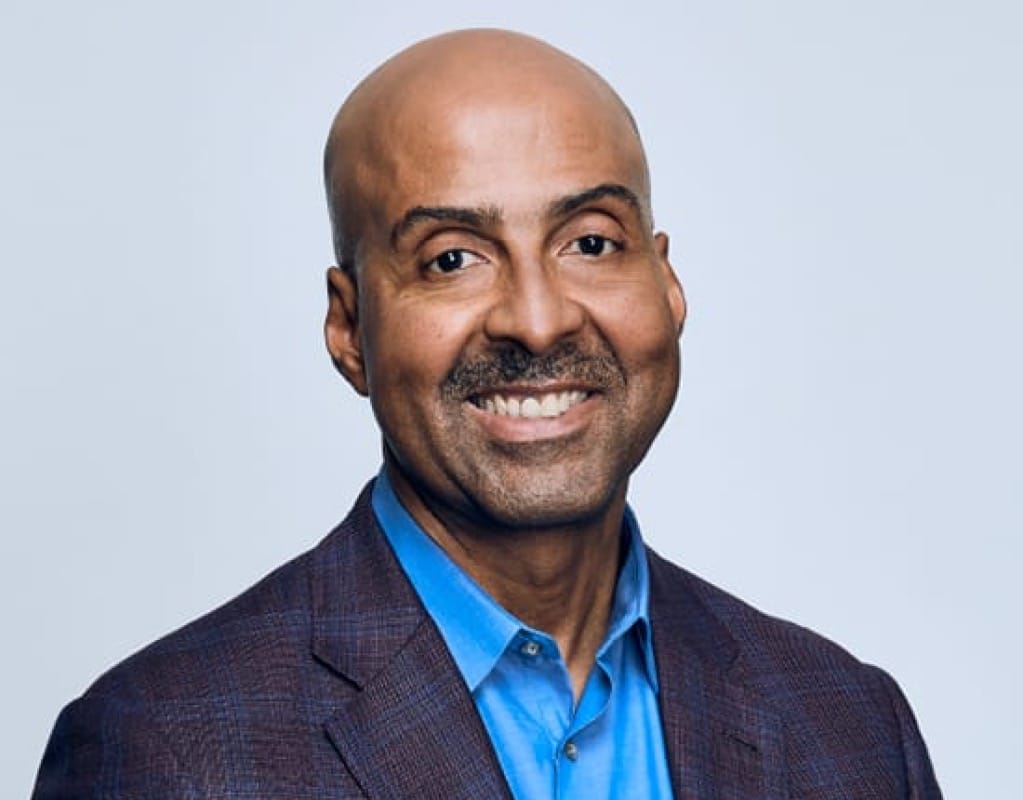
WASHINGTON, Sept. 4, 2025 – AT&T’s $23 billion purchase of EchoStar spectrum will boost the company’s fixed wireless broadband service, AT&T CFO Pascal Desroches said Thursday.
“We think that’s incredibly important because in instances where we haven’t gotten to fiber, but we plan to, it allows us to accelerate our legacy decommissioning,” he said.
AT&T has been aggressive about decommissioning its aging copper infrastructure, with goals to retire the network by 2029 (outside of California, where regulators have been less willing to allow the company to take down networks in rural areas).

And outside the carrier’s fiber wireline footprint, It would also allow the carrier to offer bundled fixed and mobile broadband. Converged plans tend to keep customers around longer – Verizon’s CEO said Wednesday the company sees a 40-50 percent reduction in churn among converged customers.
“We think that’s an incredible opportunity,” Desroches said, “to be able to really target the value segment using both a broadband and a wireless product.”
He spoke at a Bank of America conference in New York.
AT&T inked a deal with EchoStar last week to purchase the latter’s 3.45 GigaHertz and 600 MHz licenses, amounting to about 30 megahertz and 20 megahertz respectively nationwide.
EchoStar has been under pressure from the Federal Communications Commission to sell its airwaves, as Brendan Carr, the agency’s chairman, doesn’t think EchoStar’s spectrum is being put to enough use.
Desroches disclosed that EchoStar reached out to AT&T to arrange a deal. EchoStar has said it is still in talks with the government and the other wireless carriers about opening up more of its airwaves.
Analysts at New Street Research estimate the extra spectrum will give AT&T the capacity to add about 900,000 more consumer fixed wireless subscribers. The firm estimates the carrier could accommodate a total of about 6.3 million.
New Street also predicted in a Thursday note that AT&T would ultimately scoop up EchoStar’s licenses in the 700 MHz band, where AT&T has already deployed infrastructure.
In the second quarter, AT&T added 203,000 fixed wireless subscribers, for a current total of more than 1 million. The service was initially considered a way of keeping subscribers around while the carrier replaced outdated copper lines with fiber, but has been steadily growing since its launch in August 2023.
That’s been allowed by the carrier continuing to deploy spectrum it already has, Descroches said, a situation the extra headroom would improve.
“We’re going to put some real marketing muscle behind it,” he said, noting that fixed wireless has so far largely been limited to in-store promotions from the company.
Fixed wireless from the major mobile carriers has been an effective competitor against cable, which has been shedding broadband subscribers. Cable operators aren’t expected to return to subscriber growth in the near future.
“I think a little bit of the surprise has been the durability of fixed wireless,” Comcast CFO Jason Armstrong said yesterday at a Citi conference. “It's for a value-conscious consumer that's willing to make some tradeoffs on speed and reliability, but they've come in with an interesting value proposition for a segment of the market,”
The 3.45 GHz airwaves AT&T could turn on very quickly, as it has already deployed spectrum in the band. As part of the company’s deal with EchoStar, AT&T can lease the airwaves and use them until the deal is expected to close in mid-2026.
The FCC, itself eager to increase spectrum utilization, would have to approve the lease.
“We’re already deploying 3.45 within our networks, so you would anticipate that from an ideological perspective there shouldn’t be any concerns,” Desroches said. “But time will tell.”
The 600 MHz airwaves will take longer to get online – years, according to CEO John Stankey – as AT&T doesn’t yet have infrastructure using the spectrum.
Desroches said that wouldn’t impact the carrier’s long-term spending plans. AT&T told investors it planned to spend $23 billion to $24 billion annually from 2026-2027, up from the previous estimate of $22 billion, after Capitol Hill Republicans passed a sweeping set of tax breaks.
Much of the extra spend was planned for more fiber connections, but he said some could go to deploying 600 MHz. The extra 3.45 GHz, set to be turned on quickly and without much cost, will also save money by making planned densification unnecessary.



Member discussion