AWS-3 Auction Concludes With Bids Totalling $3.5 billion
The agency will publish winning bidders ‘at a later date’

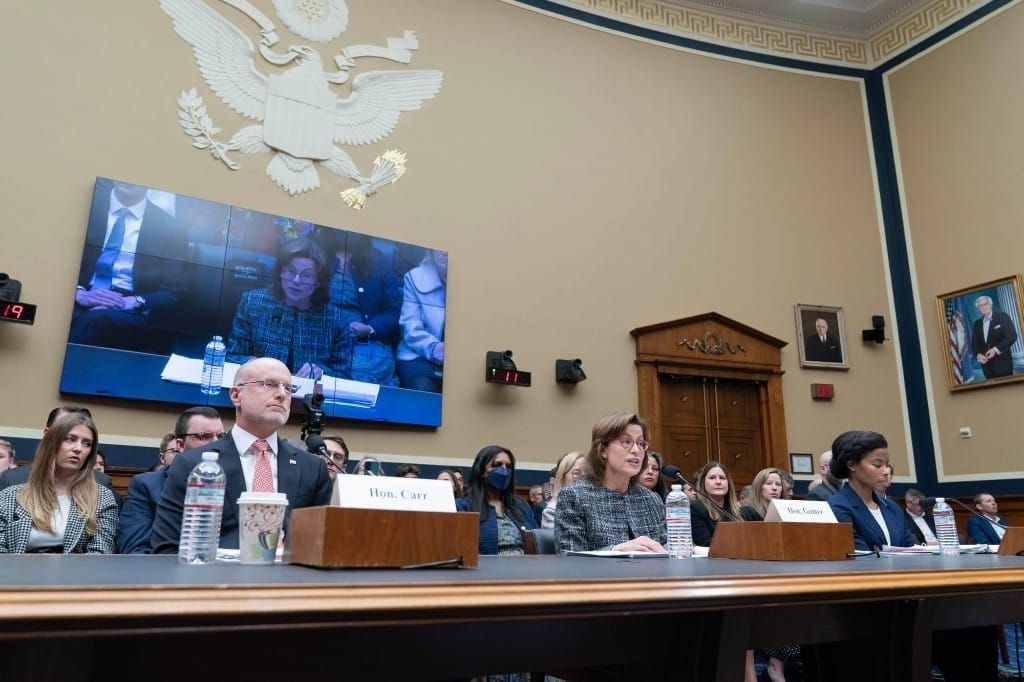
WASHINGTON, June 23, 2026 – The Federal Communications Commission’s first spectrum auction in four years concluded Tuesday, with bids totaling more than $3.5 billion.
An FCC spokesperson said in an email that detailed information about the results and winning bidders would be published in a public notice “at a later date.”
The agency re-auctioned 200 licenses in the AWS-3 bands used by each of the major wireless carriers. It was authorized by Congress as a one-off while the FCC’s authority to auction spectrum was still expired after it lapsed in 2023.
That authority has since been restored, and the agency has to sell off at least 800 megahertz by 2034 under the One Big Beautiful Bill Act.
The FCC said in a release that up to $3.3 billion of the auction’s proceeds would be used to pay back a Treasury loan taken out to fund its “Rip and Replace” program, the purpose for which Congress authorized the auction. The program reimburses smaller carriers for swapping gear from Chinese firms Huawei and ZTE out of their networks.
Rip and Replace was stood up by a 2021 law with $1.9 billion in funding, but the agency received funding requests closer to $5 billion. That led to participants receiving smaller reimbursement checks for their work and created repeated delays.
The FCC told Congress last week that 42 percent of Rip and Replace projects were complete. Many of the outstanding projects received deadline extensions of three to six months from May 8.
Most of the auction's value was in four licenses covering New York, Boston, and two Chicago markets. The New York license alone went for more than $974 million according to FCC bidding data.
Those and other valuable licenses had four bidders at one point in the auction, leading to speculation as to whether SpaceX or EchoStar was bidding along with the big three carriers.
EchoStar returned the licenses after defaulting on them and was on the hook for any shortfall if they fetched less than $2.9 billion this time around, and SpaceX could have used the extra exclusive airwaves to compete for mobile customers with its direct-to-device service, the thinking went.
BNP Paribas analyst Sam McHugh pointed out in an investor note last week that as soon as the auction passed the $3 billion mark, a bidder backed away from about 100 licenses. That suggested, he wrote, that EchoStar was trying to increase prices and avoid a shortfall payment, and pulled out once that had been achieved.
SpaceX could have been competing for cheaper licenses covering smaller populations but was likely not bidding in urban areas, he wrote.
“After years on the sidelines, FCC auctions are finally back,” FCC Chairman Brendan Carr said in a statement. “Today’s successful auction generated billions of dollars in competitive bids to put spectrum to effective commercial use, and it bolsters competition in the wireless marketplace. We will carry this momentum forward as we prepare for the Upper C-Band auction in the year ahead.”
The FCC said in its release that it was “on schedule” to sell off at least 100 megahertz in the upper C-band by July 2027. The agency said it also used for the first time a new application system for prospective bidders.