
BEAD Policy Shift Sparks Industry Concern Over Workforce and Supply Chain
Paused BEAD projects leave trained workers idle and domestic fiber warehouses full

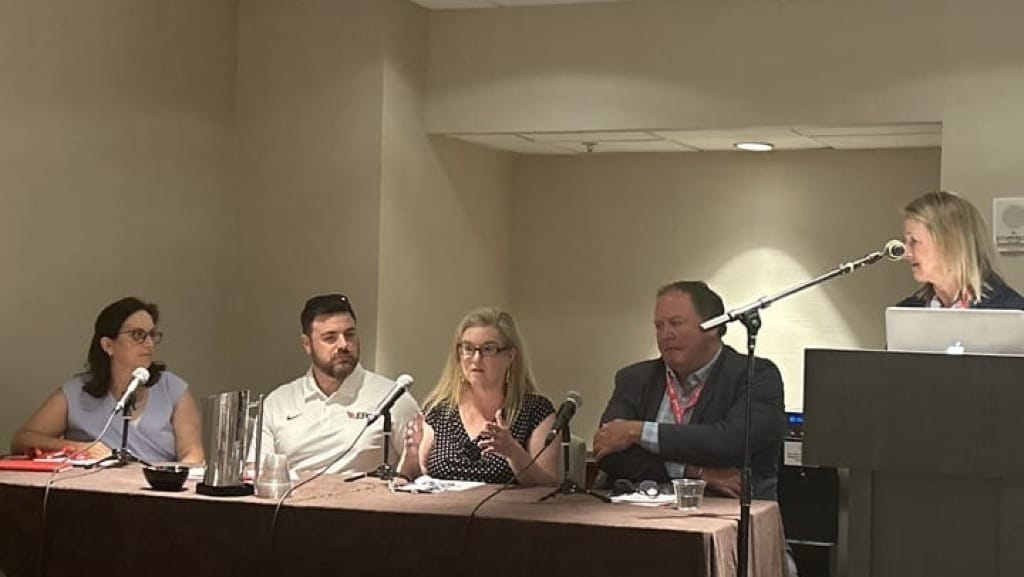
DENVER, August 5, 2025 – Steve Carender, director of special funding at Surf Internet, was dismayed when he first read the June 6 notice restructuring the Broadband, Equity, Access and Deployment program.
“There was, of course, gnashing of teeth and rending of garments,” Carender recalled, speaking to those in attendance of a Tuesday panel, here at Mountain Connect 2025.
Carender's sentiment was shared by fellow panelists in a session titled, “Keep Calm and Carry On: Managing a Changing Environment for Broadband Funding,” focused on the challenges and opportunities broadband providers have faced since the BEAD program’s sudden policy shifts on June 6.

One particularly urgent concern? A shortage of fiber workers, which may get worse when states attempt to start their BEAD projects at the same time.
“We're short, big time short, on the workforce that we're going to need to deploy [broadband] across the United States,” Josh Etheridge, owner of EPC.
Etheridge’s organization worked with Louisiana’s Office of Economic Development to develop a workforce, only to have that progress stalled when the National Telecommunications and Information Administration launched a review of the program in early March.
“It was a humongous hit in the gut to have all those people on staff and have to look at them and say ‘we were very heavily involved in this and now it's paused,’” Etheridge said. “And so that's why I've been so vocal because I believe in the people that we've trained and I believe in the jobs that need to be out there.”
When asked if there were particular types of companies better situated to deal with the changes to the BEAD program, Etheridge had an immediate answer.
“People with money,” he said. “I mean, honestly, there was a lot of people with high hopes that went after this and they were really counting on it. That limits their ability to pivot and to adapt to change.”
Lori Adams, vice president of broadband policy and funding strategy at Nokia, noted that the changes put the operations of close to 50 companies at risk that complied with the Buy America Build America (BABA) requirements, which mandate the use of domestically produced materials for federally funded infrastructure projects.
“BEAD, under the Biden administration, was a fiber-first program and so the vast majority of the awards were expected to be fiber-based. There was a volume to support manufacturing here in the U.S. The fiber industry as a whole responded to this challenge…there were 45 companies that self-certified U.S. manufacturing at 72 individual manufacturing locations across 28 states,” Adams explained.
“All of these companies, all of those 72 manufacturing locations are looking for orders, looking for work, because these were manufacturing sites that were established just for BEAD. And so the delays have created a little bit of stress around that,” she explained.
Stephanie Wiener, federal alumni fellow at Georgetown University Law Center, concluded by telling attendees that although it was possible to educate federal officials about the challenges from the Restructuring notice, ultimately it was here to stay.
“It is not easy to get upright policy reversals, right,” Wiener said. “As much as you can hire talented consultants, there are decisions that are made with a certain goal. However, when done strategically you can engage in ways that can at a minimum educate and make sure people are aware of unintended consequences.”






Member discussion