Beijing Accelerates Space-Based Internet Push With 13th Launch of 2025
Latest Long March mission advances China’s bid to rival Starlink and Kuiper.

Akul Saxena
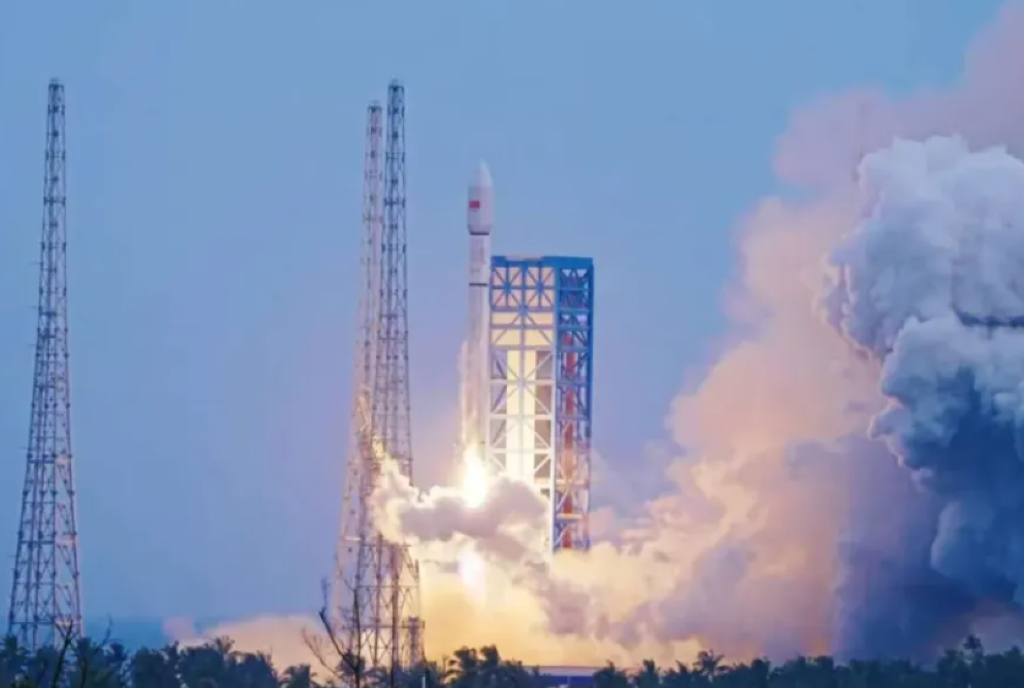
Nov. 13, 2025 — China moved a step closer to building a space-based internet of its own this week, launching a Long March 12 rocket loaded with a new group of low-Earth-orbit satellites from its coastal site in Hainan, a southern province.
The China Aerospace Science and Technology Corp. confirmed the Monday, Nov. 10 liftoff, the country’s 13th broadband-satellite launch this year.
The satellites belong to a planned network of about 13,000 spacecraft designed to provide global coverage and compete with Western constellations such as SpaceX’s Starlink, which operates more than 7,700 satellites, and Amazon’s Project Kuiper, deploying more than 150 in orbit.
Built by the Shanghai Academy of Spaceflight Technology, the Long March 12 is China’s first 3.8-meter-diameter rocket and among its most capable commercial launchers. Rising 62.6 meters (205 feet), it trails only the heavy-lift Long March 5, the vehicle used for lunar and Mars missions.
The launch was part of China’s broader plan to field two massive low-Earth orbit constellations, Guowang and Qianfan, with 28,000 satellites planned. Guowang, led by the state-owned SatNet, is geared toward domestic telecommunications and national-security applications, while Qianfan, backed by Shanghai's municipal government, targets foreign telecom markets.
Both constellations face technical and regulatory hurdles, including higher rates of faulty satellites, slower launch cadence, and limited rocket capacity. The International Telecommunication Union has required China’s operators to place at least 10 percent of their planned satellites in orbit by 2026 or risk losing their assigned spectrum rights.
Member discussion