Broadcasters Support NO FAKES Act
Senate bill would protect Americans from unauthorized AI deepfakes.

WASHINGTON, June 12, 2026 — Broadcasters in all 50 states have urged Congress to pass the NO FAKES Act, saying the bill would lead to federal action curbing the rise of AI‑generated voice and image deepfakes.
In a June 10 letter to congressional leaders, the National Association of Broadcasters said the bill would create essential guardrails for digital replicas while preserving First Amendment protections.

“This bipartisan legislation would protect the voice and visual likeness of all individuals, including the most trusted broadcast news anchors and local on-air personalities, from unauthorized computer-generated recreations made by generative AI,” the broadcasters said.
The NAB represents local over‑the‑air stations in every state, in addition to Washington, D.C., and Puerto Rico. Other groups endorsing the revised Senate bill included Disney, YouTube, TikTok, OpenAI, Universal Music Group, and the Recording Industry Association of America, among dozens of others.
The NO FAKES Act would give all Americans federal intellectual property rights to authorize the use of their digital likeness. Upon an individual’s death, these rights would transfer to their legal heirs for the next ten years.
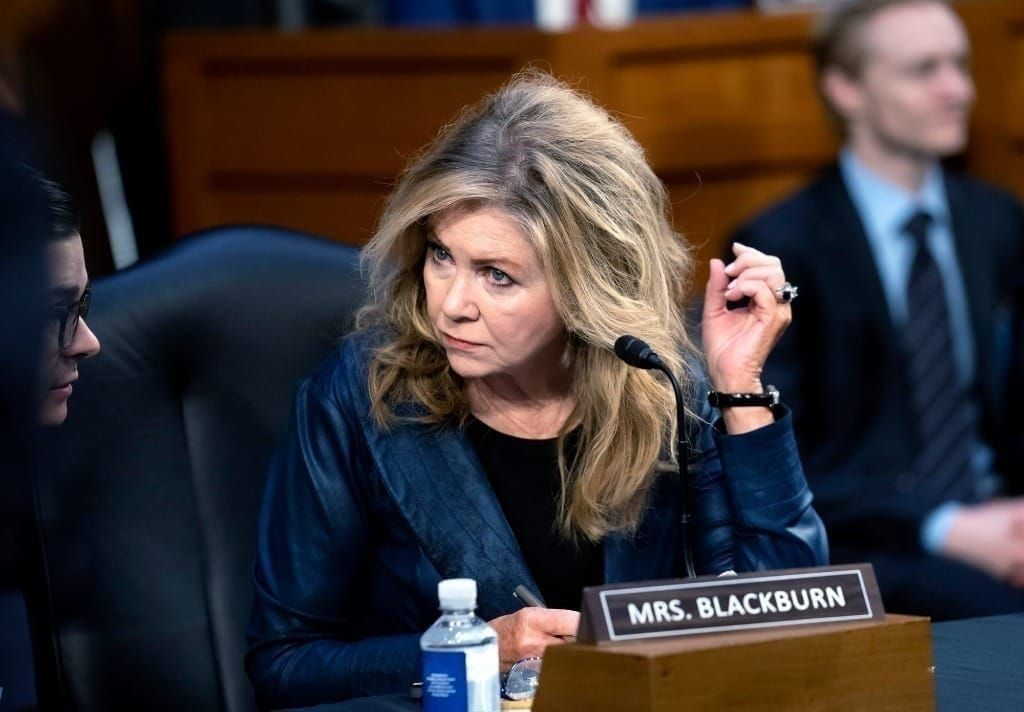
“AI should empower innovation – not give scammers and online predators a free pass to exploit someone’s voice and visual likeness without permission,” said Sen. Marsha Blackburn, R-Tenn., who co-sponsored the bill.
The 2026 Senate bill was revised from its House counterpart to add a counter-notice provision, designed to give online platforms sufficient time to take down deepfakes before incurring liability. The bill also added an exemption for libraries and research institutions to study generative AI.
The Senate bill was introduced on May 20, 2026, by Sens. Blackburn, Chris Coons, D-Del., Thom Tillis, R-N.C., and Amy Klobuchar, D-Minn. The same four senators tried to get an earlier version of the bill through Congress last year and in 2024.
The House bill was introduced on April 11, 2026, by Rep. Maria Salazar, R-Fla., along with Rep. Madeleine Dean, D-Penn.