
Capital Discipline Will Separate Successful BEAD Buildouts From Defaults, Panelists Said
The median terrestrial broadband provider will charge $50 to $60 per month, while some satellite providers charge significantly more, panelist said

WASHINGTON, March 18, 2026 — As broadband construction under the $42.5 billion Broadband Equity, Access, and Deployment program begins, subgrant agreement quality, capital discipline, supply chain costs, and AI policy uncertainty will determine which projects succeed and which ones default.
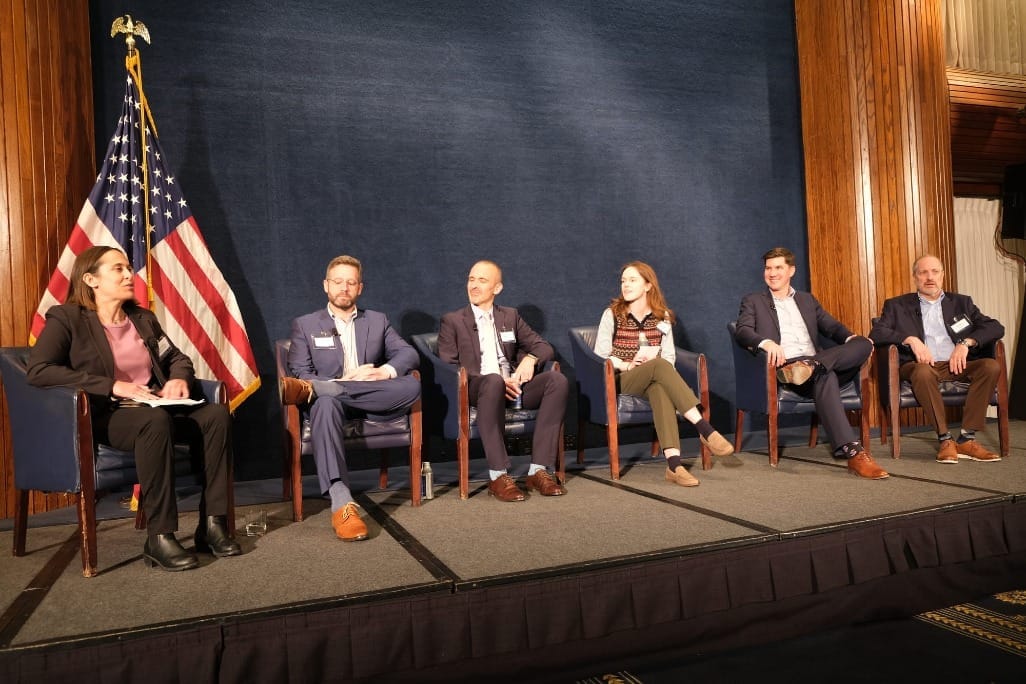
That was the message of panelists during the conclusion session of the BEAD Implementation Summit 2026 here on Wednesday.
After reviewing roughly 30 state subgrant agreements – contracts between state broadband offices and providers – Steve Coran, chair of the broadband and communications infrastructure practice group at Lerman Senter, a Washington law firm, said he found them nearly “uniformly problematic.” Louisiana was a rare exception, he said. Subgrant agreements must be investable, Coran said, wherein lenders and private equity firms must be willing to back them.
He outlined three specific concerns. States can currently reclaim, or claw back, 100 percent of funds already paid out to providers for any noncompliance, he said. Termination-for-convenience clauses let states exit agreements without consequence.
He added that restrictions on transferring agreements impede secondary market activity, of the buying and selling of broadband assets and contracts. Providers need such market activity to be able to restructure and scale their operations.
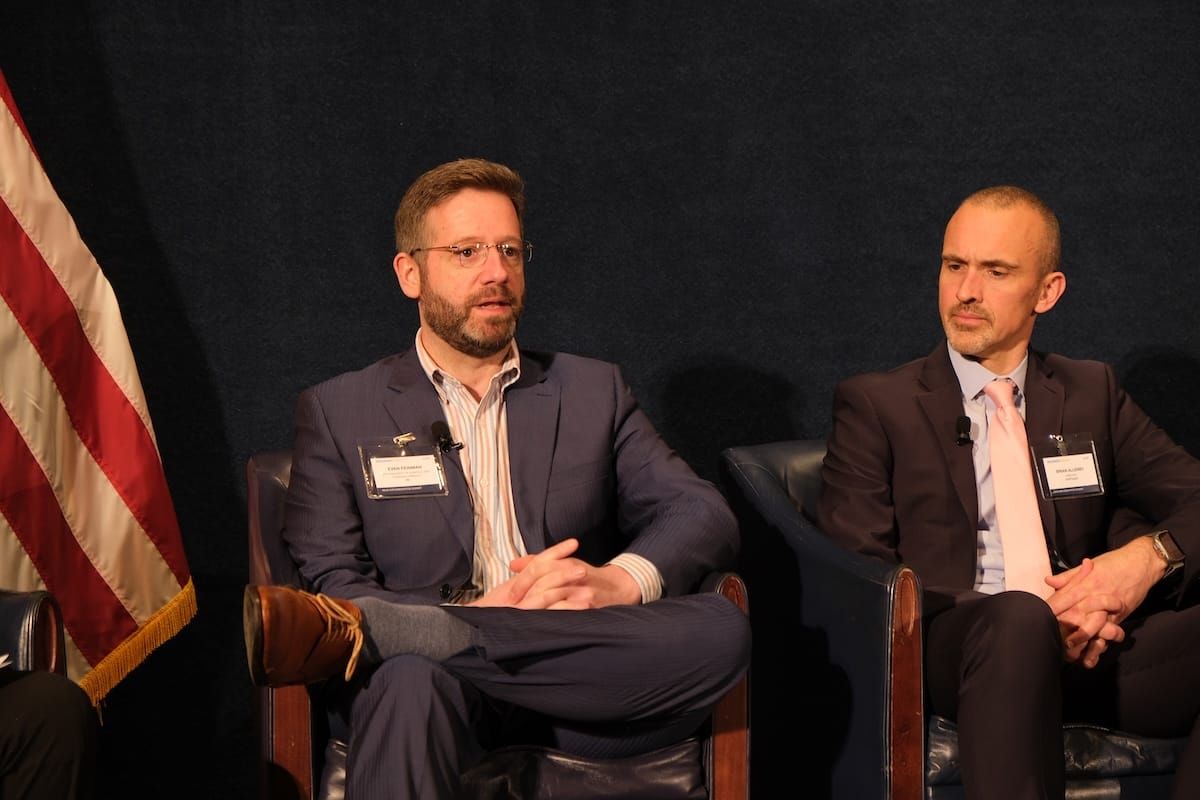
Building on those concerns, Evan Feinman, vice president of strategy at JSI, a telecommunications consulting firm and former director of the BEAD program, said financial and calendar discipline will separate successful subgrantees from those that default.
Affordability is an under-emphasized risk
Feinman raised affordability as an underemphasized risk. The median terrestrial broadband provider will charge $50 to $60 per month, he said, while some satellite providers charge significantly more.
On consolidation and transfers of ownership, Feinman said rules and regulations have no inherent value. When all parties want a transaction to proceed, regulators should get out of the way, he said.
Looking further ahead, Feinman said household data consumption driven by AI and augmented reality will grow in ways that are difficult to predict. "If you're going to err on one side or the other, it should be on greater capacity," he said.
Where capital and default risks occur
Capital-related defaults will occur at two distinct points, said Claude Aiken, chief strategy officer and chief legal officer at Nextlink Internet, a fixed wireless and fiber provider operating in 12 states with BEAD awards in 11. Some providers will be unable to secure financing before signing grant agreements, he said. Others will outrun their cash flow during construction.
States are already approaching Nextlink with locations abandoned by providers before signing grant agreements, Aiken said, an early signal of capital constraints in the program.
Brian Allenby, director of state solutions at CostQuest Associates, a broadband mapping and planning firm, said states need to understand how subgrantees are financing their matching contributions, whether through private equity, debt, or a line of credit. The benefit-of-the-bargain round left states no time to update financial due diligence conducted more than a year ago, he said.
Providers should think carefully about where to build first to generate early revenue, Allenby added.
The words 'artificial intelligence' never appear in the infrastructure law
Nat Purser, senior policy advocate at Public Knowledge, a Washington digital rights organization, said the December executive order that conditions BEAD funds on state AI regulatory environments creates real uncertainty for providers and lenders. The words “artificial intelligence” do not appear in the Infrastructure Investment and Jobs Act statute of 2021, she said, written a year before ChatGPT's November 2022 launch.
Purser pointed to Utah, whose state AI legislation might be deemed disqualifying under the executive order, as an example of the uncertainty providers and lenders face. NTIA has yet to define what constitutes an onerous AI regulation, she said.
Feinman added that governors face a genuinely difficult choice, noting that “one person's child protection measure is another person's onerous regulation.”
In a lightning round, Coran said he would have issued a model subgrant agreement from the start, Feinman said he would release guidance immediately and hire federal permitting officers, Purser said she would release guidance and give states maximum discretion, Aiken called for infinitely wise and clear guidance, and Allenby expressed gratitude to everyone who has devoted years to the program.





Member discussion