
Carr FCC Fighting to Keep $57 Million Fine against AT&T
The agency is trying to protect its ability to levy fines.

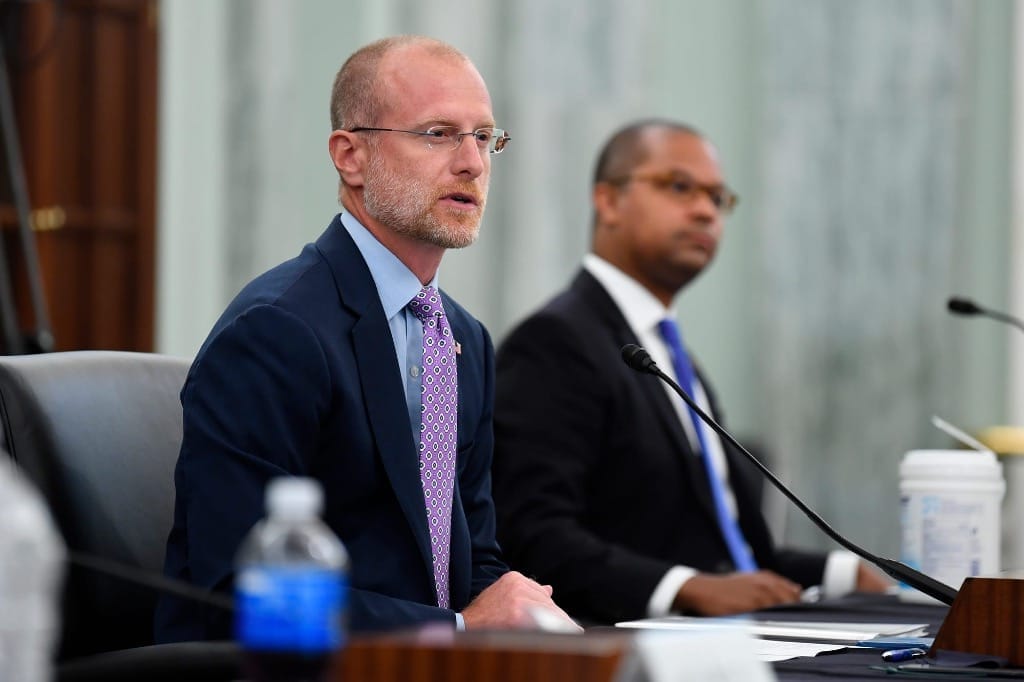
WASHINGTON, July 22, 2025 – AT&T won a legal battle against the Federal Communications Commission in April, saving the company from paying a $57 million fine. But the agency, led by FCC Chairman Brendan Carr, wants a new hearing.
The FCC has asked for a full panel of the U.S. Court of Appeals for the Fifth Circuit to rehear AT&T’s case challenging the big fine. A three-judge panel sided with the company three months ago, finding the agency’s forfeiture process was invalid in light of recent Supreme Court precedent.
“Civil penalties are among the [FCC’s] most important regulatory remedies,” the agency wrote in a Wednesday filing. “If the panel’s decision stands, the validity of every Commission enforcement action that seeks to impose a monetary penalty under that provision is likely to be challenged.”

A panel of three Fifth Circuit judges decided that the FCC could not fine AT&T for not properly vetting buyers when it sold customer location data. The agency’s enforcement process, judges said, was unconstitutional because it did not meaningfully provide AT&T the right to a jury trial.
The decision was “guided,” Circuit Judge Stuart Kyle Duncan wrote, by the Supreme Court’s ruling in Securities and Exchange Commission v. Jarkesy, where justices held that the SEC could not levy civil penalties without a jury trial.
The FCC noted that CTIA and NCTA – The Internet & Television Association, which represent the 5G and cable industries respectively, have already argued the agency’s current enforcement procedures are unconstitutional. The U.S. Chamber of Commerce said in a Thursday letter to the agency that it supported the trade groups’ request for a rulemaking to reform the enforcement process.
The agency argued the significance of the decision merited a rehearing, and that the three-judge panel’s April decision was nullified by a recent Supreme Court decision. The ruling in McLaughlin v. McKesson held that district courts can review the validity of FCC rules and orders after they take effect.
A part of the Fifth Circuit’s reasoning in siding with AT&T, it said, was that precedent in the circuit limited district courts to reviewing factual disputes rather than legal ones. That would have prevented companies from disputing legal interpretations if they chose not to pay an FCC fine and fight the penalty in court.
“There is no longer any force to the panel’s suggestion that AT&T would not be able to challenge the legal validity of a forfeiture order,” the agency wrote.
T-Mobile and Verizon were also fined for the same practice, and are challenging their penalties in separate courts. The agency has urged judges in those cases not to follow the Fifth Circuit's lead, while the carriers have argued the court made the right call.
Carr, a commissioner at the time, dissented from the fines when they were handed down and has called for the agency to review its enforcement rules in the wake of Jarkesy.
He said at a press conference earlier this year that he disagreed with the Fifth Circuit decision in the AT&T case.
“Our position continues to be that the FCC can impose fines, impose license revocations, our full suite of potential remedies,” he said. “We respect the Fifth Circuit’s decision but we disagree ultimately with the conclusion there, particularly as it applies to other circuits.”




Member discussion