
Charter Loses 109,000 Broadband Subscribers
The cable giant said competition from fixed wireless and fiber isn’t letting up.

Jake Neenan

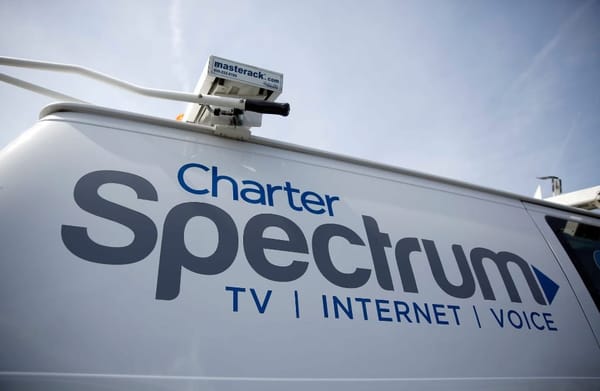
WASHINGTON, Oct. 31, 2025 – Charter lost 109,000 broadband subscribers in the third quarter, the company announced Friday, worse than the 83,000 losses Wall Street had forecast.
Charter CEO Chris Winfrey said tough competition from fixed wireless and fiber providers was not letting up, on top of slow household formation and low-income customers increasingly foregoing fixed broadband for mobile.
“The challenge we have is the operating environment remains competitive with new competitors, and a macro environment that hasn’t gotten better,” he said on the cable operator’s earnings call.
Growth in Verizon’s fixed wireless service has been slowing down, but the other two wireless carriers posted record additions in the quarter, and new fiber subscribers have been improving year over year.
Fellow cable giant Comcast posted much fewer broadband losses than expected in the quarter, but executives there said the number was helped by an especially strong back to school season and that competition remained tough.
Winfrey said the impact was worst among low-income consumers.
“We don't know if somebody's targeting it or not, but it was pretty notable for us,” he said.
He said that a slowdown in fixed wireless or fiber expansion, or an improvement in household formation or mobile-only substitution would take some pressure off the company’s subscriber numbers.
“All those things I think will happen,” he said. “It’s just very difficult to predict, frankly, the timing of each one of those.”
The cable operators have in the meantime been instituting new plans, price locks, and temporary free mobile lines in a bid to stave off continuous broadband losses, measures analysts think will have a positive impact in the long run. Charter has also emphasized video bundles in its effort to keep and attract customers.
While competition is rough for cable and Charter losses were worse than expected, New Street Research analysts say the broadband market appears to be returning to pre-pandemic strength with a total of 565,000 expected net adds.
Charter continued its ongoing subsidized rural buildout, hitting 124,000 new passings and adding 52,000 subscribers in the third quarter. That brings those totals to more than 1.1 million passings and 433,000 subscribers.
Jessica Fischer, Charter’s CEO, said the company bid on Broadband Equity, Access, and Deployment funding in 20 states and was tentatively awarded funding for $84,000 passings. The company, a big player in other recent federal broadband programs, has said it wasn’t interested in competing heavily for BEAD money.
A New Street tally puts the company’s total tentative winnings at more than $443 million, less than half what the company won from the FCC’s Rural Digital Opportunity Fund. Fischer said the company expects to spend about $230 million of its own cash on the projects. BEAD awards still have to be approved by the Commerce Department before contracts can be signed with state broadband offices.
The cable operator also added 493,000 mobile lines, for a total of 11.4 million. That’s just under Wall Street estimates.
Winfrey said 21 percent of the company’s 29.8 million broadband customers also took a mobile line. So-called converged customers tend to stick around longer according to Charter and the other major ISPs.
The company didn’t have an update on its pending acquisition of fellow cable operator Cox, other than the deal was still expected to close in mid-2026. Charter will be looking to further grow its mobile service, in Cox’s 12 million-location footprint.





Member discussion