Christine O'Connor: An Enduring Commitment to Universal Service Transformed Alaska
O'Connor charts Alaska's shift from village pay phones to fiber and telehealth, crediting universal service and the Alaska Plan while noting BEAD's work is unfinished.

It used to be a real challenge to talk to someone across Alaska, or across the country.
Many Alaskans remember waiting in line to use the only telephone in a village. For me, it was the phone at the winter watchman's house in Ekuk. We each got a few minutes because everyone was waiting. Long-distance calls were expensive, and simply talking to family or conducting business required patience and persistence.

Even after the internet arrived, connectivity remained limited in many parts of Alaska. Just a handful of years ago, I visited Unalaska where businesses routinely copied payroll records onto DVDs and shipped them overnight because their internet connections couldn't support cloud-based applications.
Those experiences were separated by decades, but they reflected the same challenge: in Alaska, the need for connectivity often arrived long before the infrastructure did.
Today, those stories are history. Students attend online classes. Patients meet with specialists hundreds of miles away through telehealth. Small businesses manage payroll and accounting in the cloud. Families share video calls. Commercial fishermen check weather forecasts and fishery announcements from their boats. Connectivity has become part of everyday life.
That transformation did not happen by accident. For generations, Congress has recognized that Alaska's geography makes communications infrastructure uniquely expensive to build and maintain. Through universal service our nation made a simple commitment: where an Alaskan lives should not determine whether they can participate in modern life.
As technology expanded from voice service to broadband, federal programs evolved. The FCC’s Universal Service Fund, USDA's ReConnect program, NTIA's Tribal Broadband Connectivity Program, and now the Broadband Equity, Access and Deployment (BEAD) Program have addressed different pieces of the challenge and transformed connectivity across Alaska.
One of the most important chapters in that effort has been the Alaska Plan.
Over the last decade, the Alaska Plan gave providers something that is often in short supply: long-term certainty. In return, providers made measurable commitments to sustain and improve service, invest in networks built for some of the hardest places to reach, and keep service affordable. More than 90,000 locations in rural Alaska have gained new or upgraded access to broadband, and more than 65,000 rural Alaskans can access upgraded wireless service. The certainty of the Alaska Plan allowed companies to invest in networks that will serve Alaskans for decades.
Today, communities from Utqiagvik to Hydaburg to Akutan have fiber broadband. But the work is not done. Thousands of Alaskans still need reliable broadband service, and BEAD will connect many of them over the next several years. New satellite technologies are creating additional opportunities in places where terrestrial networks remain impractical. These technologies work together. Satellite service complements, not replaces, the fiber networks that connect Alaska to the rest of the world. Even the most advanced satellite systems rely on terrestrial fiber backbones to carry traffic across Alaska and beyond.
The transformation of communications in Alaska is one of our state's quiet success stories. It reflects decades of commitment by Congress, Alaska's congressional delegation, the FCC, NTIA, USDA, providers, local communities, and countless Alaskans who believed that geography should not determine opportunity.
During my career in Alaska telecommunications, I’ve watched our state grow from an era when many communities struggled for basic connections to one in which broadband has become essential infrastructure for daily life.
That work is not complete. But because of a shared commitment to universal service that has endured, Alaska is more connected today than at any point in our history.
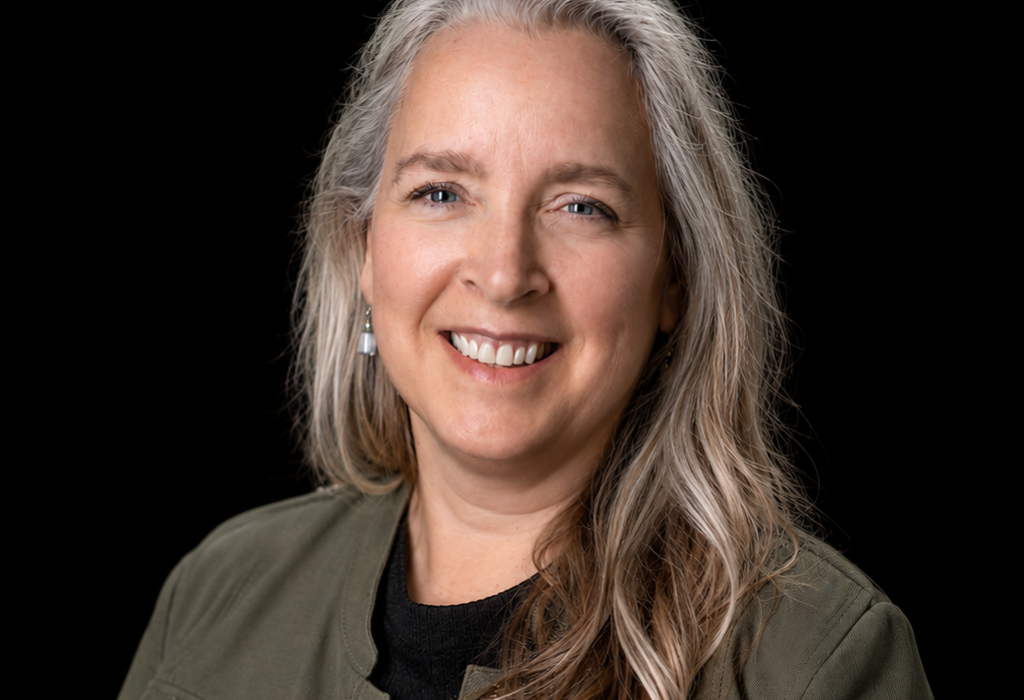
Christine O'Connor is executive director of the Alaska Telecom Association, where she represents Alaska's telecommunications carriers before Congress, the FCC, the state Legislature and the Regulatory Commission of Alaska. She has led ATA for more than a decade, following nine years at Matanuska Telephone Association. A fourth-generation Alaskan and graduate of Alaska Pacific University, she returns to Bristol Bay each summer to setnet with her family. This Expert Opinion is exclusive to Broadband Breakfast.
Broadband Breakfast accepts commentary from informed observers of the broadband scene. Please send pieces to commentary@breakfast.media. The views expressed in Expert Opinion pieces do not necessarily reflect the views of Broadband Breakfast and Breakfast Media LLC.