House Committee Wants More FCC Oversight of Chinese Firms
Barred from providing consumer service, Chinese firms still provide networking and cloud services, lawmakers found

Jake Neenan
WASHINGTON, Aug. 7, 2026 – The House Select Committee on China wants Congress to expand the Federal Communications Commission’s authority to crack down on Chinese companies.
The committee found three companies maintained presences in U.S. telecom networks despite having their authorizations revoked or denied by the FCC; China mobile, China Unicom, and China Telecom.
Those revocations prevent the companies from directly offering telecom service, but don’t stop them from occupying data center space or offering cloud and other networking services.
That continued network presence, which a Tuesday report from the committee found each company maintained, opened the door to future cyber attacks by entities linked to the Chinese government, the lawmakers argued.
The three companies did not immediately respond to requests for comment.
The report didn’t accuse the companies of willingly facilitating any hacks. The lawmakers’ investigation found nearly 109,000 instances over seven years in which Chinese networks claimed American internet addresses without authorization and diverted data, calling them “high-confidence” hijacks of the internet’s traffic routing system.
Among those, nine hijacks on a “core communication network” were processed on China Mobile infrastructure, and three hijacks on “one major telecommunications provider” originating from China Unicom claims, the report said.
During the Salt Typhoon hacks in 2024, China Mobile network gear was involved in nearly 50 hijacks over the course of a month, including 8 “high-severity” ones, according to the report. Officials from the companies told the committee they didn’t keep logs of the incidents.
While certain severe incidents were linked to the Chinese firms’ networks, the majority were not. The report said U.S. network companies should enforce stricter standards on traffic routing.
“Closing the routing-layer dimension of this threat requires allied network operators to enforce common route origin validation standards, share rapid route-leak notifications, and refuse to propagate unauthorized announcements from high-risk carriers,” the report said.
FCC Chairman Brendan Carr has been trying to block network and interconnection gear from Chinese companies for years, calling covered companies’ continued operation in the U.S. an “unregulated end run” around FCC rules.
He wrote about the issue in Project 2025, the conservative Heritage Foundation’s collection of policy proposals produced during the 2024 election.
The agency earlier this year took input on whether to block U.S. carriers from connecting to data centers and other equipment owned by companies on the agency’s covered list, a list of largely Chinese and Russian companies (including the three focused on in the report) deemed security threats by American law enforcement agencies.
U.S. companies and industry groups weren’t fans of cutting the Chinese firms out of domestic networks entirely. They told the FCC that there was always going to be some level of legitimate demand for traffic routing to and from China, and so they would have to connect directly with firms that offered that service.
China Telecom also told the agency that American carriers would be faced with higher submarine cable costs and increased latency, at least with respect to traffic to and from China and surrounding countries, if they were unable to interconnect with its equipment.
Still the report recommended Congress prevent U.S. telecom companies from interconnecting with covered list entities at all without case-by-case FCC approval.
The lawmakers also wanted expanded FCC authority to remove remaining network gear after a licensed denial or covered list designation, and extra funding for the State Department to build baseline traffic routing practices that would mitigate the hijacks the committee tried to investigate.
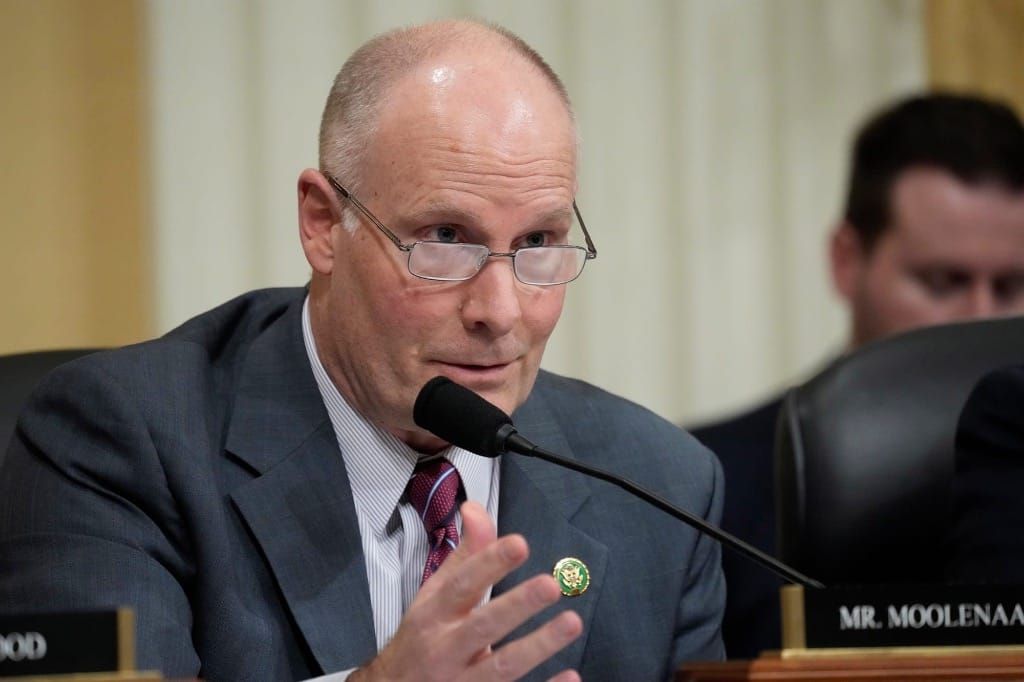
“The CCP does not allow U.S. telecom companies into China,” China Committee Chairman John Moolenaar, R-Mich., said in a statement. “We must cut these subsidiaries out of our domestic infrastructure to protect the American people.”
The report also recommended more funding for swapping out potentially insecure gear from U.S. networks. The FCC has already spent about $5 billion getting equipment from Huawei and ZTE out of domestic mobile networks.