Commissioner Gomez Calls for Stronger Efforts to Close the Digital Divide
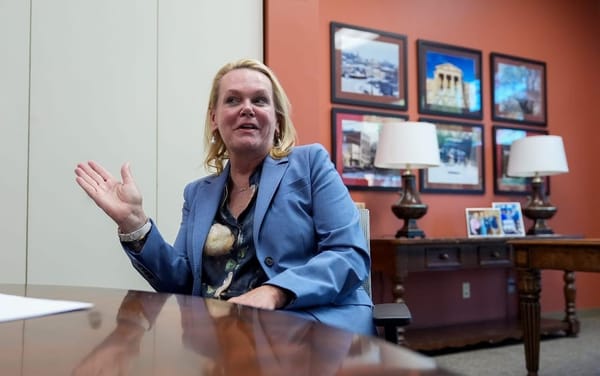
FCC Commissioner Anna Gomez urged stronger action to ensure all communities have access to affordable broadband.

Naomi Jindra
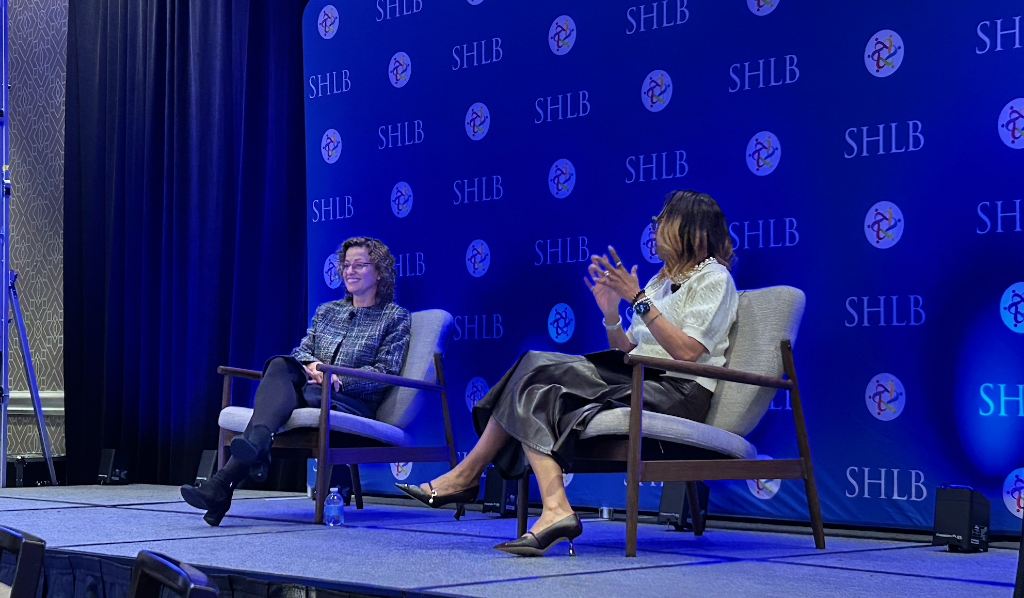
ARLINGTON, Va., Oct. 30, 2025 — Federal Communications Commission Commissioner Anna Gomez said she was “heartbroken” by the loss of the Wi-Fi Hotspot program, the Affordable Connectivity Program and other programs recently cut.
“These are all methods to reach the unconnected and to provide connectivity to the members of the community that cannot access it on their own, but need it in order to participate in just about everything we do in today’s society,” Gomez said.
“Whether it’s for students to be able to do their homework, whether it’s for teachers to be able to teach their students, whether it’s for people at home who need to apply for jobs or need to do their jobs, veterans who can get their health care remotely.”
Gomez also criticized the agency’s recent vote to remove several requirements, saying the move weakens consumer protections. Modeled after nutrition labels, the disclosures are meant to give consumers clear, standardized information about service costs and terms.
Gomez argued that eliminating fee breakdowns and language accessibility requirements makes it harder for customers to understand what they are paying for.
Tracy Doaks, president and CEO of the North Carolina Research and Education Network (MCNC), asked for Gomez’s opinion on the Universal Service Fund congressional working group.
Gomez expressed “very good reason” for bipartisan interest in “making the Universal Service Fund a sustainable fund,” adding that she hopes Congress will focus not only on contributions but also on affordability.
She went on to address workforce development, saying, “I’m very worried about the communities that don’t have the connectivity needed in order to get themselves to the point where they can develop the workforce for AI.”
Gomez also expressed concern about the Broadband Equity, Access, and Deployment Program being centered around lowest-cost options. “I really worry that we’re going to spend billions of dollars on networks that will quickly get overloaded and not actually be able to give communities what they need in this AI future.”
She described “cognitive dissonance” between the administration’s focus on global AI dominance, yet being “unfocused on providing the connectivity necessary for communities to be able to participate in [the] AI economy.”
The shift in the FCC’s current priorities was visible again concerning the annual report on broadband data, in which, where “this administration is looking at not tracking affordability anymore,” according to Gomez.
Gomez emphasized the economic benefits of broadband deployment rather than the effects of not deploying. “Countries that have deployment have higher GDPs. Having deployment reduces incarceration of youth. Having deployment saves the government money. There are lots of economic reasons why we should be investing in our futures, and these are investments in our communities and our future,” she said.
Member discussion