Congress Divided Over Renewal of U.S. Surveillance Program as Deadline Nears
Lawmakers clash over proposals to renew a controversial U.S. surveillance authority expiring April 20.

WASHINGTON, April 13, 2026 – A federal authority that allows U.S. intelligence officials to spy on the communications of foreign nationals is set to expire April 20.
Lawmakers remain divided over whether, and how, to renew Section 702 of the Foreign Intelligence Surveillance Act, which allows U.S. intelligence agencies to collect communications from non-U.S. persons located abroad, often with the assistance of American telecom and technology companies.
Nearly a dozen House Republicans have opposed a clean extension of the law, with some calling for stricter warrant requirements before agencies can access Americans’ data. American’s emails, texts, or calls can be legally collected under the program, when communicating with a foreign target.

The uncertainty is raising concerns in the private sector with some telecommunications carriers warning they may stop collecting data for the program if the law lapses, citing potential legal liability for continuing data collection without statutory authorization.
“My personal belief is that it needs to be reformed,” AT&T CEO John Stankey said in March. “In any civil society, in a trusted democracy, there should be a belief that the government will handle information in a way that's appropriate and in the best interest of its citizenry.”
Privacy advocates have expressed concern over the increase in warrantless searches under Section 702 of FISA in recent years.
“While originally enacted as a temporary counterterrorism authority, government agencies have increasingly used Section 702 in a much wider set of contexts, including counternarcotics and cybersecurity. Section 702 has also become a tool for domestic surveillance,” advocates at the Electronic Privacy Information Center have argued.
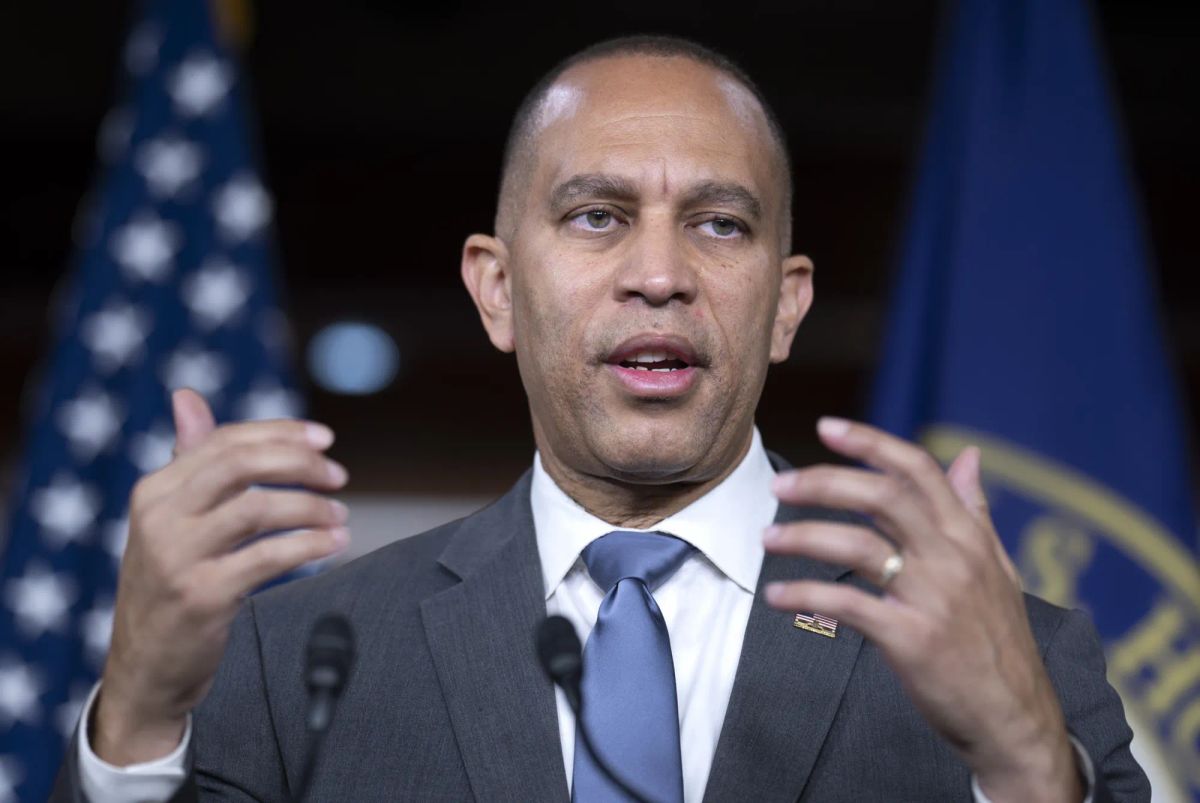
House Speaker Mike Johnson in March advocated for passing a clean, 18-month extension of the surveillance authority without any changes. House Minority Leader Hakeem Jeffries, D-N.Y., said Democrats are likely to oppose the current proposal.
Meanwhile, lawmakers have introduced several competing bills that would overhaul the program in different ways, including the Government Surveillance Reform Act, the Protect Liberty and End Warrantless Surveillance Act, and the Security and Freedom Enhancement Act.
Still, others have pushed to attach unrelated measures, like the SAVE Act, to any renewal bill.
“For too long, the federal government has used loopholes in surveillance law to sidestep the Constitution and spy on Americans without a warrant,” said Rep. Andy Biggs, R-Ariz., who introduced legislation requiring warrants before querying Americans’ communications under FISA Section 702.
With just days remaining, lawmakers face mounting pressure to reach a compromise that balances national security needs with privacy concerns.
The authority was last reauthorized on April 20, 2024, under the Reforming Intelligence and Securing America Act, and is scheduled to expire on April 20, 2026.