
Consumer Groups Balk At Verizon’s Bid to Delay Phone Unlocking
Urge FCC to adopt uniform 60 day unlocking standard instead

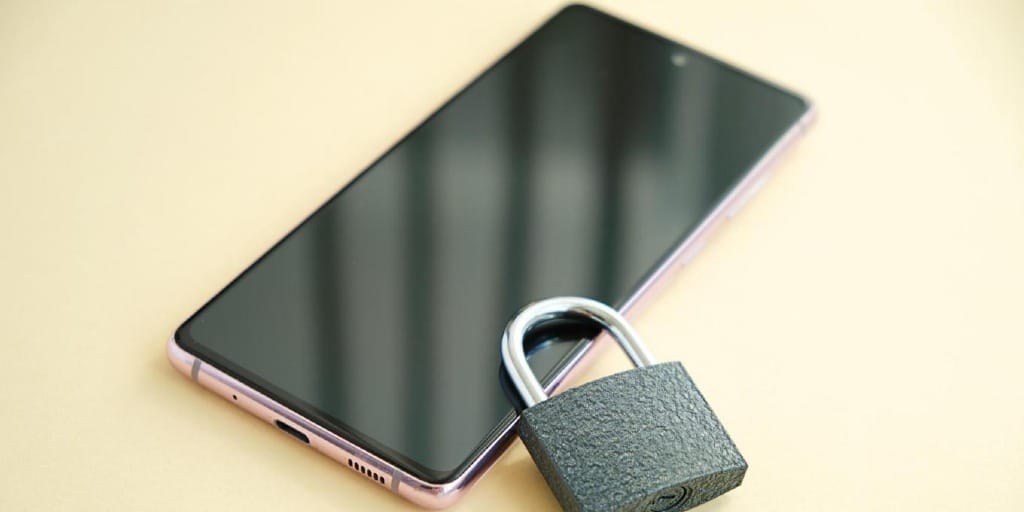
WASHINGTON, July 109, 2025 – A coalition of twelve consumer advocacy groups, ranging from the Benton Institute to iFixit, pushed back against Verizon’s petition to waive a regulation that requires it to unlock mobile phones within 60 days.
In a Monday filing sent to the Federal Communications Commission, the groups argued that Verizon’s assertion that the FCC’s unlocking regulation leads to device theft and fraud was “not supported by the broader record or by sound analysis.” The advocacy organizations further claimed that “fraud is not unique to carriers that unlock after 60 days” and stated that Verizon had provided no evidence that a longer lock period would prevent its devices from being stolen.
The groups theorized that Verizon would use a waiver of the FCC requirement to lock in customers and gain undue influence over the cellular market.

FROM SPEEDING BEAD SUMMIT
Panel 1: How Are States Thinking About Reasonable Costs Now?
Panel 2: Finding the State Versus Federal Balance in BEAD
Panel 3: Reacting to the New BEAD NOFO Guidance
Panel 4: Building, Maintaining and Adopting Digital Workforce Skills
“If providers lose the ability to enforce network locking, they will face more pressure to compete on price and quality of service rather than simply using device contracts as a customer retention tool,” the advocacy organizations said.
They also warned that granting Verizon a waiver could set a dangerous precedent that would make enforcement of future FCC actions untenable.
“If the Commission were to grant this waiver, it would send a signal that providers can evade pro-consumer conditions simply by waiting a few years and returning to request exceptions,” the organizations said.
Verizon asked the FCC to waive the requirement in May, arguing that “waiving this rule will benefit consumers because it will allow Verizon to continue offering subsidies and other mechanisms to make phones more affordable, lower upfront costs, and enable customers to obtain the latest and most innovative devices.”
Verizon has claimed that phone unlocking requirements make it a prime target for device fraud, an assertion backed by several law-enforcement groups. Seven state attorney generals filed comments to the FCC on Wednesday backing the cellular company’s claims. Those comments urged the FCC to grant Verizon’s waiver, and argued that “a mobile wireless provider typically needs more than 60 days to accurately determine whether a handset is subject to fraud or trafficking.”
Only some carriers, such as Verizon and T-Mobile, are subject to the 60-day unlocking requirement. Other carriers, such as AT&T, face no such restrictions and are given much more leeway when setting their unlocking policies. This stems primarily from FCC-imposed merger conditions: T-Mobile was required to adopt the policy as part of its purchase of Mint Mobile, and Verizon was required to adopt it as part of its acquisition of TracFone.
Despite the consumer advocacy groups’ opposition to Verizon’s waiver request, the two sides can at least agree on one thing. In July 2024, the FCC proposed mandating a uniform 60-day unlocking requirement for all mobile carriers. Though AT&T and T-Mobile initially opposed the proposal, Verizon supported it, arguing that it would benefit consumers and increase competition.
The consumer advocacy groups also supported the proposal, noting that “the proposed rule in the Unlocking [Notice of Proposed Rulemaking], while not yet adopted, reflects a reasoned and unanimous judgment by the agency that a uniform 60-day unlocking policy could promote competitive neutrality, reduce consumer confusion, and simplify enforcement.”
Several of those groups previously signed on to a letter in October 2024 urging the FCC to adopt the proposed 60-day standard.





Member discussion