
Consumers’ Research Files New USF Challenge
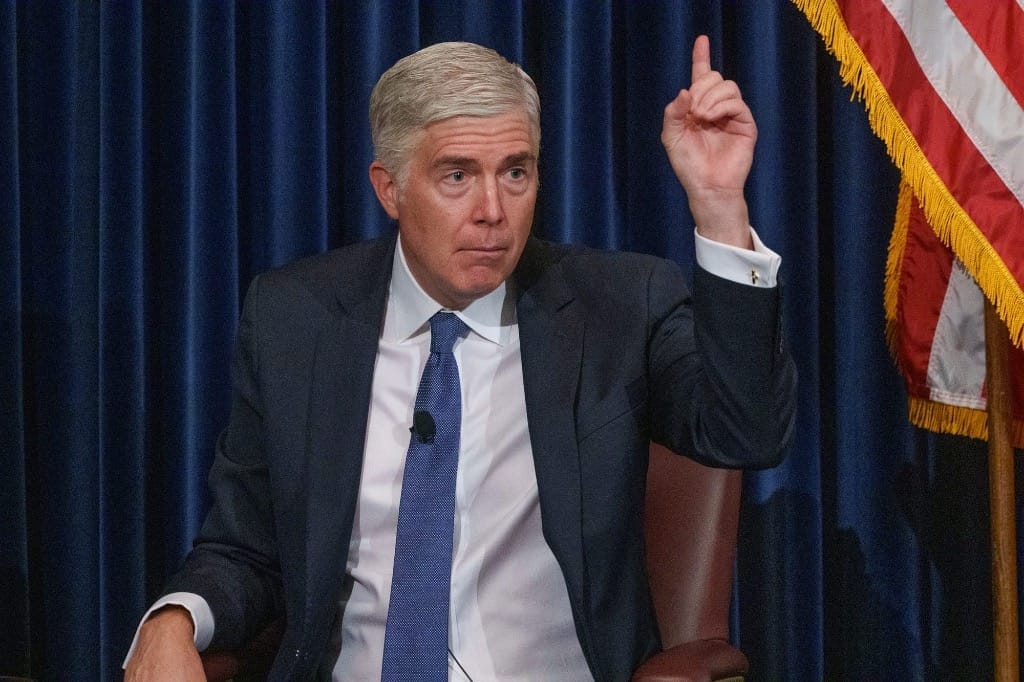
The group raised arguments in Supreme Court Justice Neil Gorsuch's dissent in the previous USF case.

WASHINGTON, Oct. 1 2025 – Consumers’ Research is again looking to challenge the Federal Communications Commission’s $8.6 billion-per-year broadband subsidy in court.
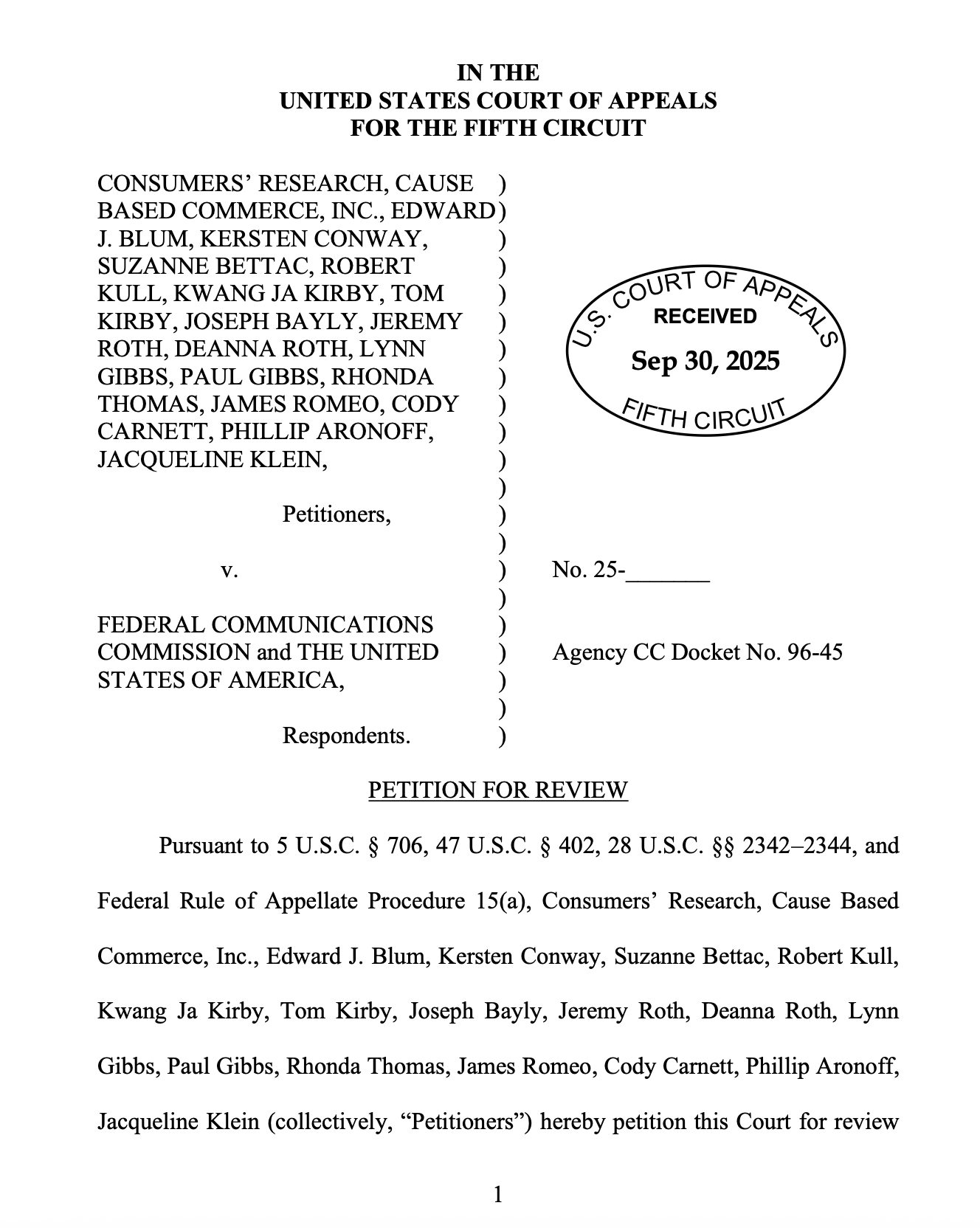
The conservative nonprofit filed Tuesday a petition for review in the U.S. Court of Appeals for the Fifth Circuit alleging parts of the law standing up the Universal Service Fund are unconstitutional, and that the nonprofit administering the fund under FCC supervision doesn’t have the power to do so.
In a 6-3 opinion, the Supreme Court ruled in June that the fund passed constitutional muster, causing the telecom industry to breathe a sign of relief. Justices said several provisions of the Telecom Act of 1996 imposed enough guardrails on the FCC that they didn’t illegally take taxing power away from the legislature. The USF is funded by fees on interstate and international voice revenue.
The majority opinion did not address two provisions that allow for “additional” and “advanced” services for schools, libraries, and healthcare centers to be funded by the program, saying Consumers’ Research didn’t advance any arguments specific to them.
Justice Neil Gorsuch, in a dissent joined by Justices Clarence Thomas and Samuel Alito, argued those indeed violated the nondelegation doctrine, the idea Congress can’t delegate its powers to other entities, by giving the FCC leeway to add any services it liked to the fund and jack up contribution fees.
The sections, (c)(3) and (h)(2), “are unconstitutional under the nondelegation doctrine, as explained by three dissenting Supreme Court Justices in a recent decision,” Consumers’ Research told the Fifth Circuit Tuesday. The Fifth Circuit had broken with other courts and ruled the fund unconstitutional last year, issuing the ruling the Supreme Court later reversed.
.
Consumer’s Research had ended its effort to have the Fifth Circuit hear more arguments last month, and the court closed the case. The group was expected to file a new legal challenge after the FCC released its fourth quarter 2025 contribution factor, the percentage of assessable revenue telecoms will pay into the fund.
The group also said that the involvement of the Universal Service Administration Company, a nonprofit that calculates the contribution factor and administers the fund under FCC supervision, was an unconstitutional delegation of executive power. The Supreme Court majority had found USAC’s role in setting the contribution factor was proper, but now Consumers’ Research is challenging the group’s ability to collect money and make payments.
The Tuesday petition was short, but Consumers’ Research outlined the same arguments at length in an FCC filing last month asking the agency not to fund programs authorized under the two Telecom Act sections at issue, or zero it out entirely because of the USAC issue. The group also cited Gorsuch’s dissent in its arguments around USAC.
Joey Wender, executive director of the Schools, Healthcare, and Libraries Broadband Coalition, which has intervened in the previous case on the FCC’s side, said last month that “SHLB remains committed to defending the USF and are confident that we would once again prevail in court.”
At the FCC’s meeting on Tuesday, the agency voted along party lines to reverse two Biden-era decisions that allowed its E-Rate program, funded by USF, to support off-campus Wi-Fi for students and library patrons. Gorsuch had pointed to the programs in his dissent, arguing they were evidence the agency could arbitrarily expand its programs beyond the universal service goals outlined in the Telecom Act.
FCC Commissioner Olivia Trusty said her vote in favor of axing the programs was partly motivated by a desire to make those arguments less compelling.
“Staying firmly within the heartland of our authority both honors the majority’s reasoning and avoids the concerns that led the dissenters to a different conclusion,” she said.
While the high court didn't upend the fund over the summer, industry experts argue that the USF needs to be reformed, as expenditures remain flat while voice revenue shrinks. The contribution factor for the fourth quarter is 38.1 percent.
Capitol Hill lawmakers are working on modernizing the contribution base and took comments from stakeholders last month. ISPs, seen as a likely revenue source, tend to support adding big software companies like Google and Netflix to the mix, something those companies oppose.







Member discussion