
Dem Lawmakers Want Clarity on BEAD Non-Deployment
The Trump administration isn't eager for states to spend money on efforts other than deploying infrastructure.

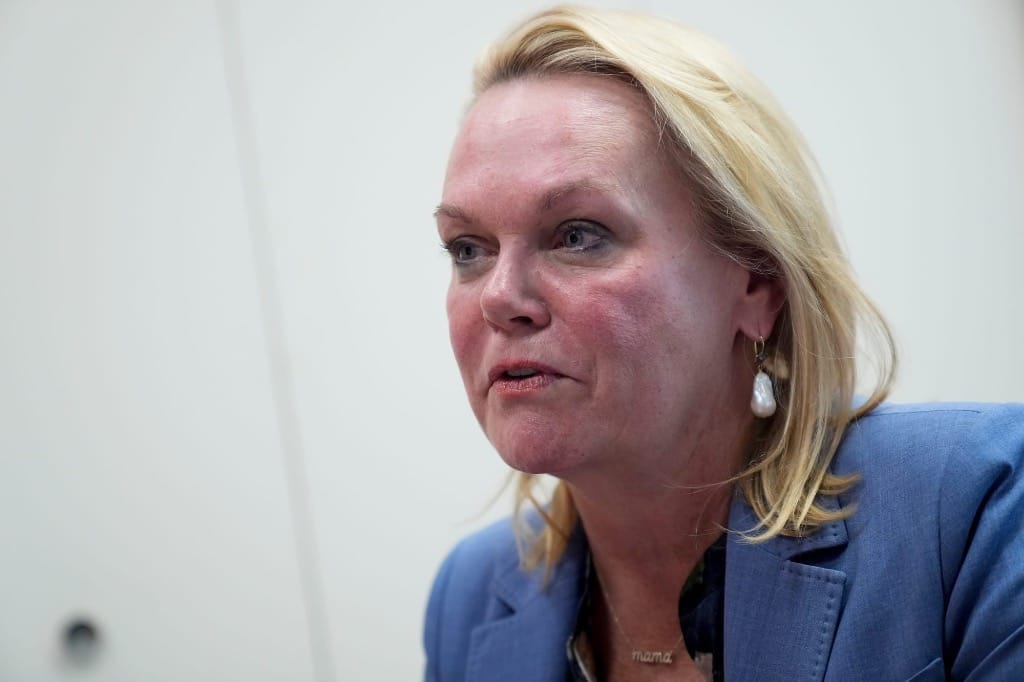
WASHINGTON, August 26, 2025 – Ten Democratic Members of Congress are asking the Commerce Department to give states clarity on how they can use excess funds under the $42.45 billion Broadband Equity, Access, and Deployment program.
“Broadband deployment is critical; however, its long-term success requires parallel investments in the foundational non-deployment activities that enable effective implementation and adoption,” the lawmakers wrote in a Tuesday letter to Commerce Secretary Howard Lutnick and Arielle Roth, who heads Commerce’s National Telecommunications and Information Administration.
“We urge NTIA to issue formal clarification elucidating how States may use remaining BEAD funds for these non-deployment purposes in their new submissions,” they wrote.

The Broadband Equity, Access, and Deployment program is aimed at getting broadband infrastructure to the last remaining homes and businesses that lack connectivity. States were allocated portions of the money to be administered by their broadband offices in 2023 based on their unserved populations and how remote those passings were.
NTIA was working with a Federal Communications Commission dataset that, while a huge improvement in federal broadband coverage mapping, was a work in progress. Even with eligible location counts have continued to come down as those maps improve and networks expand, some states have ended up with huge surpluses while others find themselves strapped for BEAD cash.
Surpluses have gotten even larger after the Trump administration handed down new rules for the program, and mandated a new round of bidding, in June. The new policy emphasized cost savings, and states that had previously put together under-budget plans are shaving hundreds of millions of dollars off their previously planned deployment spending.
It’s not clear what will happen to the saved cash at this point, though. The Trump administration rescinded approval for all non-deployment activities, including some that were already underway, and said more guidance would be forthcoming.
The 2021 Infrastructure Law, which created BEAD, specified that at least “broadband adoption programs and affordable device distribution” were an allowed use of any funds left over after securing connectivity for each eligible location, in addition to anything else the NTIA head saw fit.
The Biden administration greenlit an array of activities, which the lawmakers defended on Tuesday.
“Workforce development and employment, digital safety education, support for remote learning and telehealth and the other non-deployment activities approved under the original [BEAD rules] are foundational to delivering secure, high-speed internet to our most underserved communities,” they wrote.
Led by Rep. April McClain-Delaney, D-Md., the letter was also signed by Reps. Nikema Williams, D-Ga., Rashida Tlaib, D-Mich., Tim Kennedy, D-N.Y., Troy Carter, D-La., Cleo Fields, D-La., Jim Clyburn, D-S.C., Sylvia Garcia, D-Texas, Nikki Budzinski, D-Ill., and Shri Thanedar, D-Mich.
NTIA did not immediately respond to a request for comment.
“This is a deployment program. It’s not a non-deployment program,” NTIA Chief of Staff Brooke Donilon said at the Mountain Connect conference earlier this month. “We’re going to deliver on the benefit of the bargain, and we will figure out how much we have for non-deployment. Until we know how much money we’re talking [about], it’s hard to talk about the policy.”
State broadband heads have said they’re not all optimistic they’ll ultimately get to use the money they save on deployment costs. Drafts of states’ final proposals – spending plans that NTIA will need to approve before states can fund projects – have so far made minimal mention of non-deployment funding.
“We have been told that there is no non-deployment available, unless you’re really creative on how you language that in your final proposal,” Bree Maki, head of Minnesota's broadband office, told Broadband Breakfast at the conference.
West Virginia’s final proposal said the broadband office “looks forward to the future opportunity to respond” to NTIA non-deployment guidance “with support for initiatives that will deepen the impact of these broadband infrastructure investments for West Virginia.”
The state is looking to spend $625 million of its $1.21 billion allocation on deployment.
Louisiana, which had previously planned a major telehealth initiative and is looking to spend $500 million on deployment – $250 million less than its Biden-era plan and well below its $1.36 billion allocation – did not mention non-deployment in the public draft of its final proposal.



Member discussion