
Democratic Wisconsin State Rep. Wants Non-Deployment Funding
Sen. Joni Ernst, R-Iowa, is circulating a bill that would claw back the money, more than $20 billion so far.

Jake Neenan
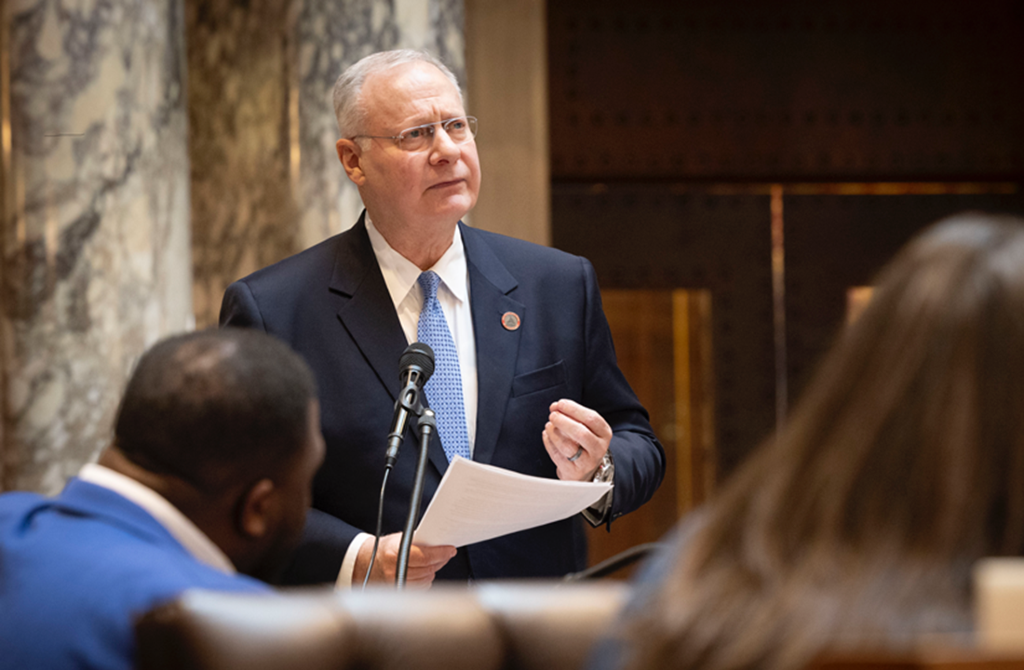
WASHINGTON, Nov. 10, 2025 – A Democratic state lawmaker in Wisconsin wants his state to retain control over its full allocation under the $42.45 billion Broadband Equity, Access, and Deployment program, including the $363 million not tapped for expanding infrastructure.
State Rep. Randy Udell, D-47th District, said the state’s broadband office would like to use that portion of its $1 billion allocation on “tasks such as pole attachments, workforce development, and cellular infrastructure.”
“However, NTIA has signaled their intention to withhold these Congressionally-allocated funds,” he said in a statement Thursday. “It is ignorant to treat these non-deployment funds as optional. Even in Dane County, rural households still lack reliable internet coverage, and these cuts will only delay their access further.”
Under its tentative bidding results, Wisconsin would spend about $692 million of its $1.05 billion BEAD allocation to serve more than 175,000 homes, businesses, and anchor institutions. Most of those would get fiber, about 74 percent, while satellite and fixed wireless providers would serve 13 percent each.
How Commerce’s National Telecommunications and Information Administration decides to handle such non-deployment funding – money allocated to states in 2023 and now not necessary to pay for a broadband deployment grant after tentative results – is the subject of much anticipation. Under a Trump administration directive to push down spending, states are so far more than $20 billion under budget.
Under the Biden administration, states had planned to use any leftover funds to boost broadband adoption, workforce development, and other things. The Trump administration rescinded approval for those activities when it updated BEAD’s rules in June, saying more guidance would be forthcoming.
Democrats in Congress have sought clarity
Democrats in Congress have also asked NTIA and Commerce for clarity on how states can use the money, and insisted non-deployment projects were allowed under the law. Gigi Sohn, head of the American Association for Public Broadband, said last month she and others were also trying to coordinate advocacy from Republican officials, who are considered more persuasive to the Trump administration.
“The only thing that’s going to turn this around,” she said on Light Reading’s The Divide podcast, “is to try to get state legislators, governors – particularly Republicans – to weigh in and say, ‘That’s our money. By statute that’s our money.’”
While the agency’s posture has led to fears that NTIA itself would attempt to claw back any BEAD remaining money, which states would prefer to keep, the agency’s top official said last month that at least some uses were under consideration.
“NTIA is also considering how states can use some of the BEAD savings – what has commonly been referred to as non-deployment money – on key outcomes like permitting reform,” NTIA Administrator Arielle Roth said in an Oct. 28 speech. “No final decisions have been made, but this could be a powerful way to advance BEAD’s goals.”
Sen. Joni Ernst, R-Iowa, is circulating a bill that would claw back all BEAD money not designated for a deployment when NTIA approves bidding results. It hasn’t yet been introduced.
NTIA has to approve states’ tentative results before contracts can be signed and projects can get underway, and the agency has said it plans to approve most plans by the end of the year. California is the only state that has yet to post those results, and is set to do so before or on Nov. 14.
A Broadband.io survey of 42 state broadband heads by Doug Adams, head of marketing firm Broadband Marketers, found that few states were confident they would ultimately retain their non-deployment dollars, but many were making an effort to convince their governors and lawmakers to advocate for keeping the cash.




Member discussion