
Dish Defaulted on $3.5 Billion, Crown Castle Says
Dish has argued it is exempt from contracts after its parent company EchoStar reached deals to sell much of its spectrum.

Jake Neenan

WASHINGTON, Jan. 13, 2026 – Crown Castle said Monday it had terminated its contract with Dish Wireless after Dish defaulted on more than $3.5 billion in owed payments.
EchoStar, Dish’s parent company, reached deals to sell many of its spectrum licenses for more than $40 billion last year.
Dish has been telling tower companies and contractors it’s exiting their existing agreements, arguing the sale was forced by Federal Communications Commission pressure and that the proceeds will remain with EchoStar.
“While it initially continued to make its required payments, DISH recently failed to do so and defaulted on its obligations under the agreement with Crown Castle. In an effort to protect its shareholders, Crown Castle exercised its right to terminate the agreement and to recover in excess of $3.5 billion in remaining payments owed,” the company said in a statement Monday.
Crown Castle is suing Dish over the issue and trying to keep the company from ditching its obligations under their lease agreement, as is American Tower. Dish told the companies and others that FCC investigations forced EchoStar’s spectrum sales, and such an unexpected event was grounds to cancel future payments for tower leases and other things.
The tower companies counter that the FCC never ordered EchoStar to do anything, and that the company is trying to avoid paying its subsidiary's bills after a lucrative business decision.
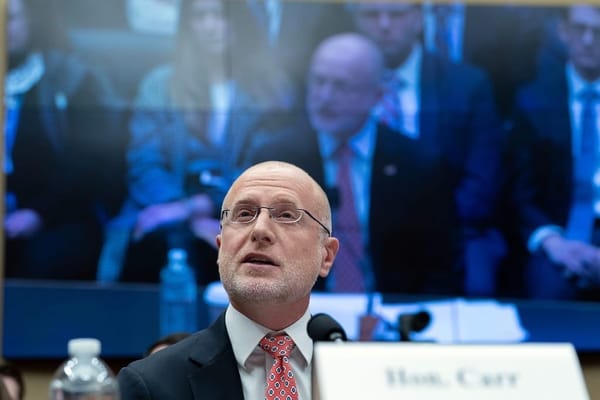
The FCC was probing EchoStar’s license rights last year, as Chairman Brendan Carr was adamant the company wasn’t putting its airwaves to productive use. Carr closed the probes after EchoStar announced major spectrum sales to SpaceX and AT&T.
Crown Castle said it was supportive of the buyer putting EchoStar’s spectrum to use.
“That said, we will do everything we can to enforce our rights under our agreement with DISH and keep DISH to its word,” the company wrote.
An EchoStar spokesperson did not immediately respond to a request for comment. Asked on the company’s November earnings call under what circumstances EchoStar might actually stop paying tower companies, CEO and co-founder Charlie Ergen only said that “litigation is not positive.”
The agency still has to approve the sales, in which AT&T would receive 3.45 GigaHertz (GHz) and 600 MHz licenses, and SpaceX would receive AWS-4, PCS H-block, and unpaired AWS-3 airwaves. Infrastructure companies and contractors have been asking the agency to condition its approval on EchoStar paying Dish’s bills.
“If contractors, tower owners, and other partners are left bearing the costs of EchoStar’s exit from facilities-based deployment, it will deter future participation in similar buildout efforts,” NATE, which represents telecom contractors, wrote in a Jan. 6 filing. “No contractor or infrastructure owner can responsibly commit capital, labor, and expertise to future FCC-backed deployment models if contractual commitments can later be avoided through corporate restructuring or license transfers.”





Member discussion