
Experts Call for Modernization, Rewrite of 1996 Telecom Act
Ahead of Thursday's hearing, witnesses point to opportunities to promote competition, broadband classification, and AI infrastructure.

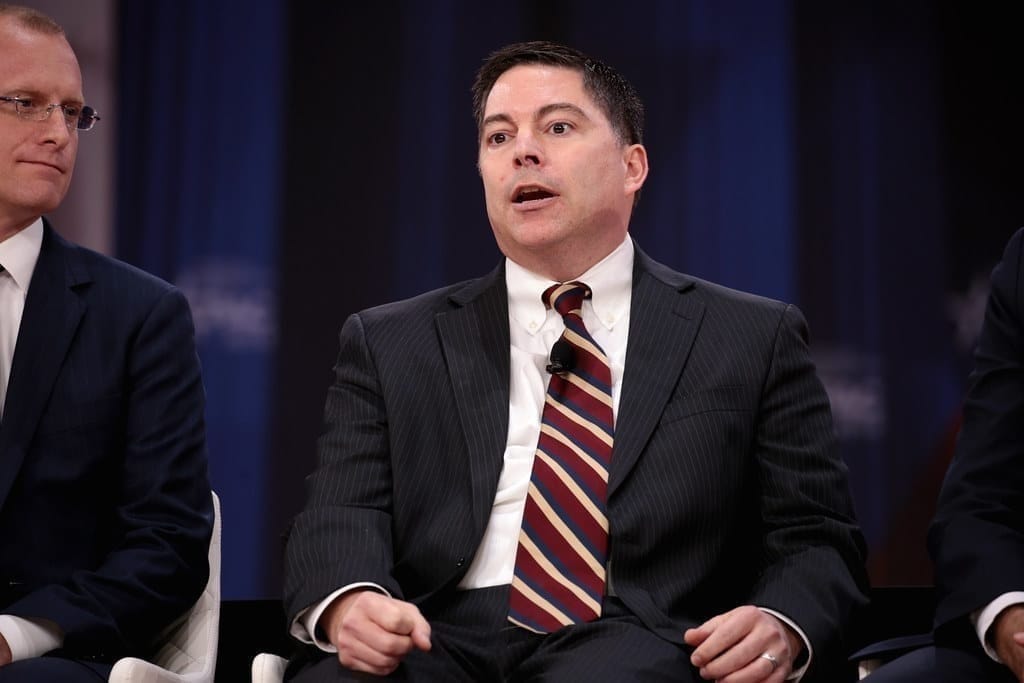
WASHINGTON, March 24, 2026 – It is time for a rewrite of the Telecommunications Act of 1996, witnesses said in written testimony ahead of Thursday’s House hearing to review the law.
“Much of the current law has been diluted over time and in response to changing circumstances, allowing for the deregulation of those covered by it,” said former Federal Communications Commissioner Michael O’Rielly. “The so-called legacy communications industry should be relieved of burdens that no longer make any sense or deserve clarification.”
The Subcommittee on Communications and Technology will review the Telecom Act at the hearing after persistent calls for its modernization from lawmakers and experts.

Along with O’Rielly, the hearing witnesses include INCOMPAS CEO Chip Pickering, R Street Institute’s Resident Senior Fellow Adam Thierer, and Free Press Vice President of Policy Matt Wood.
Pickering, who shaped the Telecom Act as a staff member on the Senate Commerce Committee, stressed the need to revise the law to promote competition in an artificial intelligence-enabled economy, remove deployment barriers, encourage investment and ensure connectivity remains accessible.
Pickering emphasized that if Congress creates the right policy environment like it did for the Telecom Act, it will set up innovation and growth to secure the country’s digital and economic future.
“We are now writing the first sentences of the next chapter, and I would ask that you write them with the same clarity of purpose,” Pickering said. “That means streamlining permitting so that data centers, fiber networks, and transmission infrastructure can be deployed without years of regulatory delay.”
O’Rielly asked the committee to consider the outdated cable regulation in a competitive video market, mismanagement and overspending with the Universal Service Fund (USF), simplification of satellite regulations, and Voice over Internet Protocol regulation.
In a staff memorandum to members of the Energy and Commerce Committee, House Energy and Commerce Chairman Brett Guthrie, R-Ky., and Rep. Frank Pallone, D-N.J., selected issues to discuss at the Thursday hearing, including the telecom competition and regulatory structure, broadband’s classification, the Universal Service Fund mechanism, changes to Section 230, media ownership and wireless infrastructure reforms.
The lack of a regulatory classification of broadband in the Telecom Act has been a hot topic for lawmakers.
Another selected issue that has garnered much conversation has been the funding mechanism for USF, especially as the revenue base continues to shrink and costs remain high.
Beyond issues surrounding the USF contribution factor, O’Rielly said the solution to overspending is not to “simply to tax more industries” and he opposed giving the FCC authority to make such decisions.
“Focusing only on contributions ignores the fact that spending has risen sharply, subsidy subprograms need serious reform, and the Universal Service Administrative Company operates without proper oversight,” O’Rielly said.
The Subcommittee on Communications and Technology will discuss what worked and did not work with the Telecom Act, lessons to take from the enactment of the law and how Congress should modernize the Communications Act.
“Just as the 1996 Act unlocked the internet era, this committee has a real opportunity to lay the foundation for America’s future in AI and digital infrastructure, and the country is counting on you to get it right,” Pickering said.




Member discussion