
Experts Warn U.S. Needs ‘System-of-Systems’ Resilience
'The key performance indicator going forward is how quickly you can recover,' panelist said.

Jericho Casper
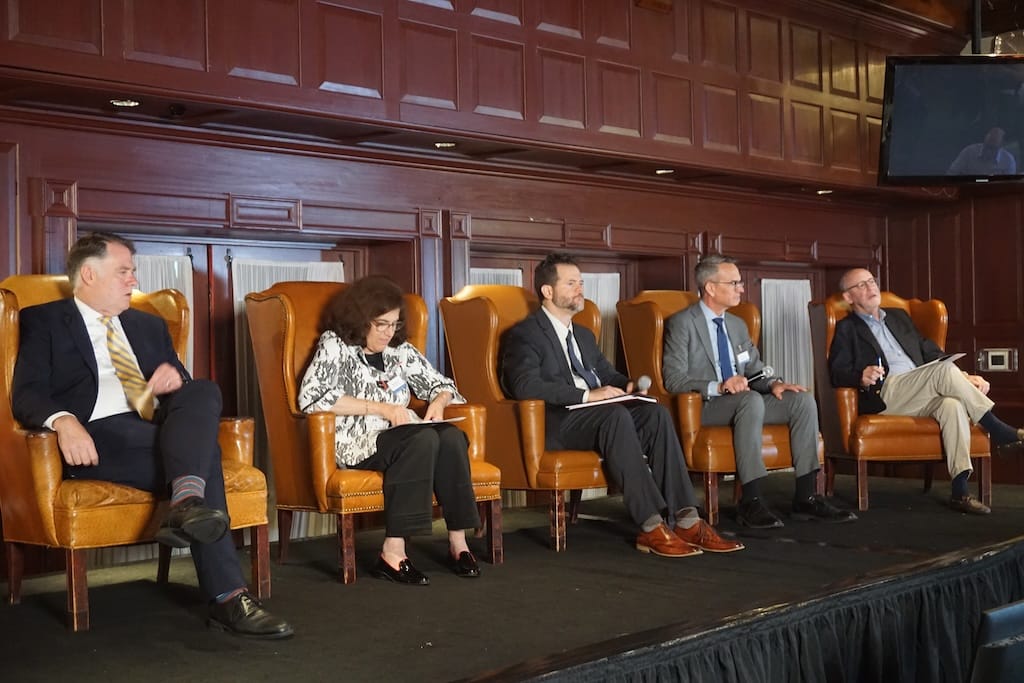
WASHINGTON, Sept. 18, 2025 – Industry leaders warned Thursday that U.S. infrastructure resilience was being tested by cyberattacks, power demands, and GPS interference.
Can't see the full event video? Join the Breakfast Club to watch
Melissa Newman, vice president at the Telecommunications Industry Association, said artificial intelligence had made cyberattacks faster and more damaging, multiplying vulnerabilities across networks and data centers.
“Cyberattacks and supply chain issues are going to keep recurring,” Newman said, speaking at the Resilient Critical Infrastructure Summit, hosted by Broadband Breakfast. “The key performance indicator going forward is how quickly you can recover.”
She pointed to TIA standards already in use worldwide, including for data centers and supply chain security, which have been adopted in more than 50 countries.
“TIA-942 is used to actually go through all aspects of a data center,” Newman explained, listing “infrastructure, site, location, layout, cabling, network, power, tooling, physical security, and fire protection.”
“The point of the standard is to do our best to make sure that they are resilient,” she said. “We have over 600 certifications already, because this standard has been around since 2005.”
She said the standards give companies a roadmap to identify weak points before failures occur.
“If cooling is the weakest link, if the power grid isn’t great, everything else is not going to go well,” she added.
U.S. power sector facing conditions unlike anything seen in decades
Steven Snyder, an energy partner at Morgan Lewis, said the U.S. power sector was facing conditions unlike anything seen in decades.
Electricity demand had been flat since the late 1970s, when efficiency reforms following the oil embargo slowed load growth. That dynamic has shifted dramatically with the rise of AI and data centers.
“For years, utilities planned around slow, predictable growth,” Snyder said. “Now, load growth is at levels we haven’t seen in modern times.”
Distribution and transmission constraints, he said, are becoming the bigger choke points, because new power lines and pipelines can take years to plan, permit, and construct.
Ed Mortimer, vice president of government affairs at NextNav, said GPS disruptions were another vulnerability preventing resilient U.S. communications.
“You see GPS jamming and spoofing as a modus operandi of any conflict around in the world,” Mortimer said. “Here in the United States, we’ve had major interference events at Denver International Airport and Dallas–Fort Worth Airport.”
He said GPS remains invaluable but is increasingly fragile because its open signals can be easily jammed. To address that gap, NextNav was developing a terrestrial, encrypted backup system that could provide continuity if satellite GPS was obstructed.
“The power source it would take to jam a NextNav signal would be 10,000 times stronger than for GPS,” Mortimer said. “That’s why we need a system of systems – GPS complemented by terrestrial backups that are encrypted and secure.”
Mortimer added that the FCC, under Chairman Brendan Carr, has launched a proceeding on GPS resiliency and spectrum use. “This is a critical moment in our nation’s history,” he said. “It’s going to take a lot of stakeholders working together.”
Ambassador Steve Lang, who recently concluded a 30-year career at the State Department as U.S. Coordinator for International Communications and Information Policy, said the U.S. cannot ignore the geopolitical stakes.
“Our competition with China is the fundamental challenge for the United States in this century,” Lang said. “You’re only as strong as your weakest link, and we need to make sure our undersea cables, satellite networks, and wireless systems are resilient and secure.”
Lang pointed to steps taken abroad, such as the European Union’s 5G security toolkit that gives member states guidance on how to assess high-risk vendors and limit their role in national networks.
Additionally, Japan has excluded untrusted suppliers from sensitive telecom projects, while Australia has enforced strict rules barring high-risk equipment from its 5G build-outs.
“We’ve made a lot of progress,” he said, “but this is an effort we have to constantly continue.”
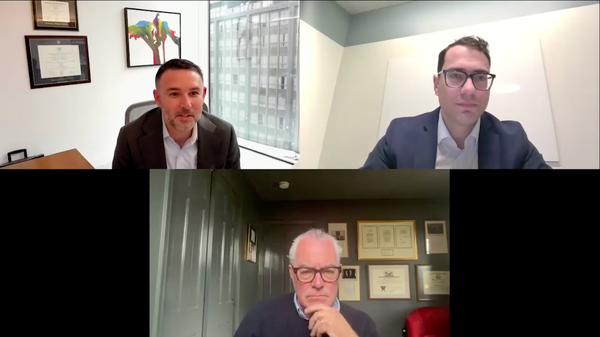
Ambassador David Gross, a partner at Wiley and former U.S. envoy for international communications policy, moderated the discussion.



Member discussion