FCC Accused of Withholding DOGE Communications ‘in Bad Faith’
A watchdog group is seeking discovery after alleging the FCC failed to adequately produce records in a FOIA lawsuit.

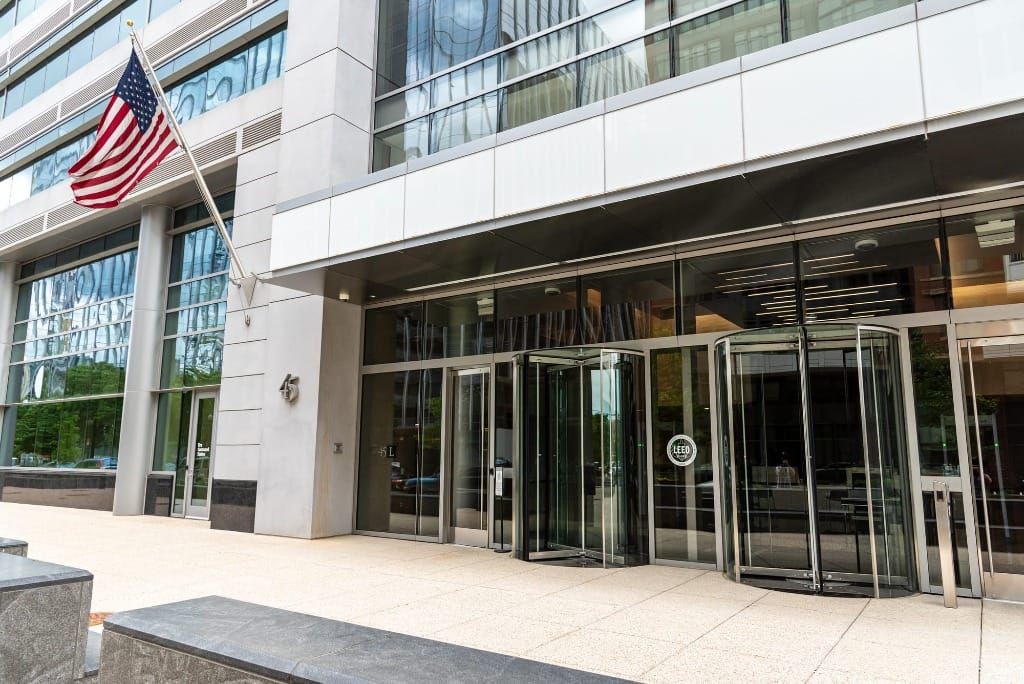
WASHINGTON, July 2, 2026 – A watchdog group and journalist are urging a federal judge to reject the Federal Communications Commission’s bid for a ruling without trial in a Freedom of Information Act suit.
After 16 months of delays and what they call “obfuscation,” Frequency Forward and journalist Nina Burleigh urged the D.C. District Court last Thursday to grant discovery in its FOIA fight to expose potential conflicts of interest at the FCC involving Elon Musk, DOGE, and SpaceX.
Frequency Forward and Burleigh, a veteran journalist and author who covered the Clinton White House for Time magazine, filed the original FOIA request in February 2025 and sued in April 2025 after the FCC failed to produce documents. To date, the FCC has produced thousands of pages that plaintiffs argue are inadequate, incomplete, and often unresponsive.
In their latest filing, the plaintiffs highlighted several missing categories of records, including Signal and text messages, travel records related to Chairman Brendan Carr’s visits to SpaceX and Starlink facilities, communications with known DOGE personnel, and information related to DOGE detailee Tarak Makecha, one of three individuals representing DOGE detailed to the FCC.
“The Defendant has provided a paucity of information concerning the activities of DOGE within the FCC and no information concerning the activities of Musk himself as the simultaneous head of the United States Digital Service and SpaceX,” Arthur Belendiuk, attorney for advocacy group Frequency Forward, wrote in a filing to the court.
The USDS was rebranded as the U.S. Department of Government Efficiency (DOGE) to act as the internal technology and modernization arm for the Trump administration's efficiency agenda.
“The evidence clearly demonstrates that the FCC has acted in bad faith by withholding documents responsive to Plaintiffs’ FOIA request,” the filing states.
Plaintiffs allege gaps in FCC records search
The lawsuit alleges DOGE and FCC personnel routinely communicated via text, encrypted messaging apps such as Signal and personal devices to conduct government business, which plaintiffs argue complicate compliance with federal records laws.
Plaintiffs say the full extent of Signal use within relevant FCC offices is unknown, though they argue there are indications it has been used at senior levels, including by Carr.
“We know he’s using Signal,” Belendiuk, a veteran communications attorney at Smithwick & Belendiuk, P.C., which is representing the plaintiffs pro bono, told Broadband Breakfast in an interview. “These things should have been disclosed, and the court should have searched for those texts, and they absolutely did not.”
The FCC, for its part, has maintained that agency policy prohibits the use of personal devices and encrypted messaging apps like Signal for official government use.
Belendiuk said plaintiffs face evidentiary challenges in proving the existence of certain communications. “They’re going to pretend it doesn’t exist, and I can’t prove it exists,” he said, adding, “It is not up to anyone at the FCC to decide that certain government records need not be preserved.”
Questions remain about DOGE detailee's role
The lawsuit points to the case of Makecha, one of several individuals plaintiffs say were detailed to the FCC through DOGE or related government digital service efforts.
According to the filing, Makecha described himself as a software engineer in correspondence with FCC counsel, though plaintiffs note his professional background has been in finance and corporate strategy roles, including positions at Tesla, Flexport, and SkySafe, and most recently with an investment firm linked to Musk’s private companies – particularly SpaceX, xAI, Neuralink, and The Boring Company.
The plaintiffs say the FCC did not produce a resume, curriculum vitae, or comparable onboarding documentation for Makecha, which they argue would typically be part of the clearance process. They say this leaves unclear what his role at the agency was, what duties he performed, and why he was assigned there.
“What exactly was he doing there for two weeks? What were his duties?” Belendiuk queried. “After fighting with the FCC on this case for over a year, I can't answer that question.”
Beyond Makecha, the plaintiffs say the FCC has provided little information about other DOGE associated personnel detailed to the agency.
Belendiuk said Jordan Wick appears to have performed technical work related to broadband data, while the role of Jacob Altik remains unclear. According to Belendiuk, the FCC indicated Altik’s onboarding process was started but never completed, leaving unanswered questions about whether he performed any work for the agency.
“I think [Wick] was the one guy actually doing what he was supposed to,” Belendiuk said.
“If [they] saved the government money, God bless them, that's a good thing.”
Plaintiffs seek discovery into FCC search
Plaintiffs are asking the court to deny the FCC’s motion for summary judgment and authorize discovery into the adequacy of the agency’s search.
If the court grants that request, the plaintiffs could seek depositions and other discovery to examine how the FCC conducted its search for responsive records and whether additional documents exist.
Belendiuk said discovery is essential because, without depositions, the plaintiffs cannot determine whether the FCC’s search was complete. “I don't think the FCC is going to win this motion,” he said.
Belendiuk said a separate FOIA lawsuit involving Carr’s communications about ABC host Jimmy Kimmel revealed similar issues with the agency’s production of text messages. “It seems that there's a pattern in practice here,” he suggested.
The filing also points to a series of actions beneficial to SpaceX and its Starlink business which the FCC has taken under Carr. Those include dropping an investigation into competitor EchoStar after it agreed to sell spectrum to Starlink, granting SpaceX a waiver for direct-to-cell service over objections from mobile network operators, and approving the expansion of SpaceX’s satellite constellation by up to 7,500 satellites.
Frequency Forward is a public interest watchdog dedicated to promoting transparency and accountability at the FCC, based out of the office of Smithwick & Belendiuk.
The FCC did not respond to a request for comment by publication time.