
FCC Adopts Copper Retirement, Call Center Onshoring Orders
Chairman Brendan Carr said there ‘may in fact be’ a full commission vote on the Nexstar-TEGNA merger.

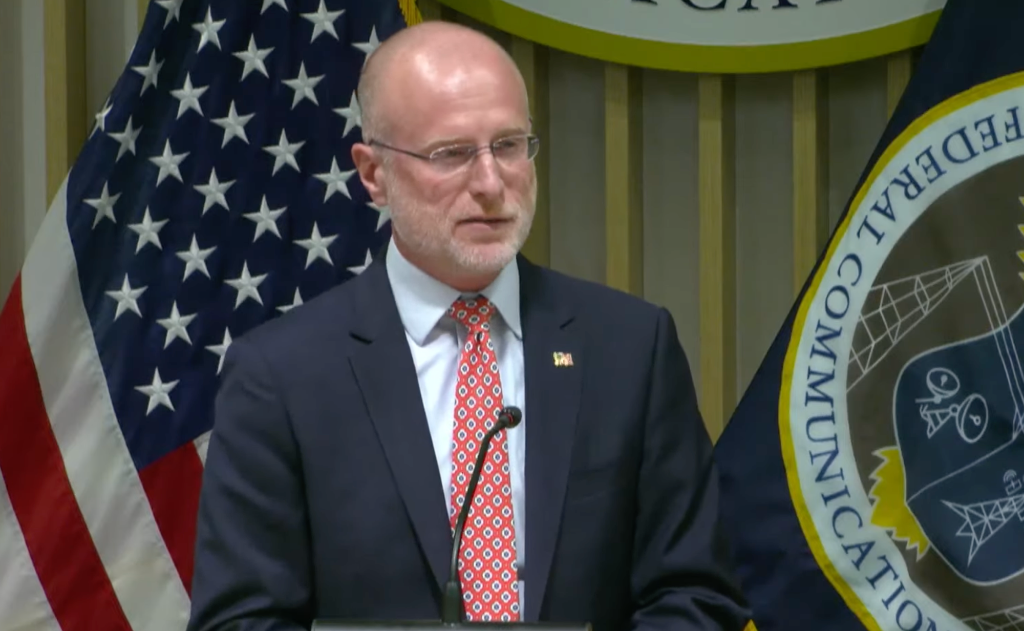
WASHINGTON, March 26, 2026 – The Federal Communications Commission unanimously adopted an order aimed at easing the process of decommissioning copper networks.
The order the agency adopted eliminated some filing requirements around network changes and granted companies blanket authority to grandfather legacy copper services like voice and low-speed broadband, meaning they won’t be offered to new customers.
The FCC has to greenlight companies’ requests to discontinue legacy telecom services, an effort to ensure areas aren’t left without access to essential services. Major ISPs are eager to transition customers to other technologies, as copper doesn’t provide competitive broadband service and is expensive to maintain.

FCC Commissioner Anna Gomez said she requested edits to the public draft that establish a docket for consumers to submit complaints on carriers’ discontinuance practices. Companies will also have to notify subscribers of that docket when sending out still-mandatory notices of planned discontinuance.
The adopted text also limited the scope of state laws the order would preempt. Gomez said preemption was limited to “the discontinuance of interstate and jurisdictionally missed services, and does not reach consumer protection laws, state universal service obligations, or state authority over 911 service.”
“After working through some of our requested edits, this order strikes the right balance between moving the transition forward,” protecting 911 networks and ensuring a competitive marketplace, and “ensuring no one is left without a path forward when their service changes,” Gomez said.
Consumer advocacy group Public Knowledge wasn’t convinced.
“Today’s Order puts people at risk. It allows phone companies to cut corners in the name of upgrading our nation,” Harold Feld, senior vice president at Public Knowledge, said in a statement. “We appreciate the FCC’s adoption of safeguards to address these concerns, but we fear these do not go nearly far enough. As a result, millions of rural Americans may see the price of service go up while the quality goes down – or worse, see their service disconnect altogether.”
Rural residents and others had raised similar concerns during the rulemaking process.
AT&T, Verizon, and the Wireless Infrastructure Association each released statements praising the order.
“By streamlining rules and removing outdated regulatory barriers, the FCC is strengthening our ability to invest in modern networks and accelerating the shift from outdated copper to newer technologies,” Rhonda Johnson, AT&T’s executive vice president of regulatory affairs, said in a statement. “This is a win for customers and for America’s communications future, and we look forward to continuing to work with Chairman Carr and the Commission to build on this momentum.”
AT&T COO Jeff McElfresh said at a Morgan Stanley conference this month the carrier had approval to stop selling new service at 85 percent of its more than 5,000 wirecenters, and could start fully shutting down 30 percent. The carrier is aiming to shut down most of its copper by the end of 2029.
Call center onshoring, robocalls
The agency also unanimously adopted a proposal seeking comment on ways to incentivize communications companies to onshore call center jobs.
In a change from the public draft, the adopted item would seek comment on requiring companies to disclose to prospective subscribers the percentage of customer service calls handled outside the U.S. on FCC-mandated broadband ‘nutrition labels.’
The agency is separately considering rolling back other broadband label requirements.
The proposal will also seek comment on allowing callers to transfer calls to a U.S.-based center, requiring providers to disclose the location of call centers handling a customer service call, and other things.
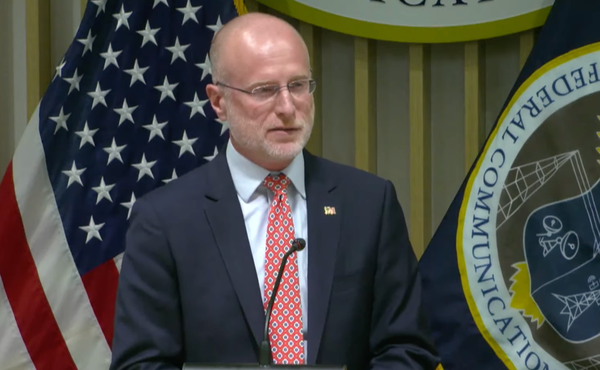
“Too often, foreign call centers have meant confusing customer service, delayed support, and even security risks,” FCC Chairman Brendan Carr said. He claimed sometimes robocallers were trained at legitimate call centers.
On robocalls, the agency adopted a separate proposal that would seek comment on expanding robocall certification and reporting requirements to more companies that access phone numbers. Carr said a majority of the agency’s robocall cases include numbers that had been resold among companies, a practice the proposal will ask about restricting.
Space spectrum, subsidy debarment
The agency also adopted a proposal asking about ways to make spectrum available for spacecraft other than communications satellites, like those that might be used for in-space manufacturing and repair or private lunar missions.
Carr pointed to the massive orbital data center application from SpaceX, plus a Blue Origin plan to launch 50,000 and a StarCloud application to launch 88,000 data centers into orbit.
A separate item, also universally adopted, will adopt Office of Management and Budget guidelines for suspending or debarring participants in government programs. The item would also propose to apply those rules to a greater range of misconduct and to additional FCC programs other than its Universal Service Fund.
Nexstar-TEGNA
Carr said there might still be a full commissioner vote on the hotly contested merger between broadcast station owners Nexstar and TEGNA. The agency’s media bureau approved the deal last week, and opponents including state attorneys general and cable trade associations have sued to block the transaction.
“Staff decisions are initial decisions, they’re not final decisions. There may in fact be a commission vote on this,” he said. “There’s been an application for review seeking full commission review of that decision – that may happen. So there may be a commission vote on this at the end of the day.”
Opponents of the deal, including Gomez, argued commissioners should have voted on the merger because it involved waiving the agency’s cap preventing a single entity from owning stations reaching more than 39 percent of U.S. households. They maintain that cap is set in stone in the Communications Act.
In a filing submitted Thursday during the agency’s meeting, the FCC urged a panel of the U.S. Court of Appeals for the D.C. Circuit not to pause the merger itself. The deal already closed on March 19, according to the companies, but the agency stuck with the argument that its media bureau had authority to waive the 39 percent cap.



Member discussion