
FCC Approves T-Mobile, SES Purchases
T-Mobile is set to acquire UScellular's wireless business for $4.3 billion, and SES is purchasing Intelsat for $3.1 billion.

WASHINGTON, July 11, 2025 – The Federal Communications Commission approved two major deals Friday: T-Mobile’s $4.3 billion purchase of UScellular’s wireless business and SES’s $3.1 billion acquisition of Intelsat.
The T-Mobile deal will see the carrier take on UScellular’s 4.4 million customers, plus about a third of the company’s spectrum holdings. The Justice Department announced it approved the deal Thursday evening, but said the agency held concerns about consolidation in the wireless industry. UScellular is also looking to sell spectrum licenses to AT&T and Verizon for about $1 billion each.
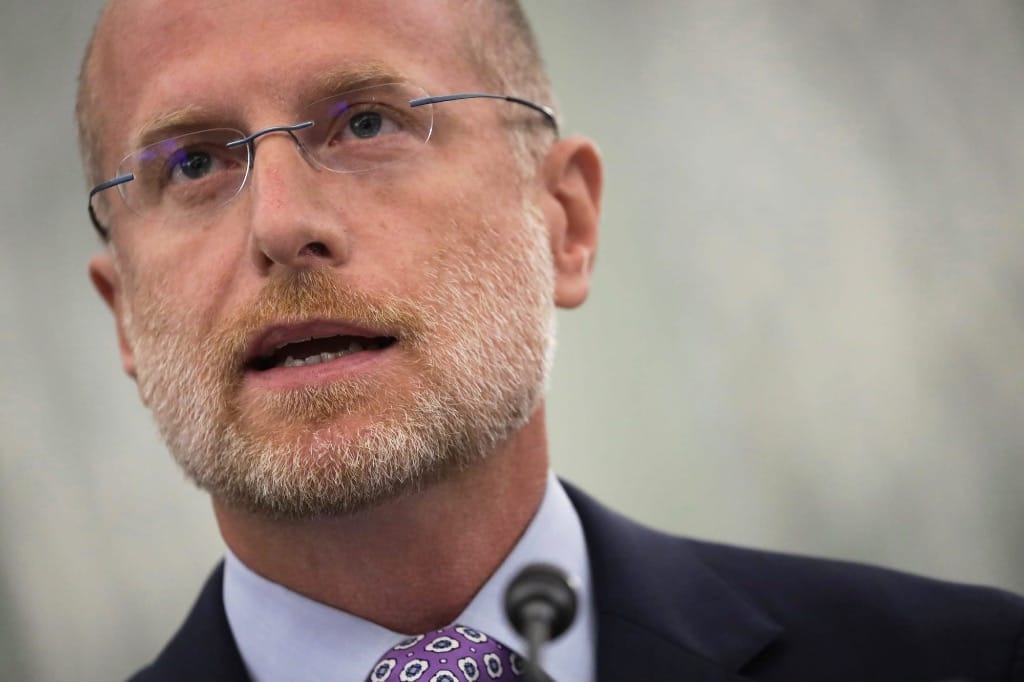
“Today’s FCC approval of this transaction is expected to result in substantial network benefits for customers of both T-Mobile and UScellular, including additional capacity and coverage benefits, as well as improved fixed wireless access service with higher speeds and capacity,” FCC Chairman Brendan Carr said in a statement.

FROM SPEEDING BEAD SUMMIT
Panel 1: How Are States Thinking About Reasonable Costs Now?
Panel 2: Finding the State Versus Federal Balance in BEAD
Panel 3: Reacting to the New BEAD NOFO Guidance
Panel 4: Building, Maintaining and Adopting Digital Workforce Skills
The deal has been strongly opposed by consumer advocates and rural wireless carriers, who say the big three carriers carving up a competitor will further edge out smaller providers. Both Public Knowledge and the Rural Wireless Association again asked the FCC to reject the deal after the DOJ's announcement.
The agency also approved this week T-Mobile’s purchase of fiber provider Metronet via a joint venture with investment firm KKR.
The SES-Intelsat deal will give SES a total constellation of 100 geostationary orbit satellites and 26 in medium-earth orbit. Both companies provide video distribution services, among other things.
“Today’s approval of the SES Intelsat transaction builds on the [FCC’s] efforts to promote the provision of robust and competitive satellite services to the public,” Carr said. “It has the potential to lower costs, improve quality, and increase investment. It also will create a more vigorous multi-orbit competitor in the satellite communications marketplace.”
The satellite merger will see one entity control almost all of the upper C-band spectrum that cable companies and broadcasters rely on for content, a prospect that has made both industries uneasy.
SES and Intelsat relocated to the band after the FCC’s C-band auction in 2020, and got a large payout for doing so. The agency is now looking into auctioning the upper portion of the band and further packing the video distributors, which will mainly be SES.
The FCC had already opened an inquiry into how to put the spectrum to more intensive use when Congress mandated in its recent budget legislation that 100 megahertz be auctioned off.
SES CEO Adel Al-Saleh said earlier this year it should be possible to clear 100 megahertz of the band while preserving content distribution services.



Member discussion