
FCC, DOJ Defend USF to Fifth Circuit
Lawmakers are working on modernizing the fund.

Jake Neenan
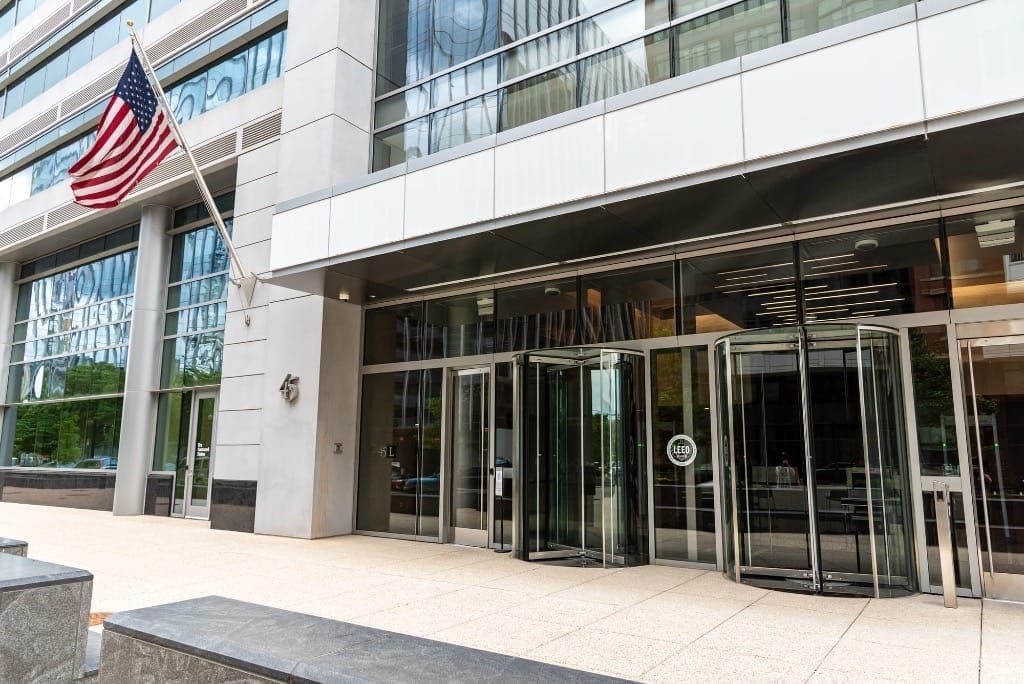
WASHINGTON, March 16, 2026 – After a victory at the Supreme Court last year, the Federal Communications Commission again finds itself defending in federal court its $8 billion-per-year broadband subsidy program.
The agency told the U.S. Court of Appeals for the Fifth Circuit that, contrary to a new lawsuit filed by the same group that unsuccessfully challenged the fund last year, its Universal Service Program is valid under the U.S. Constitution.
Congress “imposed ascertainable and meaningful guideposts for the FCC to follow when carrying out its delegated function of collecting and spending [universal service] contributions from carriers,” the agency wrote in a Friday filing. “The nondelegation doctrine requires nothing more.”
Conservative nonprofit Consumers’ Research filed a lawsuit in October alleging parts of the Telecom Act of 1996 violate that nondelegation doctrine, the idea that Congress can’t hand its powers to other entities without limitations.
In a 6-3 opinion, the Supreme Court ruled in June 2025 that the law in general constrained the FCC enough to pass constitutional muster. That reversed a previous ruling from the Fifth Circuit that found the program unconstitutional. Three other circuits had sided with the FCC.
The high court’s opinion did not specifically address two provisions that allow for “additional” and “advanced” services for schools, libraries, and healthcare centers to be funded by the program, and those are the focus of the current litigation. In the current lawsuit, the fund’s opponents argued those sections gave the FCC the ability to charge carriers as much as they want in quarterly fees to expand the program indefinitely.
“The FCC’s discretion to make universal service funding available to ‘additional’ or ‘advanced’ services is cabined by multiple statutory constraints,” the agency argued in its 61-page brief. The filing was led by FCC attorney James Carr and signed by Brett Shumate, the assistant attorney general in the Justice Department’s civil division.
The agency argued services subsidized under those provisions could only be provided to a subset of USF participants, and that they must still fulfill their respective program’s criteria of being necessary for rural health care or educational uses.
“In view of those multiple statutory constraints, petitioners have no basis for asserting that the statute imposes no ‘meaningful limits’ on the FCC’s authority to ‘fund services for schools, libraries, and health care providers,’" the agency wrote.
The FCC also noted it recently discontinued a program to subsidize off-campus Wi-Fi hotspots for schools and libraries. Consumers’ Research had pointed to the program in its lawsuit.
FCC Commissioner Oliva Trusty, a Republican, said her September vote in favor of repealing the program was in part motivated by a desire to make the arguments against the fund less compelling.
While the high court didn't upend the fund over the summer, industry experts argue that the USF needs to be reformed, as expenditures remain flat while voice revenue shrinks. The contribution factor for the fourth quarter of 2025 was 38.1 percent.
Lawmakers from both parties on Capitol Hill are working on modernizing the fund, including the contribution base. Aides from the offices of Sens. Dan Sullivan, R-Alaska, and Ben Ray Luján, D-N.M., said in October they were planning on unveiling a new framework early this year.



Member discussion