
FCC Opens Airwaves for Low Power Devices, Loosens Financing for Broadband
Both orders were adopted unanimously.

Jake Neenan
WASHINGTON, Dec. 11, 2024 – The Federal Communications Commission moved Wednesday to open more of the unlicensed 6 GigaHertz band to very low power devices, and to loosen financing requirements for some of its broadband subsidy programs.
The agency opened up the remaining 350 megahertz of the 6 GHz band for unlicensed use by very low power devices, making 1200 contiguous megahertz for that purpose. Just as when the FCC opened the initial 850 megahertz to VLP devices last year, devices can operate indoors and outdoors without a frequency coordination system.
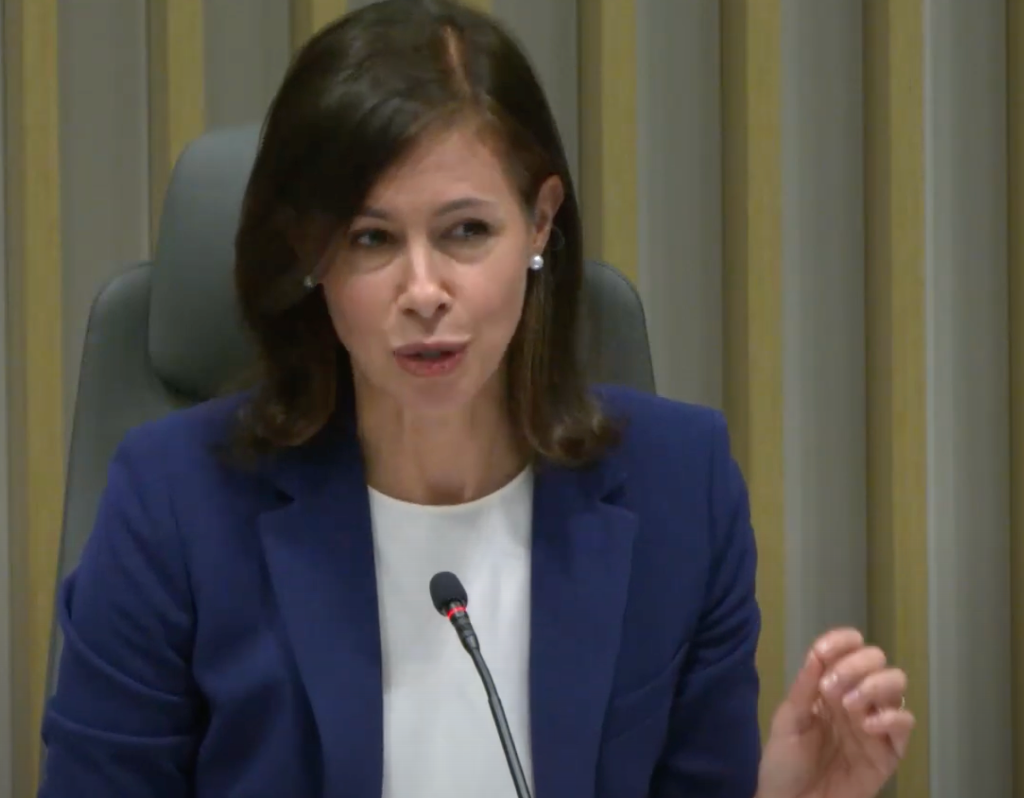
“These are the airwaves where we can really develop new wearable technologies and expand access to augmented and virtual reality in ways that will provide new opportunities in education, healthcare, and entertainment,” FCC Chairwoman Jessica Rosenworcel said.
In addition to the short-distance, high-bandwidth use cases targeted by the expanded VLP authorization, the band is also available for unlicensed use at higher power levels, which requires the use of frequency coordinators to prevent interference.
Ira Keltz, head of the agency’s Office of Engineering and Technology, said having more contiguous spectrum for VLP use would benefit Wi-Fi 6E and W-Fi 7 devices, which support wider channels of 320 megahertz. The 6 GHz band will have seven of those channels rather than four.
“To ensure the risk of interference remains insignificant, the devices will be required to employ a contention-based protocol and implement transmit power control while prohibited from operating as part of a fixed outdoor infrastructure,” the agency noted in a release.
Officials didn’t detail any changes from the public draft.
The item was unanimously adopted, as was the broadband financing item.
RDOF, CAF II Auction letters of credit
The agency also adopted changes to its letter of credit policy for its $6 billion Rural Digital Opportunity Fund and $1.8 billion Connect America Fund Phase II Auction programs.
Both broadband deployment subsidies require participants to get and maintain a letter of credit with a bank, in amounts that increase over time as more money is disbursed. Those letters of credit usually involve putting up an equal amount of cash as a collateral.
The FCC swapped its previous standard for determining a bank’s eligibility, a B- or better from Weiss, and replaced it with the “well capitalized” standard used by federal agencies that regulate financial institutions. The move is intended to increase the number of eligible banks without adding much risk – Weiss precipitously dropped the number of banks above a B- over the last two years, leading to providers scrambling to secure compliant letters of credit.
The order also made permanent its policy of allowing CAF II Auction participants to use RDOF letter of credit rules, which require smaller amounts of cash and get reduced quicker. The agency had until now been annually extending a 2020 waiver allowing the change.
RDOF participants will also be able to reduce their letter of credit to one year of support when they build out to 10 percent of their committed locations, down from 20 percent.
WISPA, the trade association for small and wireless ISPs, was happy with the changes.
Louis Peraertz, the group’s vice president of policy, said in a statement that “updating the rules to reduce ongoing administrative costs makes more support available for actual deployment to unserved rural Americans, helping to drive broadband access and adoption where it is already costly to go.”
Officials said changes to the public draft included edits requested by Commissioner Anna Gomez acknowledging the difficulty Tribal providers have in securing letters of credit, plus some minor edits in response to ex parte meetings.




Member discussion