FCC Taking a Look at State Pole Attachment Laws
An inquiry asked how the agency could make state rules ‘more transparent and effective’

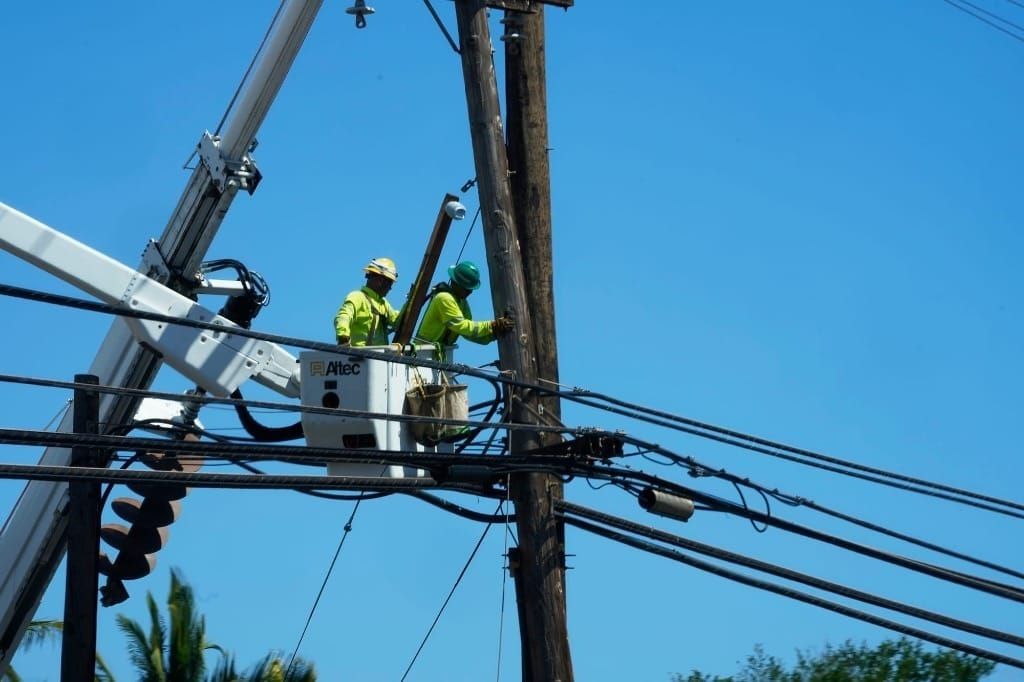
WASHINGTON, June 11, 2026 – Worried about a patchwork of rules ahead of a major broadband grant program, federal regulators are taking a look at state-level pole attachment laws.
The Federal Communications Commission is taking comment on actions it could take to make state pole attachment rules “more transparent and effective,” the agency said in a Thursday public notice.
The FCC regulates pole attachment deals between investor-owned utilities and telecom carriers. Its rules set limits on what fees can be charged to carriers looking to attach gear to utility poles, and set timelines for application processing and other things.
In 23 states and D.C., that federal regime is preempted by state laws.
The agency said in its notice that there were “inconsistencies and possible inadequacies” in those state rules, which it wanted to address as the $42.45 billion Broadband Equity, Access, and Deployment program got underway. About 63 percent of the program's 4 million locations across the country are in line for fiber, much of which will be hung on utility poles.
The notice asked whether the FCC should require reverse-preemption states to recertify that they handled pole attachment regulations, and include more specificity on who and what they regulate. It also noted that 18 of the states had certified before 1996, when the federal rules only applied to cable TV providers.
The agency has never actually said that those existing certifications were enough for states to also regulate telecom providers’ pole access, the notice said.
“We thus seek comment on whether state certifications filed before 1996 are sufficient for the purpose of regulating attachments by providers of telecommunications services,” the agency wrote.
The notice cited a May report from New York Law School researchers Alex Karras and Michael Santorelli. The paper found the FCC regulated only about 10 percent of the poles that BEAD-funded fiber is likely to be hung on.
Karras and Santorelli noted more than 40 percent of all BEAD aerial fiber would be hung in electric cooperative service territories. Electric co-ops are not subject to the FCC’s rules (unless they themselves won a BEAD grant, in some cases) and the notice did not ask about them.
“Increased regulatory clarity will ensure large deployments are quickly approved and modern high-speed infrastructure gets built,” FCC Chairman Brendan Carr said in a statement. “As a result, more Americans will be able to enjoy access to next-generation broadband and connectivity for years to come.”
The item also asked whether it should review the reverse-preemption states’ certifications and what it should do if it found them lacking in some way.
FCC disputes
Pole attachments are the subject of fierce dispute at the FCC between telecoms and utilities, and the agency has tried to prevent those disagreements from holding up BEAD projects. In 2023 it assembled a team and accelerated docket to mediate pole disputes quickly.
The agency issued its first decision with those tools in February, siding with Comcast against Appalachian Power Company. The FCC found APCO couldn’t charge the cable giant the full replacement cost for poles that weren’t up to code.
But in May, Comcast told the agency APCO was still trying to charge the ISP more than what was allowed under federal rules.
Electric co-ops and BEAD
Co-ops don’t like having the federal rules apply to them, operators and their national trade group told reports last month. They prefer having more leeway to work out rates with attachers.
One operator described handing back BEAD money over the issue.
Under the Commerce Department’s rules, electric co-ops that win BEAD grants to deploy broadband must subject themselves to the FCC’s pole rules, unless there’s an existing state law on co-ops. That applies to the co-ops' entire in-state footprint.