Comcast Seeks FCC Action in Pole Dispute With Appalachian Power Company
Disputed pole replacement fees could delay broadband deployments, the ISP argues.

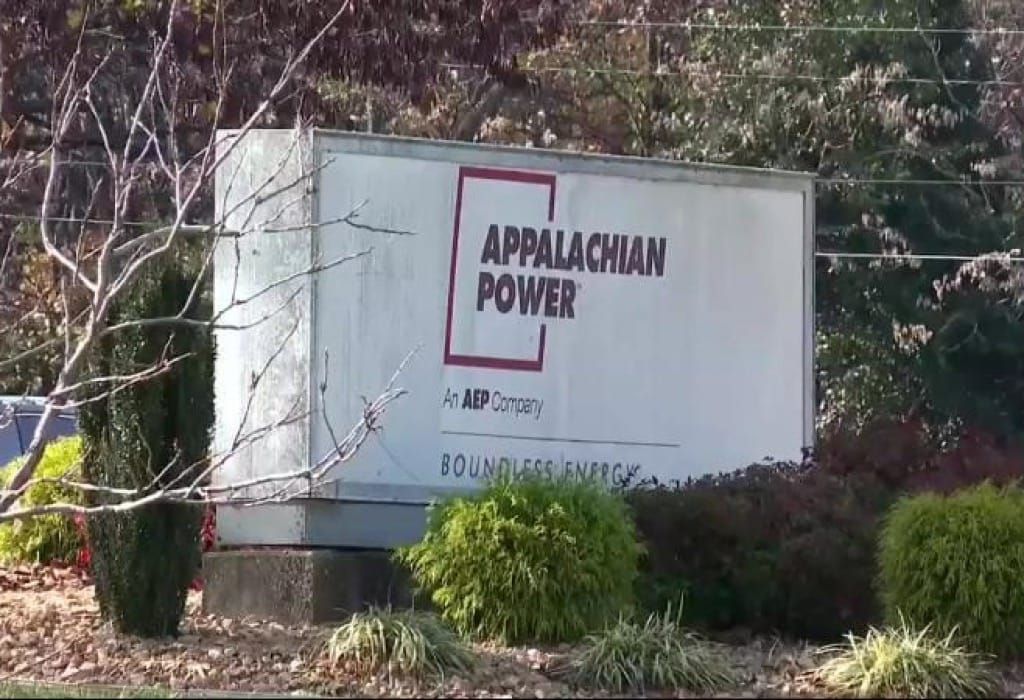
WASHINGTON, May 11, 2026 - Internet provider Comcast asked federal regulators Monday to step back into a continuing and growing dispute over utility pole replacement costs with an Appalachian electric utility.
The ISP, the nation’s largest, argued the fees sought by the Appalachian Power Company could delay federally backed broadband deployments and raise construction costs nationwide.
The filing marks one of the first major tests of the Federal Communications Commission’s Rapid Broadband Assessment Team, created to quickly resolve infrastructure disputes slowing broadband construction.
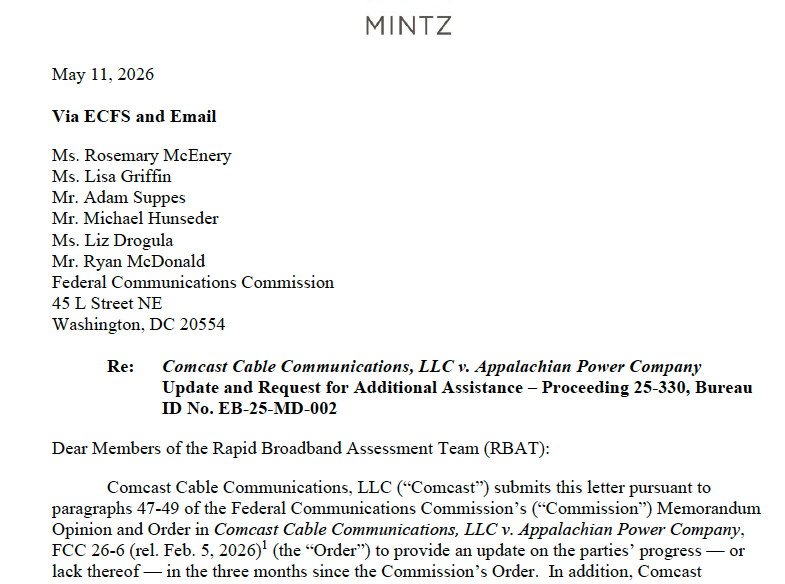
Documents available to Breakfast Club members
In a letter submitted by law firm Mintz Levin on Comcast’s behalf, the company said Appalachian Power Company continued charging at least 20 percent of total pole replacement costs to Comcast as a new attacher, despite a February FCC ruling rejecting the utility’s previous cost-sharing methodology.
In that ruling, the FCC said that utilities could not force new attachers to bear the full cost of replacing poles when preexisting violations from other parties already required replacement.
The conflict stems from a complaint Comcast filed against Appalachian Power in November 2025, arguing the utility’s pole replacement policy could delay broadband construction to roughly 13,000 locations in Virginia under the Broadband Equity, Access and Deployment program.
The FCC fast-tracked the case in December under its accelerated pole attachment docket before ruling in February. In it, the agency said utilities could not force new attachers to cover the full cost of replacing poles that had preexisting safety violations.
The case became a flashpoint in a broader industry fight over pole attachment costs, contractor actress and BEAD deployment timelines.
“APCo has refused to comply with this order and other Commission rules, instead demanding that Comcast pay to fix preexisting violations on poles caused by other parties,” a Comcast spokesperson said Monday.
Comcast asked the FCC to schedule a status conference through the Rapid Broadband Assessment Team in hopes of resolving the dispute quickly.
The dispute reflects broader industry concerns that pole attachment costs and make-ready delays could slow BEAD-funded broadband deployment nationwide.
New 20-page filing
According to Comcast’s filing, Appalachian Power’s revised policy could still leave broadband providers paying far more than the incremental costs associated with adding new attachments to poles. Comcast argued lawful incremental costs should amount to roughly $100 per pole, while the utility’s current formula could exceed $1,600 per pole.
The filing also alleged Appalachian Power reserved the right to seek even higher payments from Comcast in future proceedings.
Industry groups of which Comcast is a part backed Comcast’s request.
“Fair and reasonable access to utility poles remains a key barrier to NCTA member companies seeking to bring broadband to unserved areas,” NCTA — The Internet & Television Association said Monday.
The group said some pole owners appeared to be ignoring the FCC’s February order, potentially jeopardizing BEAD-funded broadband deployments.
Regional broadband organizations also warned the dispute could slow rural internet expansion.
“Appalachian Power Company’s continued demands for exorbitant fees to attach new fiber to its utility poles for preexisting violations caused by others are bottlenecking progress,” said Ray LaMura, president of the Broadband Association of Virginia.
The West Virginia Cable Telecommunications Association similarly argued that the dispute had delayed efforts to close the rural digital divide in the state.
“Appalachian Power’s efforts to run up the tab for broadband deployment projects has hurt West Virginians and delayed progress on one of our state’s highest public policy priorities,” said Mark Polen, executive director of the association.
The Appalachian Power Company did not immediately provide a response to Broadband Breakfast’s request for comment on the dispute.
UPDATE: At 11:27 a.m. ET on Tuesday, Appalachian Power Company replied:
Appalachian Power Company supports broadband expansion and recognizes its value to the communities we serve. At the same time, we must ensure pole replacement costs are allocated fairly and consistent with FCC requirements. Pole replacements can cost about $8,000, yet Comcast’s latest filing proposes paying only $100, leaving electric customers to cover roughly 99% of the cost for work that does not benefit electric service. APCo is reviewing the filing and will continue to advocate for a reasonable, balanced approach that supports broadband deployment without placing undue costs on electric customers for work that does not benefit electric service.