
FCC’s March Agenda: Copper Retirement, Call Center Onshoring
The agency’s next open meeting is set for March 26, 2026

Jake Neenan
WASHINGTON, March 5, 2026 – The Federal Communications Commission is set to vote on relaxing copper retirement rules and a proposal to incentivize U.S. companies to onshore call centers.
The copper retirement order would give providers blanket authority to grandfather legacy services over copper wire, meaning they won’t be offered to new customers, and eliminate various filing requirements.
The item would adopt “one consolidated rule applicable to all technology transitions discontinuance applications and eliminating rule provisions thereby rendered irrelevant,” the public draft posted Thursday said. It would automatically grant discontinuance applications from dominant carriers after 31 days, shortening the current 60-day automatic grant window, among several other things.
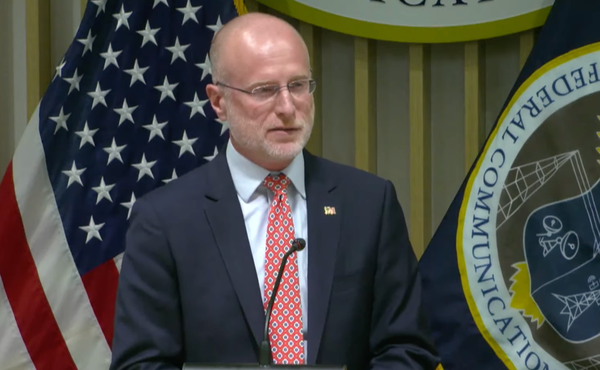
“This action will free up billions of dollars to go into new infrastructure builds in communities across the country while safeguarding core consumer protection and public safety requirements,” FCC Chairman Brendan Carr said in a post on X.
The FCC has to greenlight companies’ requests to discontinue legacy telecom services, an effort to ensure areas aren’t left without access to essential services. Major ISPs are eager to transition customers to other technologies, as copper doesn’t provide competitive broadband service and is expensive to maintain.
The agency under Carr has been trying to facilitate that transition and make it easier for companies to turn off their legacy infrastructure. AT&T COO Jeff McElfresh said at a Morgan Stanley conference this week the carrier had approval to stop selling new service at 85 percent of its more than 5,000 wirecenters, and could start fully shutting down 30 percent. The carrier is aiming to shut down most of its copper by the end of 2029.
Rural residents and consumer groups have urged the agency to proceed with caution, fearing people could lose access to communications in emergencies.
The FCC’s news release also said that if state and local rules required the continued provision of a carriers’ copper services after the FCC had allowed its discontinuance, “those state requirements conflict with federal law and are subject to preemption.”
California has more stringent carrier of last resort (COLR) rules, which led AT&T to exempt the state from its national copper retirement plans. The state’s Public Utility Commission is considering updating those rules.
The FCC’s meeting is scheduled for March 26.
In addition to copper retirement and onshoring call centers, the agency will vote on measures to combat robocalls, make spectrum available for space operations, and strengthen oversight over the agency’s Universal Service Fund.
Onshoring call centers, robocalls
“Americans get frustrated when they call a U.S. business and end up connecting with a call center located abroad. Language and communications barriers often make it difficult for callers to promptly and efficiently get the results they want,” Carr said in a statement. “So the FCC will be voting on several proposals designed to reshore call center jobs and improve the customer service experience at the ones that remain – including by seeking comment on requiring call center workers to be proficient in American Standard English.”
The proposal would seek comment on ways to encourage FCC-regulated companies to onshore call centers, the agency said in a release, including limiting call volume from overseas centers.
The item would also ask about combating robocalls that originate in foreign call centers, including “requiring the use of bonds or tariffs in appropriate circumstances.”
A separate robocall item would seek comment on expanding certification requirements for companies that have access to customer phone numbers.
USF oversight, space spectrum
The order would adopt Office of Management and Budget guidance that would update the FCC’s rules on suspension and disbarment from participation in its subsidy programs.
“By updating our processes, aligning with government‑wide best practices, and enabling quicker action against misconduct, we will better protect these programs from abuse and ensure limited resources are used responsibly,” Carr wrote in a blog Wednesday.
The agency will also take comment on making spectrum available for spacecraft other than communications satellites, like “orbital laboratories, satellite repairs, and private inhabitable spacecraft.” The agenda item was dubbed “Spectrum Abundance for Weird Space Stuff” in the FCC’s release.
The agency is also set to delete a slate of rules from its Office of Economics and Analytics and Office of International Affairs, and update broadcast rules.





Member discussion