
FCC's Wireless Siting Proposal Sparks Wave of Local Opposition
More than 200 individuals urged the FCC to abandon rules they say erode local rights and speed tower approvals.

Jericho Casper

WASHINGTON, November 14, 2025 – A proposal from the Federal Communications Commission to accelerate the buildout of wireless infrastructure has drawn fierce pushback from municipalities and residents who say it overrides local zoning authority.
More than 200 individual comments have hit the agency’s docket since Wednesday calling on the FCC to reject the draft plan advanced at its September meeting on eliminating barriers to wireless deployments.
“This initiative is not about ‘building America’—it is about stripping away local rights,” wrote commenters, who repeated the same warning: the FCC’s proposed rules may impose new shot clocks and force automatic approval of wireless towers and other telecom projects if local governments don’t act fast enough.
The FCC’s proposed rulemaking asks whether existing 60, 90, and 150-day shot clocks set for wireless siting in its 2018 Small Cell Order and a 2009 ruling were working as intended, whether to tighten them, and whether to apply to larger wireless facilities, such as macro towers.
The FCC also asked whether it should adopt a rule that would automatically approve towers and other wireless facilities when localities miss federal deadlines.
“If adopted, these rules would force automatic approval of towers after 150 days, even if there is strong community opposition,” commenters warned. “These rules would allow towers to be placed virtually anywhere, with no say from the people who must live with them.”
Proposals would 'eliminate vital community protections'
They would “eliminate vital community protections by prohibiting consideration of aesthetics, property values, and historic preservation. Undermine property rights by driving down home values without recourse or compensation. Silence residents by removing public hearings, conditional and special use permits, and local decision-making,” the coalition said.
The draft also asks whether the FCC should limit or standardize local permitting fees, including by adopting a “reasonable” fee model based on the 2018 Small Cell Order, and whether certain local requirements, such as setback rules, aesthetic conditions, or time-limited conditional-use permits, should be treated as unlawful impediments to broadband deployment under federal law.
FCC leadership defended the proposal as necessary to speed modern networks.
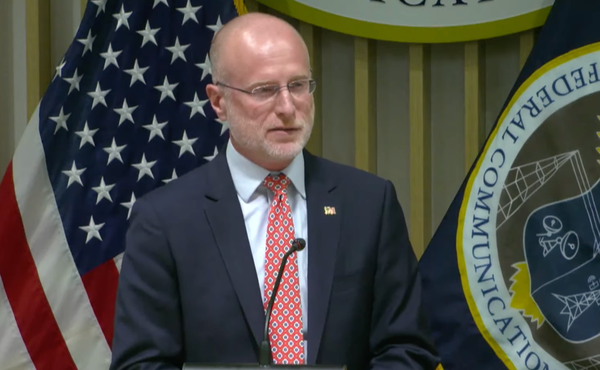
When adopting the rulemaking Sep. 30, Chairman Brendan Carr said the item was part of larger permitting reforms the FCC was pursuing, arguing that wireless providers “still have to navigate a thicket of red tape to get the permits they need.”
He said the FCC was “taking a fresh look at [its] authorities under sections 253 and 332 of the Communications Act to preempt state and local barriers to next-gen builds.” He also cited powers the FCC has under the Spectrum Act of 2012.
As the FCC prepares to reconsider its authorities under Section 253, stakeholders have pushed the agency to use that authority to preempt a wide range of state and local rules.
The proposal cites directives the FCC was given in July from the White House’s AI Action Plan. That plan instructed the FCC to evaluate whether state artificial intelligence laws interfere with its responsibilities under the Communications Act.
Reflecting that mandate, the FCC asks whether state or local AI regulations “impede the advancement of telecommunications and personal wireless service,” and even requests legal theories for how it could preempt those state AI rules under Sections 253 and 332.
In September, Democratic Commissioner Anna Gomez cautioned the FCC against getting sidetracked by attempts to “fulfill a failed congressional effort and second-guess states placing guardrails on artificial intelligence.”
The wireless proceeding was paired with a separate inquiry on accelerating wireline broadband deployment. In that docket, stakeholders have urged the FCC to preempt a wide range of state and local rules, including broadband rate or affordability laws.
The FCC invites public comment on its proposal to accelerate wireless infrastructure by Nov. 17; the reply comment period will run until Dec. 16. The National Association of Counties, representing the nation’s 3,069 county governments, plans to file in opposition to the FCC’s premise.



Member discussion