
Fifth Circuit Won’t Rehear AT&T Fine Case
Courts are split on whether the FCC's forfeiture process violates the U.S. Constitution.


WASHINGTON, August 25, 2025 – It looks like the Federal Communications Commission is going to need help from the U.S. Supreme Court. Lower courts remain split over whether the agency’s process for issuing fines violated the constitution.
The U.S. Court of Appeals for the Fifth Circuit said Friday it will not rehear arguments in AT&T’s challenge to a $57 million FCC fine, leaving the company’s victory intact and maintaining a circuit split that makes Supreme Court intervention likely.
The court ruled in April that the FCC couldn’t fine the carrier because its forfeiture process was invalid in light of recent Supreme Court precedent. The high court ruled in Securities and Exchange Commission v. Jarkesy (2024) that the Securities and Exchange Commission, which oversees Wall Street financial firms, couldn't levy civil penalties without providing the chance for a jury trial.

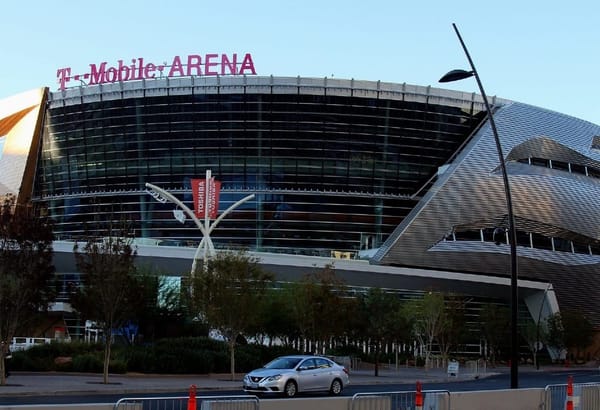
On Aug. 15 the U.S. Court of Appeals for the D.C. Circuit, hearing a challenge to a similar fine by T-Mobile, ruled the opposite way and said the FCC’s enforcement rules did not violate companies’ constitutional right to a jury trial.
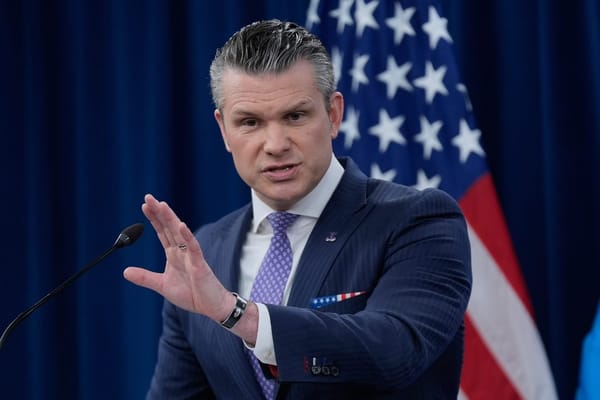
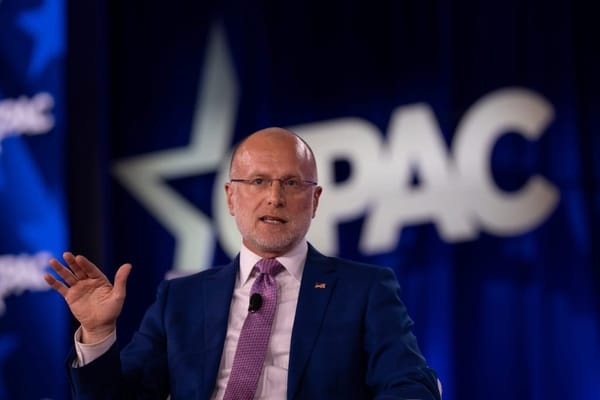
FCC Chairman Brendan Carr, a commissioner at the time, dissented from the April 2024 fines being appealed by the major carriers and has called for the agency to review its enforcement rules in the wake of Jarkesy. But under his leadership the agency is defending its ability to issue fines.
The FCC asked the full panel Fifth Circuit judges to hear the case again in July, saying one of its most important regulatory tools would be taken away if the decision stood.
“Civil penalties are among the [FCC’s] most important regulatory remedies,” the agency wrote. “If the panel’s decision stands, the validity of every Commission enforcement action that seeks to impose a monetary penalty under that provision is likely to be challenged.”
The split makes it likely one of the parties will ask the Supreme Court to weigh in, Andrew Jay Schwartzman, senior counselor for the Benton Institute for Broadband & Society, said in an email after the D.C. Circuit decision came down. He said they would probably wait for Verizon’s case, still pending in the Second Circuit, to be resolved before doing so.
“But so long as the Circuits remain split, one or both sides are quite likely to seek Supreme Court review,” he said.
The FCC fined the three major mobile carriers last year nearly $200 million in total for not vetting third parties before selling them customer location data in 2018. All three carriers challenged the fines in court, arguing the penalties violated their Seventh Amendment right to a jury trial.
The FCC’s process allows companies to get a jury trial, but only if they choose not to pay and wait for the Department of Justice to pursue a collection action. The companies instead opted to pay the fines, giving them the chance to appeal the penalties in court.
The Fifth Circuit also rescinded its April decision and issued a new one, which was almost entirely the same except that it did not include three paragraphs from near the end of the April decision.
Those had pertained to precedent specific to the Fifth Circuit that judges said would limit AT&T to challenging the facts at issue if the DOJ brought a collection action there, rather than the FCC’s legal conclusions based on those facts.
When asking for a rehearing, the FCC had said that line of reasoning was nullified by a June Supreme Court case in which justices held that district courts can review the legal validity of FCC rules and orders even after they take effect.
“Because [the precedent cited] has possibly been called into question by a Supreme Court decision issued after our panel opinion, we excise that part of the opinion as unnecessary to our holding,” the court wrote in a footnote Friday.




Member discussion