
Former NRC Boss Says Nuclear Power Safe
‘The United States is safer today.’

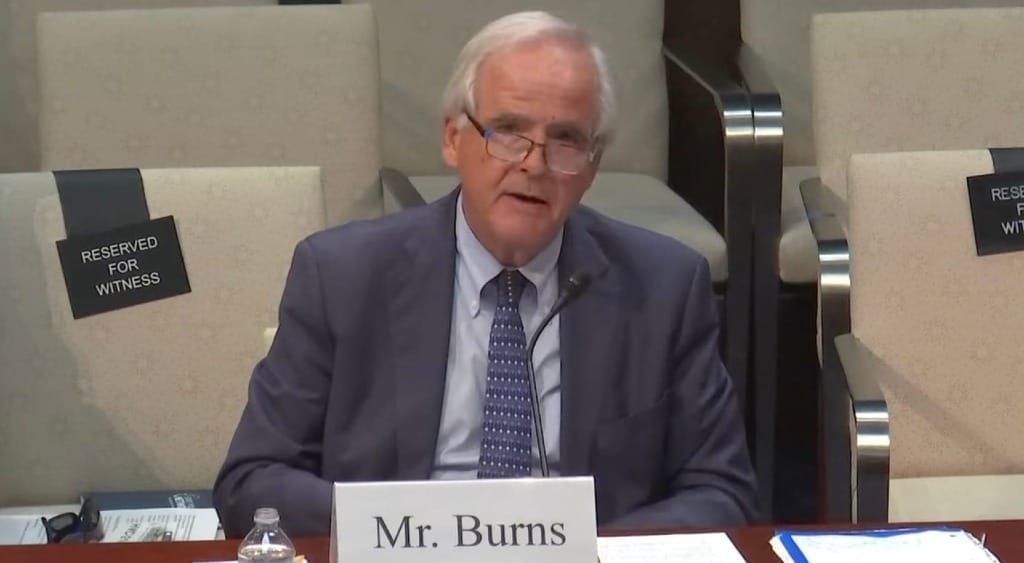
WASHINGTON, July 22, 2025 – Nuclear energy could help meet the rapidly increasing energy demands driven by artificial intelligence, but concerns about its safety remain.
During a House Oversight and Government Reform Committee hearing titled “The New Atomic Age: Advancing America’s Energy Future,” the safety of nuclear power plants was discussed.
Stephen Burns, an independent who served as a Commissioner of the Nuclear Regulatory Commission from 2014 to 2019 and as its Chair from 2015 to 2017, argued Tuesday that nuclear energy can be safely utilized under the guidance of an independent NRC.

“The NRC has protected the health and safety of Americans for 50 years without a single civilian reactor radiation-related death,” Burns wrote in his testimony.
Burns emphasized that under the NRC’s oversight, the U.S. has learned from its past nuclear power plant accidents.
“The lessons of the Three Mile Island accident have long been woven into the safety regime, and every commercial reactor in the United States is safer today because of major safety steps taken after the destruction of reactors at Japan’s Fukushima Daiichi facility by a massive earthquake and tsunami,” Burns stated. “Since the Three Mile Island accident in 1979, the agency has licensed approximately 50 power reactors to operate. It has recently issued construction permits for advanced reactors ahead of schedule. And the NRC has cleared utilities to boost the power of many existing reactors and has licensed them to run longer than originally planned.”
Three Mile Island was recently renamed the Crane Clean Energy Center. Constellation Energy and Microsoft have finalized a deal to restart reactor Unit 1 at Three Mile Island in Middletown, Pa. Unit 2 had the infamous meltdown.
Based primarily in Rockville, Maryland, the NRC was founded in 1975 by the Energy Reorganization Act of 1974 to help prevent reactor accidents that could threaten public health and safety. Burns stated that preserving the NRC’s reputation as a strong regulator of nuclear energy is crucial for ensuring public confidence.
Ranking Member Maxwell Frost, D–Fla., agreed with Burns, stating, “[The U.S.] can boast that we haven’t had a single civilian reactor-related death in 50 years of the NRC’s existence, and that didn’t happen by accident.”
Frost did say nuclear energy by definition is dangerous, but regulating it can make it safe.
Opponents of strict NRC regulations argued that slow licensing and permitting processes hinder nuclear energy innovation.





Member discussion