
Groups Challenge FCC's Bureau-Level Order Suspending Prison Phone Rate Cap
The groups argue that the bureau's order delaying compliance to 2027 violates federal law.

WASHINGTON, July 31, 2025 – A coalition of public interest groups filed a formal challenge Wednesday to a recent bureau-level decision at the Federal Communications Commission to delay rate caps that would make prison phone calls more affordable.
Public interest groups including Worth Rises, the United Church of Christ Media Justice Ministry, and the Benton Institute for Broadband & Society, filed an application for review urging the FCC to overturn the June 30 decision from the Wireline Competition Bureau that delayed enforcement of congressionally mandated rate caps.
Advocates said the Bureau’s order violated federal law by delaying implementation of rate caps until 2027, despite the Martha Wright-Reed Act, enacted in 2023, directing the FCC to finalize the rules by December 2024.

The agency voted in July 2024 to adopt the rules, which were set to take effect for large facilities on January 1, 2025, and smaller jails on April 1. On June 30, 2025, the WCB suddenly delayed enforcement until April 1, 2027.
The groups found the bureau’s suspension order to be procedurally improper, stating it was issued without any request from stakeholders and without public notice or opportunity for comment, and therefore, in violation of the Administrative Procedure Act.
'Novel questions of fact, law or policy'
Additionally, the groups argued that the bureau exceeded its authority when it took action on “novel questions of fact, law or policy.” Because the bureau was not authorized to initiate rulemakings or suspend FCC orders, the groups’ filing asserts that the Bureau’s June 30 action was ultra vires, or taken without lawful power.
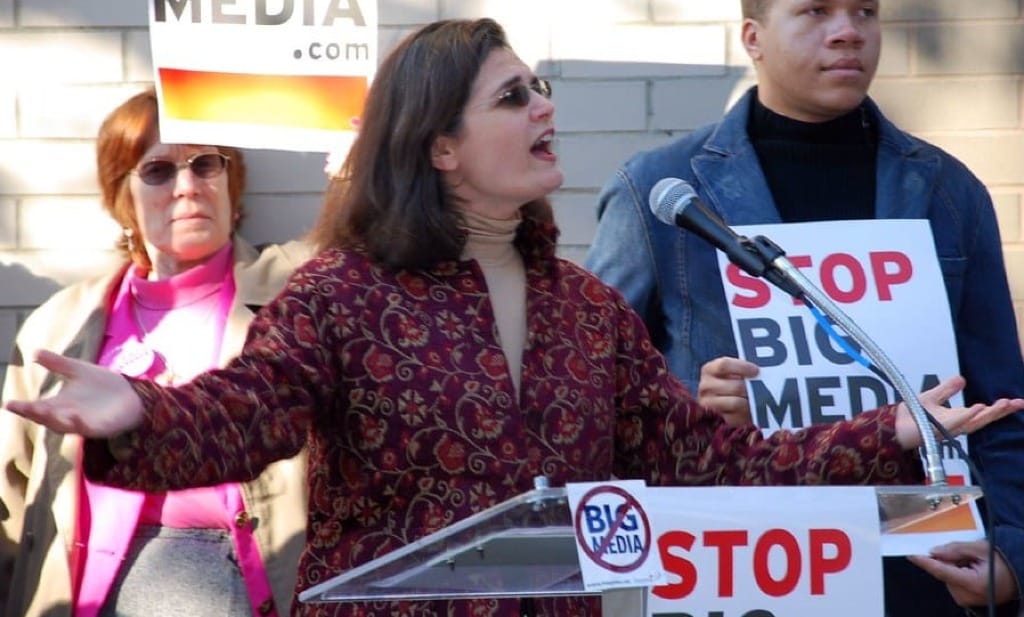
“The Bureau's decision is as harmful as it is mystifying. It goes far beyond the Bureau's authority, a fact that the FCC majority just acknowledged last week in its open meeting when it agreed that Bureaus cannot conduct rulemakings,” said Cheryl Leanza, policy advisor of the UCC Media Justice Ministry, in a statement shared with Broadband Breakfast.
The UCC Media Justice Ministry has been involved in prison phone reform efforts for over two decades. The group was among the first public interest organizations to support the original Martha Wright petition in 2003 and has remained a consistent voice in FCC proceedings since.
More recently, UCC Media Justice, alongside the other organizations, has been actively defending the FCC’s 2024 rate cap rules in an ongoing case before the U.S. Court of Appeals for the First Circuit.
That case, consolidates challenges brought by prison telecom providers including Securus Technologies and Pay Tel Communications, as well as a coalition of state sheriffs.
In response to the Bureau’s June 30 suspension order, thousands of individuals have flooded the FCC’s electronic filing system in protest, calling the FCC's sudden reversal of its position on regulations passed near unanimously in 2024 “plainly shameful.”
“In addition to being illegal and contrary to the will of Congress, this suspension order is profoundly cruel,” said Harold Feld, senior vice president at Public Knowledge.




Member discussion