
House Committee Delays Markup of FY26 NTIA Bill
Releases draft report outlining new BEAD policy directives

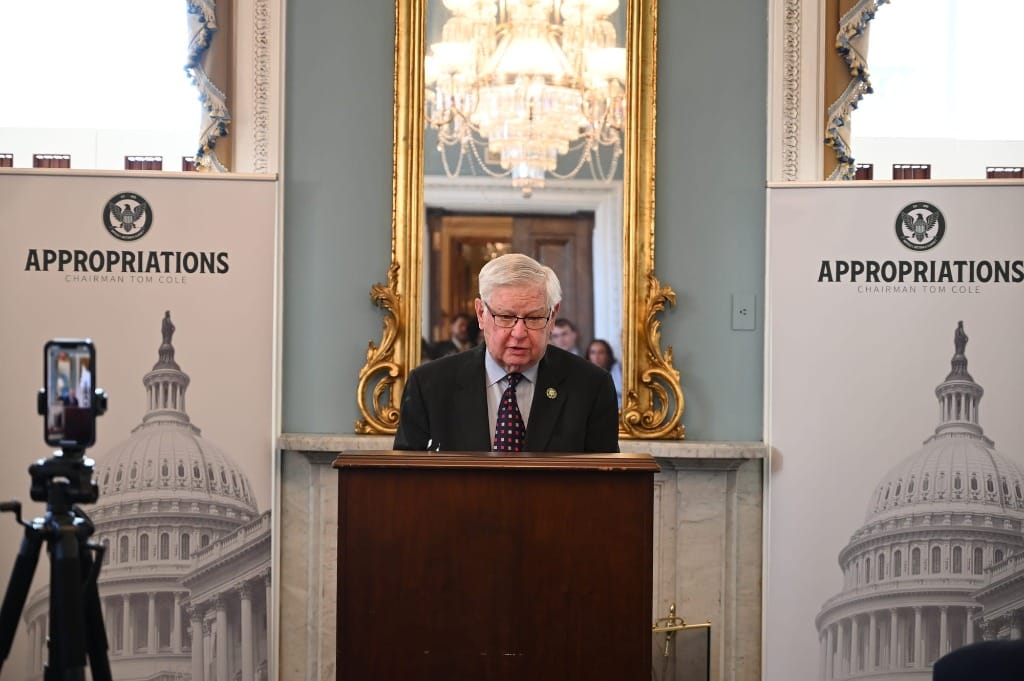
WASHINGTON, July 25, 2025 — The House Appropriations Committee postponed a scheduled Thursday markup of a bill to fund the National Telecommunications and Information Administration for fiscal year 2026.
The delay came amid House Republican infighting over efforts to force floor votes on the release of federal investigative records tied to the late Jeffrey Epstein. The markup was now expected after the House returns from its August recess on September 2.
Despite the delay, the committee’s Commerce, Justice, Science and Related Agencies Subcommittee released a draft report Thursday recommending a $47 million budget for NTIA. The White House and Senate have proposed a larger appropriation of $57 million, down from the $59 million the agency has received in the last two years.

Report outlines new BEAD policy directives
In addition to the funding recommendation, the draft report includes a series of policy provisions at guiding NTIA’s authority over broadband grant implementation. Much of the language targets how the agency oversees the $42.45 billion Broadband Equity, Access, and Deployment program.
One of the most consequential directives would bar NTIA from approving any BEAD funding proposal that “requires, encourages, or incentivizes” subgrantees to offer specific broadband prices, including low-cost service options or affordability tiers aimed at middle-income households.
The NTIA’s broadband programs “shall not directly or indirectly regulate the rates that broadband service providers charge to consumers generally or to any subset of consumers,” the report states.
Beyond pricing and eligibility concerns, the subcommittee directs NTIA to consider real-world deployment obstacles when evaluating project proposals, including supply chain disruptions, workforce shortages, and delays in securing permits.
Where such factors threaten to deter participation or undermine deployment commitments, the NTIA was instructed to use its discretionary authority to offer waivers or other relief.
The report also revives a longstanding concern about duplication in federal broadband deployment programs, directing NTIA to submit a report to Congress within 120 days identifying any statutory barriers to coordination across federal broadband programs. The agency must also estimate how much additional funding would be required to reach universal fixed broadband access, accounting for all current federal support.
Finally, the committee instructs NTIA to continue its spectrum policy work, including efforts to expand access to non-federal users and maintain a balanced approach to licensed, unlicensed, and shared use. NTIA would be required to submit annual updates on spectrum-sharing and commercial access opportunities.







Member discussion