
House Panel Advances 18-Bill Kids’ Online Safety Package
Democrats warn the proposals would override stronger state privacy laws.

Jericho Casper
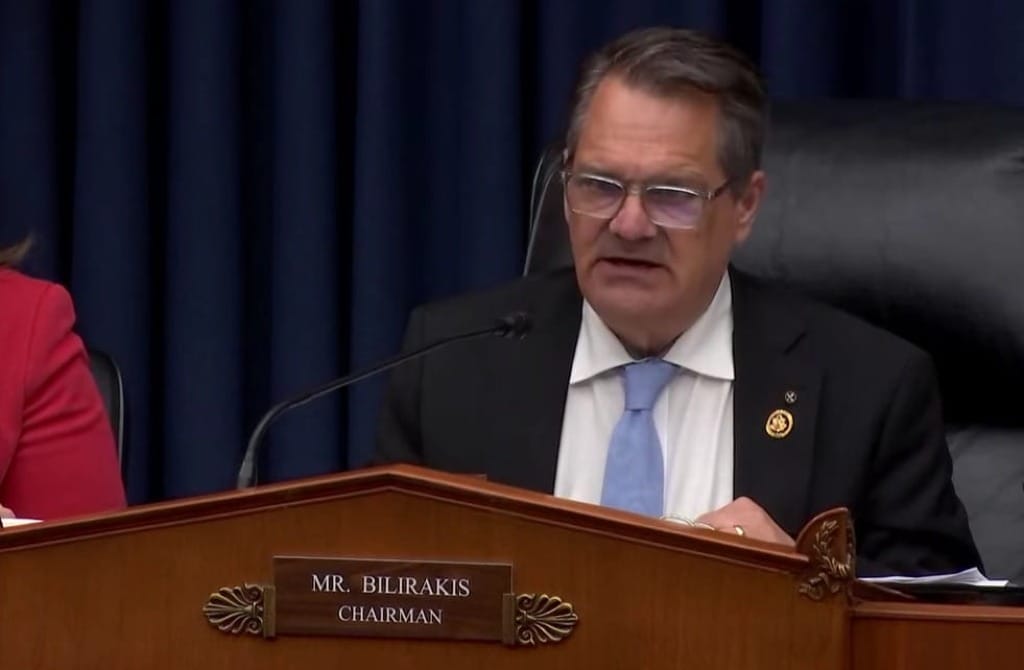
WASHINGTON, Dec. 11, 2025 – Lawmakers clashed Thursday over 18 federal proposals to regulate kids’ online safety, with Democrats warning that some would preempt stronger state laws.
The House Subcommittee on Commerce, Manufacturing, and Trade voted to advance the 18 bill kids’ online safety package to the full Energy and Commerce Committee. Of the bills considered, 11 were led by Republicans, three were brought by Democrats, and four were bipartisan.
Among the most divisive proposals was the Kids Online Safety Act, or KOSA, which Democrats argued would establish a weak federal ceiling and block states from enforcing stronger children’s privacy and safety laws. Democrats raised similar objections to COPPA 2.0, a bill that would update the federal children’s privacy law of 1998.
“I can’t support the current version of the Kids Online Safety Act or COPPA 2.0 that forever close the door on greater state protection for kids,” said Rep. Frank Pallone, D-N.J. in opening remarks.
“The broad preemption language in these bills would wipe out existing state laws on the books that keep kids safe, like state data privacy and product liability laws,” Pallone said.
Following a Dec. 2 hearing on the so-called ‘Kids Package,’ digital rights group Public Knowledge said the House was taking “one step forward, two steps back” with the latest drafts.
The group noted that while the newest version of KOSA removed a controversial provision which critics warned could incentivize platforms to overmoderate, the House bill also added sweeping state preemption language that advocates say could undermine stronger state protections in place.
“Beyond KOSA and COPPA 2.0, the bills in the latest package are a scattershot approach, like throwing spaghetti at the wall and seeing what sticks,” wrote Morgan Wilsmann, policy analyst at Public Knowledge.
“Proposals range from user safeguards, to privacy-invasive surveillance requirements, to outright bans on minors using certain platforms,” Wilsmann said. “Nearly every bill has problematic elements… The broad state regulation preemption language in several bills is especially concerning.”
Democrats on the panel echoed those concerns
“I cannot make it any clearer that it would be detrimental for Congress to put any kind of ceiling on kids’ safety and privacy through federal preemption,” said Rep. Yvette Clarke, D-N.Y.
“Technology changes every single day; new tech brings new harms. Existing state laws are the only legislation keeping kids safe online right now. We need to get over this preemption fad,” she said.
Democratic Senator Ed Markey, D-Mass., urged House Republicans to return to the bipartisan language in the Senate bill, releasing a statement Thursday, saying: “This weakening of COPPA 2.0 on behalf of Big Tech is unacceptable.”
Markey reintroduced COPPA 2.0 in the Senate earlier this year, where it cleared the Commerce Committee unanimously in June. He said he is “ready to work” on a final bill but warned that the House version abandons protections that previously earned broad bipartisan support.
House Republicans defended their approach
Subcommittee Chairman Gus Bilirakis, R-Fla., who introduced the House version of KOSA, argued the package reflected a “comprehensive strategy” to address an “online epidemic” harming children and teens.
He said KOSA and the broader slate of bills are designed to “protect kids, empower parents, and future-proof” online safety rules as new technologies emerge. Citing the death of a 16-year-old in his Florida district after cyberbullying, Bilirakis said the House draft offers “concrete safeguards” and “real consequences” for platforms that fail to protect minors.
The Computer & Communications Industry Association, representing major tech companies including Google, Meta, Amazon and Apple, praised several of the online safety measures in the package.
CCIA specifically endorsed the Promoting a Safe Internet for Minors Act, the Kids Internet Safety Partnership Act, and Assessing Safety Tools for Parents and Minors Act.
The package now heads to the full Energy and Commerce Committee. Lawmakers will have to resolve deep disagreements to enact the online safety proposals.




Member discussion