
House Passes Slate of Telecom Bills
The bills would codify spectrum testing and cybersecurity teams already working within NTIA, among other things.

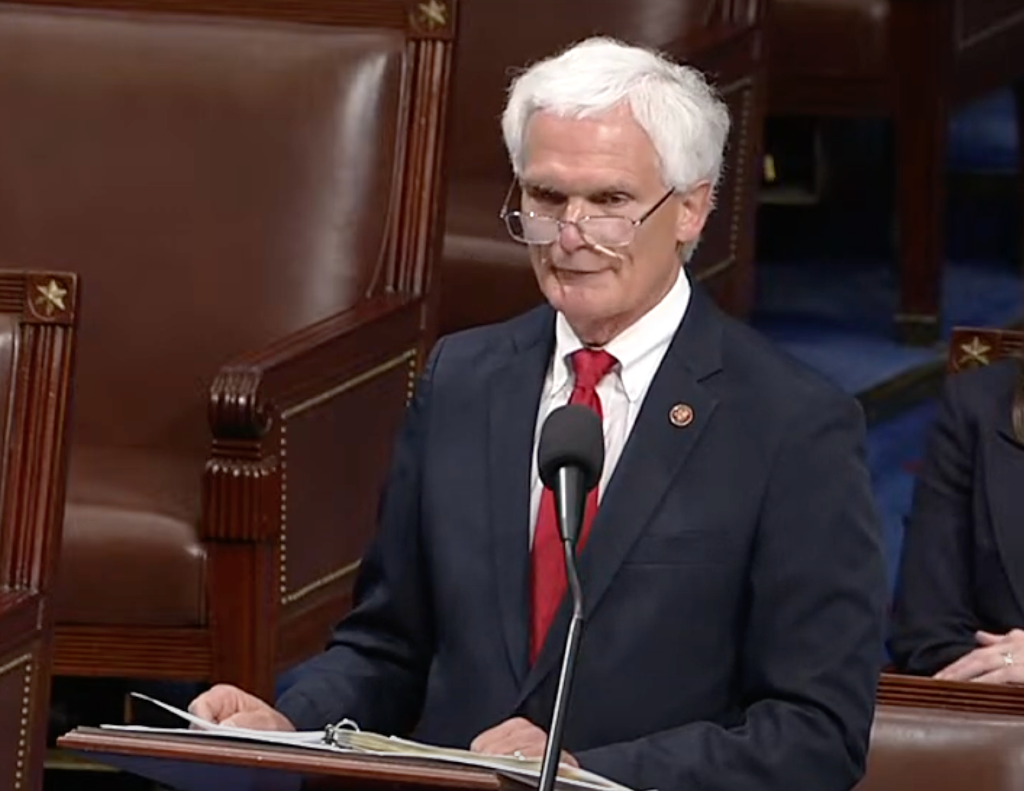
WASHINGTON, July 15, 2025 – The House passed Monday six bipartisan bills focused on telecom and broadband.
They included legislation that would require the Commerce Department’s National Telecommunications and Information Administration to investigate the cybersecurity of mobile networks and the Federal Communications Commission to look into ways to promote precision agriculture with its satellite policies.
Following is a rundown of the bills:

Understanding Cybersecurity of Mobile Networks Act (H.R. 1709)
The bill would direct the head of the NTIA to produce within one year a report on the cybersecurity of American mobile networks. The report would include an assessment of whether providers had addressed, or were working to address, vulnerabilities identified by experts.
The report would also include an estimate of the usage of various hacking techniques by adversaries of the U.S. and the barriers to providers adopting stronger encryption and authentication methods.
The major 5G carriers, along with other large ISPs, were breached last year by hackers linked to the Chinese government. The unprecedented hack reportedly targeted both presidential campaigns and government wiretapping systems.
The bill was passed 360-10, with 10 Republicans voting against it. The rest of the bills passed by voice vote. Trump's pick to lead NTIA, Arielle Roth, has yet to be confirmed.
Institute for Telecommunication Sciences Codification Act (H.R. 1455)
The ITS Codification Act would codify the NTIA’s existing spectrum testing lab in law. ITS is “the Government’s premier expert laboratory for spectrum research activities” and is “critical for undertaking engineering studies and analyses that inform clearing or sharing opportunities and facilitate policy decisions to maximize the efficient use of spectrum resources,” the bill reads.
The bill would codify the lab’s existing functions. The lab would be tasked with finding ways to increase spectrum sharing between federal and non-federal users and promote access by non-federal users to federal spectrum, in addition to other scientific work.
The budget reconciliation bill directs the NTIA, which manages federal spectrum use, to find 500 megahertz of government spectrum that could be made available to the private sector, and to study certain bands in particular. The Biden administration also initiated some long-term studies of other key government bands sought by wireless companies.
The bill would also direct the head of NTIA to start an initiative supporting the development of tracking technologies for finding people trapped in mines, collapsed buildings, and other spaces where radio communication is difficult.
NTIA Policy and Cybersecurity Coordination Act (H.R. 1766)
The bill would codify an existing office within NTIA and rename it the Office of Policy Development and Cybersecurity.
The office would be responsible for developing and advocating for “market-based policies that promote innovation, competition, consumer access, digital inclusion, workforce development, and economic growth in the communications, media, and technology markets.”
The office would also study broadband use and develop cybersecurity and privacy policies, among other things.
The bill would “ensure there is a foundation within the federal government to oversee the security of our nation’s communications networks,” said Rep. Frank Pallone, D-N.J., ranking member on the House Energy and Commerce Committee.
Open RAN Outreach Act (H.R. 2037)
The bill would direct the head of the NTIA to do outreach to smaller providers and “raise awareness regarding the uses, benefits, and challenges of Open RAN networks and other open network architectures.”
Open RAN networks have a diversified slate of equipment and software vendors that can be interchanged. The still-nascent space is an effort by the government, ongoing since the first Trump administration, to develop an alternative to Chinese vendors that American lawmakers consider security threats.
The NTIA chief would also have to promote the agency’s Wireless Supply Chain Innovation Fund, stood up with the CHIPS and Science Act to bolster the open RAN ecosystem.
The recently passed budget reconciliation bill rescinded $850 million in unobligated funds from the program. The law had set aside $1.5 billion for the fund, more than $550 million of which NTIA had already awarded.
NTIA announced in May that more than 90 applicants had applied for nearly $1.3 billion from a planned $450 million funding round aimed at software solutions for open RAN networks.
“The need for this guidance is significantly diminished, as Congressional Republicans inexplicably gutted this program,” Pallone said.
Precision Agriculture Satellite Connectivity Act (H.R. 1618)
The bill would require the FCC to review some of its satellite rules to see if any policies could be changed to promote precision agriculture. The report on the review and potential ways of implementing the rule changes would be due in 15 months.
“Farmers use information in real-time to make smart decisions about how to optimize inputs and when to plant or harvest,” said Rep. Bob Latta, R-Ohio, a lead sponsor of the bill. “When terrestrial or cellular networks are not available, satellite broadband steps in to make these technologies work.”
Latta and Pallone said farmers also use satellite imagery to monitor their crops, something they also wanted to bill to foster.
Promoting United States Wireless Leadership Act of 2025 (H.R. 1765)
The bill would require the NTIA head to encourage American telecom companies to participate in international standards setting bodies, and provide technical support to help them do so.
The agency would brief Congress on the effort within 60 days.




Member discussion